
Hydrochloric Acid Synthesis and Handling
Synthesis reactor piping, absorption column piping and acid storage and transfer lines run in this alloy, because the acid concentration is the single factor that governs material choice on those circuits.
ASTM B622 / ASME SB-622 / UNS N10665 / W.Nr. 2.4617
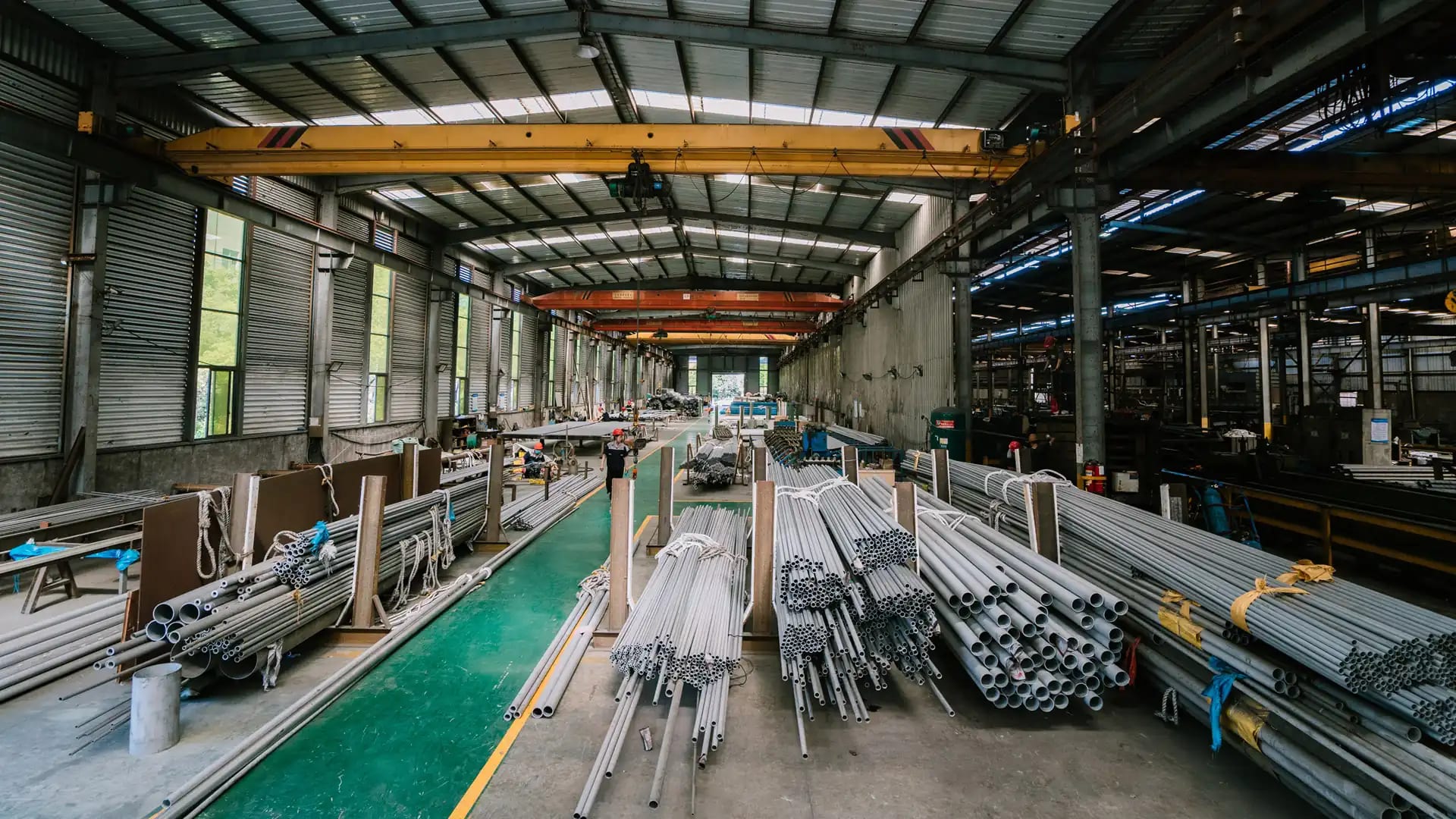
Thaida Stainless Steel Manufacturing (Thailand) Co., Ltd. lists ASTM B622 Alloy B2 seamless pipes among the grades it draws at Ban Bueng, Chonburi, Thailand, for hydrochloric and sulfuric acid duty that corrodes austenitic stainless steel. The alloy carries the UNS number N10665 and the European material number 2.4617, and the grade belongs to our Hastelloy Seamless Pipes group. Quotations and order follow-up run from the Bang Phli, Samut Prakan office.
Alloy B2 seamless pipeUNS N10665 / W.Nr. 2.4617
EN 10204 3.1 certificate / 3.2 on request
Match your line size, wall thickness and cut length against the figures below, which set out what the mill runs in this grade and the condition each length is released in.

One product standard sits behind the grade: ASTM B622, whose title is Standard Specification for Seamless Nickel and Nickel-Cobalt Alloy Pipe and Tube. Its code designation is ASME SB-622. No grade name is attached anywhere in it, the alloy being identified by its UNS number, which is why N10665 goes on the mark and on the paperwork while Alloy B2 and Alloy B-2 remain commercial names. The same specification reaches tube, and Alloy B2 seamless tubes take the work where a bundle is sized by outside diameter and wall rather than by schedule.
Every lot moves with an EN 10204 3.1 (3.2 on request) certificate. Issued alongside it are heat treatment charts, 100% PMI records and the certificate covering the raw material, while a size and surface measurement report or independent inspection is arranged where an order calls for one.
Molybdenum between 26.0 and 30.0% in a seamless 2.4617 pipe is what carries the alloy through reducing acid, and chromium held to 1.0% maximum is the compositional line that separates the B family from the chromium-bearing C grades. Carbon at 0.02% maximum limits grain-boundary carbide precipitation, so the zone beside a girth weld holds its resistance in the as-welded condition.
These are the limits each heat of the alloy meets under ASTM B622:
UNS N10665B2
| Element | Limit per ASTM B622 / ASME SB-622 (%) |
|---|---|
| Ni (Nickel) | Remainder |
| Mo (Molybdenum) | 26.0 to 30.0 |
| Fe (Iron) | 2.0 max |
| Cr (Chromium) | 1.0 max |
| Mn (Manganese) | 1.0 max |
| Co (Cobalt) | 1.0 max |
| Si (Silicon) | 0.10 max |
| P (Phosphorus) | 0.04 max |
| S (Sulfur) | 0.03 max |
| C (Carbon) | 0.02 max |
Figures are maximums unless a range is shown, and no tungsten, vanadium, titanium, copper or niobium requirement applies to this alloy. Where the stream also carries oxidizers such as ferric chloride or hypochlorite, the chromium-bearing route is Alloy C276 seamless pipes, and ASTM B622 specifies UNS N10276 at 15.0 to 17.0% molybdenum with 14.5 to 16.5% chromium.
ASTM B622 sets 760 MPa minimum tensile strength and 350 MPa minimum yield for UNS N10665, matched only by UNS N10675 at the same two figures, while UNS N06022, UNS N06455 and UNS N10276 are each specified at 690 MPa tensile. The figures are room-temperature minimums.
| Property | Value | Unit |
|---|---|---|
| Tensile Strength, min | 760 (110) | MPa (ksi) |
| Yield Strength (0.2% offset), min | 350 (51) | MPa (ksi) |
| Elongation in 2 in. (50.8 mm) or 4D, min | 40 | % |
A piping engineer takes the wall of a seamless nickel alloy B2 pipe from these minimums and the design code in force for the line, so order the schedule the calculation returns rather than the nearest convenient wall. For the same strength pair in the improved-stability grade, see Alloy B3 seamless pipes.
The designations below are the ones that cover Alloy B2 in American and European practice. Only the UNS number originates in ASTM B622; the commercial names and the European and German numbers are recorded for cross-reference alone, and no conformity to any European specification is claimed for them.
A drawing that calls for 2.4617 material and one that calls for N10665 describe the same nickel-molybdenum alloy, and both are quoted against the same heats.
No length leaves without an integrity test. ASTM B622 allows two routes for it, hydrostatic pressure and nondestructive electric examination, and one route or the other is applied to every piece as a standard requirement. Which of them is used rests with the mill unless the purchase order names the method. On an Alloy B-2 seamless pipe order the usual route is the hydrostatic test, at an internal pressure of 1000 psi (6.9 MPa). Where the order calls for the alternative instead, every length receives a nondestructive electric examination in its place.
The pressure is not merely reached and released. It stands on the piece for five seconds at the least, with the length watched throughout, which is long enough for a through-wall defect to show as a leak instead of passing as a momentary dip on the gauge. Any seamless Alloy B2 pipe that leaks during the test is rejected, and the rejected length is taken out before the lot is offered.
1000 psi (6.9 MPa) is the figure ASTM B622 applies as standard. A higher test pressure may be agreed between purchaser and manufacturer, or applied at the manufacturer's option, so state the pressure you want in the purchase order and the quotation for the seamless 2.4617 pipe confirms it item by item.
Each B2 seamless pipe is drawn in the 6 to 457 mm diameter band, at walls of 1 to 65 mm, and in lengths reaching 18 m or cut to a figure you set. The ordering basis ASTM B622 gives this form is a nominal pipe size together with a schedule, so an item written that way is quotable as it stands, and an item dimensioned as diameter by wall is priced from the same production window. Ends are plain, cut and deburred.
Schedule is how wall is ordered on this form, and the schedule the line needs follows from its design pressure and the minimum strength figures in the table above. Give the nominal size with the schedule, or the outside diameter with the wall, and the quotation for the seamless alloy 2.4617 pipe states both.
Diameter and wall are checked against these ASTM B622 cold-worked tolerances, banded by nominal outside diameter and reproduced below in the specification's own inch sizes with the millimetre figure beside each one. The top band reaches past the 457 mm this grade is drawn to, and it is printed the way the specification writes it rather than cut back to the largest pipe the mill runs.
Cold-worked allowances applied band by band before a length is released
| Nominal outside diameter, in. (mm) | Diameter, plus (mm) | Diameter, minus (mm) | Nominal wall (%) | Minimum wall (%) |
|---|---|---|---|---|
| Up to 0.400 (10), incl | 0.10 | 0.10 | ±15.0 | +30 / 0 |
| Over 0.400 (10) to 5/8 (16), excl | 0.13 | 0.13 | ±15.0 | +30 / 0 |
| 5/8 (16) to 1 1/2 (38), incl | 0.19 | 0.19 | ±10.0 | +22 / 0 |
| Over 1 1/2 (38) to 3 (76), incl | 0.25 | 0.25 | ±10.0 | +22 / 0 |
| Over 3 (76) to 4 1/2 (114), incl | 0.38 | 0.38 | ±10.0 | +22 / 0 |
| Over 4 1/2 (114) to 6 (152), incl | 0.51 | 0.51 | ±12.5 | +28 / 0 |
| Over 6 (152) to 6 5/8 (168), incl | 0.64 | 0.64 | ±12.5 | +28 / 0 |
| Over 6 5/8 (168) to 8 5/8 (219), incl | 0.79 | 0.79 | ±12.5 | +28 / 0 |
| Over 8 5/8 (219) to 14 (356), incl | 1.57 | 0.79 | +15.0 / -12.5 | +30 / 0 |
| Over 14 (356) to 24 (610), incl | 3.18 | 0.79 | +15.0 / -12.5 | +30 / 0 |
Swipe sideways to see the full table.
At 48 mm outside diameter that gives ±0.25 mm on diameter, 10% either way on nominal wall, and +22% / 0 where the seamless WNR 2.4617 pipe is ordered to minimum wall, which is the basis to pick when a wall calculation cannot absorb any under-tolerance.
Pure reducing acid is the duty this grade is bought for, and ASME SB-622 B2 seamless pipe is specified where hydrochloric acid is handled across its concentration range.
Synthesis reactor piping, absorption column piping and acid storage and transfer lines run in this alloy, because the acid concentration is the single factor that governs material choice on those circuits.

Sulfuric acid in its non-oxidizing range is diluted, stored and moved in this grade, which takes its corrosion resistance from the molybdenum content and not from chromium at all.

Reactor and evaporator piping in wet-process phosphoric acid plants, together with acetic and other organic acid lines free of oxidizing side streams, suit the composition well.

Hydrotreating units and acid wash systems move acid-bearing streams and hydrogen chloride gas, and process spools built in this grade take the sections of them where the stream stays reducing.

Bleaching stages and chemical recovery areas in pulp mills circulate acidic liquor, and piping in this alloy is chosen where that liquor is reducing rather than chlorinated.

Hot corrosive gas moving through scrubbers, dampers and ducting condenses acid on the metal surface, and the grade is used for the piping and connections that carry the condensate away.
Packing
Steel-strapped bundles, or wooden cases where a project asks for them, with a plastic cap fitted at each end.
Marking
Manufacturer name, UNS N10665, ASTM B622, heat number and nominal size, applied by a method that leaves no harmful contamination behind.
Condition on dispatch
Solution annealed and descaled, and where atmosphere-controlled annealing is used a separate descaling step becomes unnecessary.
Certification set
Raw material certificate, heat treatment charts and the EN 10204 3.1 (3.2 on request) material test certificate.
Added reports on request
Intergranular corrosion, pitting corrosion, bend, eddy current (ET) and ultrasonic (UT) results on the manufacturer test certificate, plus third-party inspection.
Terms
FOB, CIF or CFR, with the discharge port named in the offer.
Delivery
Against a scheduled production run, with the date confirmed on the quotation.
Indicative pricing for UNS N10665 seamless pipe to ASTM B622 runs USD 25 to 58 per kg. Molybdenum moves this grade more than nickel does, because the analysis carries 26.0 to 30.0% molybdenum, so the band follows the molybdenum market as closely as the nickel market. Small quantities, heavy walls and the largest diameters push an item up the band. Send the sizes together with the certificate level and the indication becomes a firm, dated offer.
Indicative only. Send your sizes and specification to Thaida for a firm quotation.
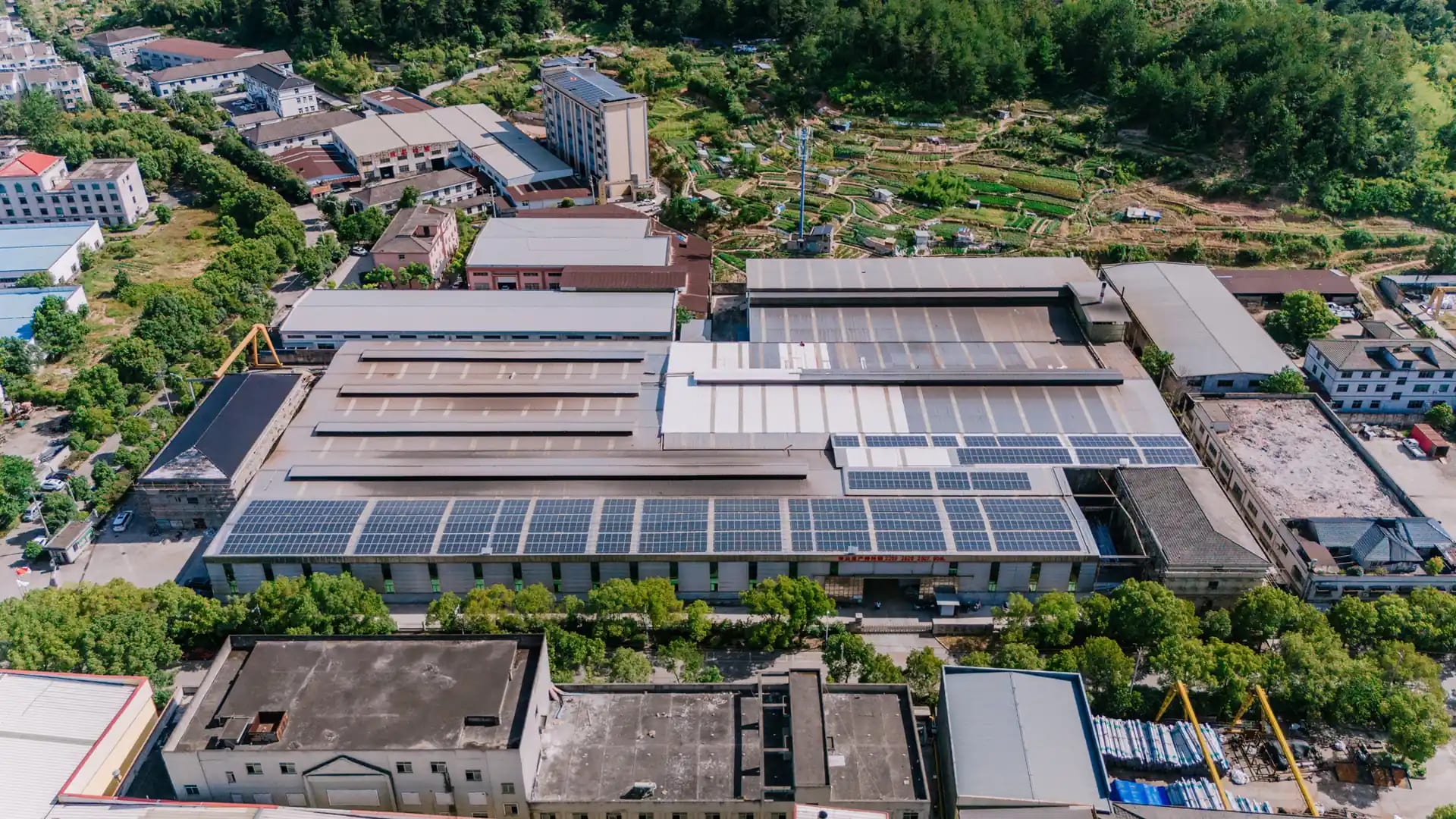
Pipe for this grade is drawn and finished at 154 Moo.1 Map Phai, Ban Bueng, Chonburi 20170, Thailand. Pricing, order acknowledgement and the document pack are all produced at 89/18 Moo.15 Enterprize Park, Bangna-Trad Road, Bang Kaeo, Bang Phli, Samut Prakan 10540, Thailand. Domestic orders leave the mill direct, and export consignments reach Singapore, Malaysia, Vietnam, Indonesia, the Philippines and India.
It proves the piece in your hand is sound, rather than a sample standing in for it. ASTM B622 sets the pressure at 1000 psi (6.9 MPa) and keeps it on the length for five seconds at the least, and the outcome goes on the certificate for the heat.
It is rejected and never enters the lot offered to you. Because the pressure is applied to each piece rather than to a sample, a leak removes that one length only; the tension result for the lot and the rest of the pieces stand.
Yes. A pressure above 1000 psi (6.9 MPa) may be agreed between purchaser and manufacturer, or applied at the manufacturer's option. Write the figure into the purchase order and the quotation confirms it against the sizes you have listed.
Because the composition is built for reducing acid. ASTM B622 holds chromium to 1.0% maximum in UNS N10665 and sets molybdenum at 26.0 to 30.0%, which is what suits hydrochloric acid across its concentration range. Keep the circuit clear of ferric and cupric salts, which turn the acid oxidizing.
Both are nickel-molybdenum alloys for reducing acid, and ASTM B622 gives UNS N10665 and UNS N10675 the same 760 MPa tensile and 350 MPa yield minimums. B3 differs in composition, with chromium of 1.0 to 3.0% and a specified nickel minimum, which changes how it behaves through fabrication heat.
They are the floor the wall calculation works from. ASTM B622 sets 760 MPa minimum tensile and 350 MPa minimum yield at room temperature, and your design code turns them into an allowable stress. Give us the schedule the calculation calls for and we confirm it against the 1 to 65 mm wall range.
From 6 to 457 mm outside diameter, at walls between 1 and 65 mm, in lengths reaching 18 m or cut to the figure you give. Nominal size with a schedule, and outside diameter with a wall, are both workable ways to write an item.
Three things: the analysis of the heat set beside the ASTM B622 composition limits, the tension figures standing for the lot, and confirmation that each length passed its pressure test. N10665 is the designation printed, and 2.4617 is added as a cross-reference where a drawing uses the European number.
Request a Quote for Alloy B2 Seamless Pipes
or email sales@thaida.co.th