
Pickling Lines in Metal Processing
Acid pickling lines in steel plants circulate hot, aggressive baths through headers and drops, and pipe in this alloy holds up to the constant immersion and splash exposure that duty involves.
ASTM B622 / ASME SB-622 / UNS N10276 / W.Nr. 2.4819
Thaida Stainless Steel Manufacturing (Thailand) Co., Ltd. makes ASTM B622 Alloy C276 seamless pipes at its Ban Bueng plant in Chonburi, Thailand, for pickling lines, scrubber circuits and chlorine-bearing process headers. The alloy is identified as UNS N10276 and cross-referenced to W.Nr. 2.4819, and within the Hastelloy Seamless Pipes we manufacture it is the reference grade for mixed-acid and chloride duty. Inquiries and order documents are handled at the Bang Phli, Samut Prakan office.
Alloy C276 seamless pipeUNS N10276 / W.Nr. 2.4819
EN 10204 3.1 certificate / 3.2 on request
A line list can be priced straight off the envelope below, whether it calls out a nominal size with a schedule or an outside diameter and wall taken from a drawing.

ASTM B622, issued by ASME as SB-622, is the Standard Specification for Seamless Nickel and Nickel-Cobalt Alloy Pipe and Tube. It fixes the composition limits, the room-temperature strength minimums, the solution annealed and descaled delivery condition and the pressure or electric test each length has to pass. The specification carries no grade names: it identifies this material as UNS N10276, which is why that number, rather than a commercial name, belongs on the purchase order. Dimensional limits and test methods reach the order through the general requirements ASTM B622 invokes. Ordered on a diameter and a wall instead of on a schedule, the same alloy becomes our Alloy C276 seamless tubes.
Chemistry is tested once per lot, which is one heat, and one tension test is taken per lot. Every length is then proved by a hydrostatic test or by a non-destructive electric test before release, and the results are issued on the EN 10204 3.1 (3.2 on request) certificate for each ASME SB-622 C276 seamless pipe order. Third-party inspection by an independent agency is arranged when the order asks for it.
Nickel is the remainder in a seamless alloy 2.4819 pipe, with molybdenum and chromium as the two deciding additions and tungsten and iron behind them.
Molybdenum carries the alloy through reducing acids, chromium handles oxidizing and chlorine-bearing streams, and tungsten adds to pitting and crevice resistance where chlorides concentrate. Carbon held to 0.010% and silicon to 0.08% keep chromium carbide out of the grain boundaries while a spool is being welded. Where a stream sits at the strongly oxidizing end, Alloy C22 seamless pipes carry 20.0 to 22.5% chromium against the 14.5 to 16.5% in this grade.
ASTM B622 limits for UNS N10276, reported heat by heat:
UNS N10276C276
| Element | ASTM B622 Limit for UNS N10276 (%) |
|---|---|
| Ni (Nickel) | Remainder |
| Mo (Molybdenum) | 15.0 to 17.0 |
| Cr (Chromium) | 14.5 to 16.5 |
| Fe (Iron) | 4.0 to 7.0 |
| W (Tungsten) | 3.0 to 4.5 |
| Co (Cobalt) | 2.5 max |
| Mn (Manganese) | 1.0 max |
| V (Vanadium) | 0.35 max |
| Si (Silicon) | 0.08 max |
| P (Phosphorus) | 0.04 max |
| S (Sulfur) | 0.03 max |
| C (Carbon) | 0.010 max |
A single tension test per lot establishes the room-temperature minimums below, and ASTM B622 applies them to this alloy in pipe and in tube form alike.
| Property | Minimum per ASTM B622 |
|---|---|
| Tensile Strength | 690 MPa (100 ksi) |
| Yield Strength, 0.2% offset | 283 MPa (41 ksi) |
| Elongation in 2 in. (50.8 mm) or 4D | 40% |
Those three figures are where a wall-thickness calculation starts; the measured result for your own lot is printed on the certificate that travels with the consignment.
Alloy C276 is catalogued under several numbering systems. Only the UNS number comes from the ASTM specification; the European, German, Chinese and Japanese entries below are cross-references for drawings written that way, and they carry no conformity claim to those standards.
N10276 is the number we mark and certify. W.Nr. 2.4819 and DIN 2.4819 name the same alloy in European numbering, so a drawing written to either one is quoted and supplied as UNS N10276 material.
Pipe in this family is ordered as a nominal size with a schedule, and the schedule decides the wall. Across an outside diameter of 6 to 457 mm, walls of 1 to 65 mm and cut lengths reaching 18 m, we also work to a drawing dimension where a line calls for one.
ASTM B622 lists the walls below as the schedules regularly available from nominal size 1/4 in. to 3 in., and publishes them for information rather than as a requirement. Outside diameter is given in both units and wall thickness in millimeters. The Schedule 80 wall at nominal size 1/4 in. is not tabulated.
| Nominal Pipe Size (in) | OD (in) | OD (mm) | Schedule 10 Wall (mm) | Schedule 40 Wall (mm) | Schedule 80 Wall (mm) |
|---|---|---|---|---|---|
| 1/4 | 0.540 | 13.72 | 1.65 | 2.24 | |
| 3/8 | 0.675 | 17.14 | 1.65 | 2.31 | 3.20 |
| 1/2 | 0.840 | 21.34 | 2.11 | 2.77 | 3.73 |
| 3/4 | 1.050 | 26.67 | 2.11 | 2.87 | 3.91 |
| 1 | 1.315 | 33.40 | 2.77 | 3.38 | 4.55 |
| 1 1/4 | 1.660 | 42.16 | 2.77 | 3.56 | 4.85 |
| 1 1/2 | 1.900 | 48.26 | 2.77 | 3.68 | 5.08 |
| 2 | 2.375 | 60.32 | 2.77 | 3.91 | 5.54 |
| 2 1/2 | 2.875 | 73.02 | 3.05 | 5.16 | 7.04 |
| 3 | 3.500 | 88.90 | 3.05 | 5.49 | 7.62 |
Swipe sideways to see the full table.
Above nominal size 3 in. the wall is stated directly in millimeters on the order, up to the 65 mm ceiling in the production range.
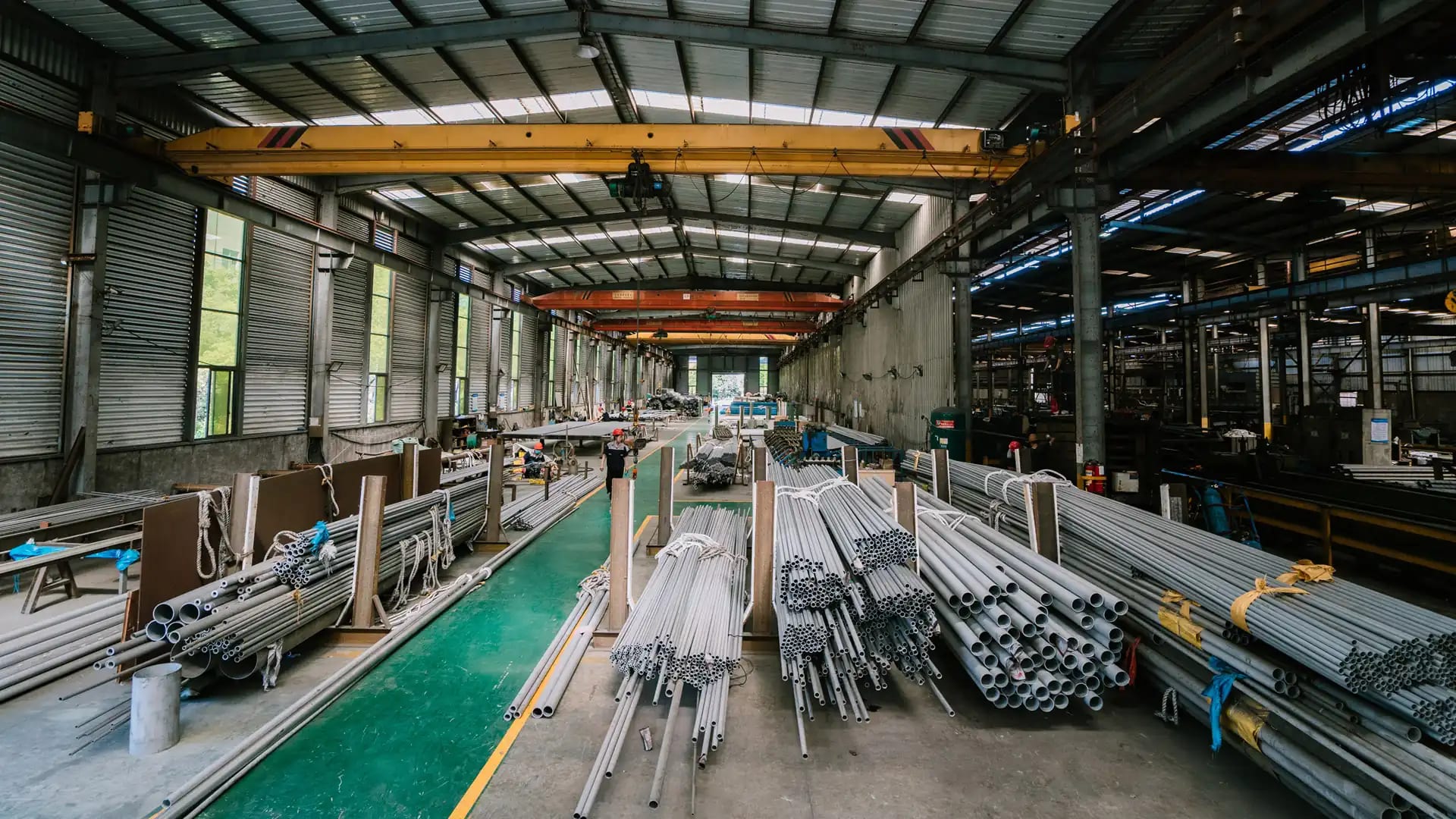
Four entries make an item quotable: nominal pipe size, schedule or wall, cut length and quantity. A seamless WNR 2.4819 pipe is handled the same way whichever designation your drawing carries, and the cold-worked permitted variations apply to diameter and wall on every length, with a plus-only band on the wall when minimum wall is specified. Each piece is finished with plain ends, cut and deburred, at any cut length up to 18 m.
Spools, headers and reactor connections are joined by TIG or MIG welding, and an Alloy C-276 seamless pipe assembly normally goes into service as welded, without a post-weld solution anneal. The 0.010% carbon ceiling and the 0.08% silicon limit are the reason: little chromium carbide forms along the grain boundaries, so the heat-affected zone stays close to the parent metal in corrosion resistance. Material arrives solution annealed and descaled, which is the condition fabrication starts from, and where atmosphere-controlled annealing is used the descaling step is unnecessary.
Wet chlorine, hypochlorite, hot contaminated mineral acids and chloride-rich slurries are the streams that put this grade on a piping specification.
Acid pickling lines in steel plants circulate hot, aggressive baths through headers and drops, and pipe in this alloy holds up to the constant immersion and splash exposure that duty involves.

Scrubber assemblies that strip sulfur dioxide from exhaust run acidic slurries high in chlorides, and seamless Alloy C276 pipe takes the absorber, quench and recirculation legs of those circuits.

Pollution control equipment at power stations takes this alloy into stack gas reheaters and damper assemblies, where sulfur-rich exhaust and the acid condensate forming on cooler metal would thin an austenitic line.

Reactors running organic chloride routes and acid catalysts are fed and drained through this alloy, because the reaction fluids thin cheaper piping from the bore outward with no warning at the surface.

Incinerators expose pipe to the toxic, corrosive gas and condensate that combustion produces, a duty UNS N10276 seamless pipe is specified for across quench, duct drain and gas washing circuits.

Chromium and molybdenum together let the grade perform well in flowing seawater, which is why coastal plant and offshore intake, cooling and brine lines are a regular destination for it.

Pharmaceutical transfer lines and pulp mill bleaching sections are secondary duties here: both combine strong disinfectants or chlorine dioxide with the need for a bore that cleans down fully.
Packing
Strapped bundles or wooden cases sized for container loading, with plastic caps over both ends of every length.
Marking
Each length of 19.0 mm (3/4 in.) OD or larger that runs over 914 mm (3 ft) is stenciled with our name, N10276, ASTM B622, its heat number and its nominal size; anything under either threshold carries the same data on the piece itself or on a bundle tag.
Documents
The EN 10204 3.1 (3.2 on request) certificate for the heat, together with the raw material record, the annealing charts and a dimensional and surface measurement report.
Added tests
100% PMI, plus bend, pitting and intergranular corrosion, ultrasonic and eddy current examination, can be written onto the manufacturer test certificate when an order calls for them.
Trade terms
FOB, CIF and CFR, against the port named in your inquiry.
Delivery
Every seamless nickel alloy C276 pipe is released from stock or against a production schedule confirmed with the quotation.
ASTM B622 Alloy C276 seamless pipes sit at an indicative USD 22 to 60 per kg. Nominal size, wall, cut length, order quantity and the testing called for move an item within that band, while the nickel and molybdenum markets move the band itself. The step up from 316L seamless pipes is a service-life decision rather than a specification upgrade, since 316L remains the cheaper line until free chlorides and hot acid reach it. Send the line list and the indication becomes a dated offer.
Indicative only. Send your sizes and specification to Thaida for a firm quotation.
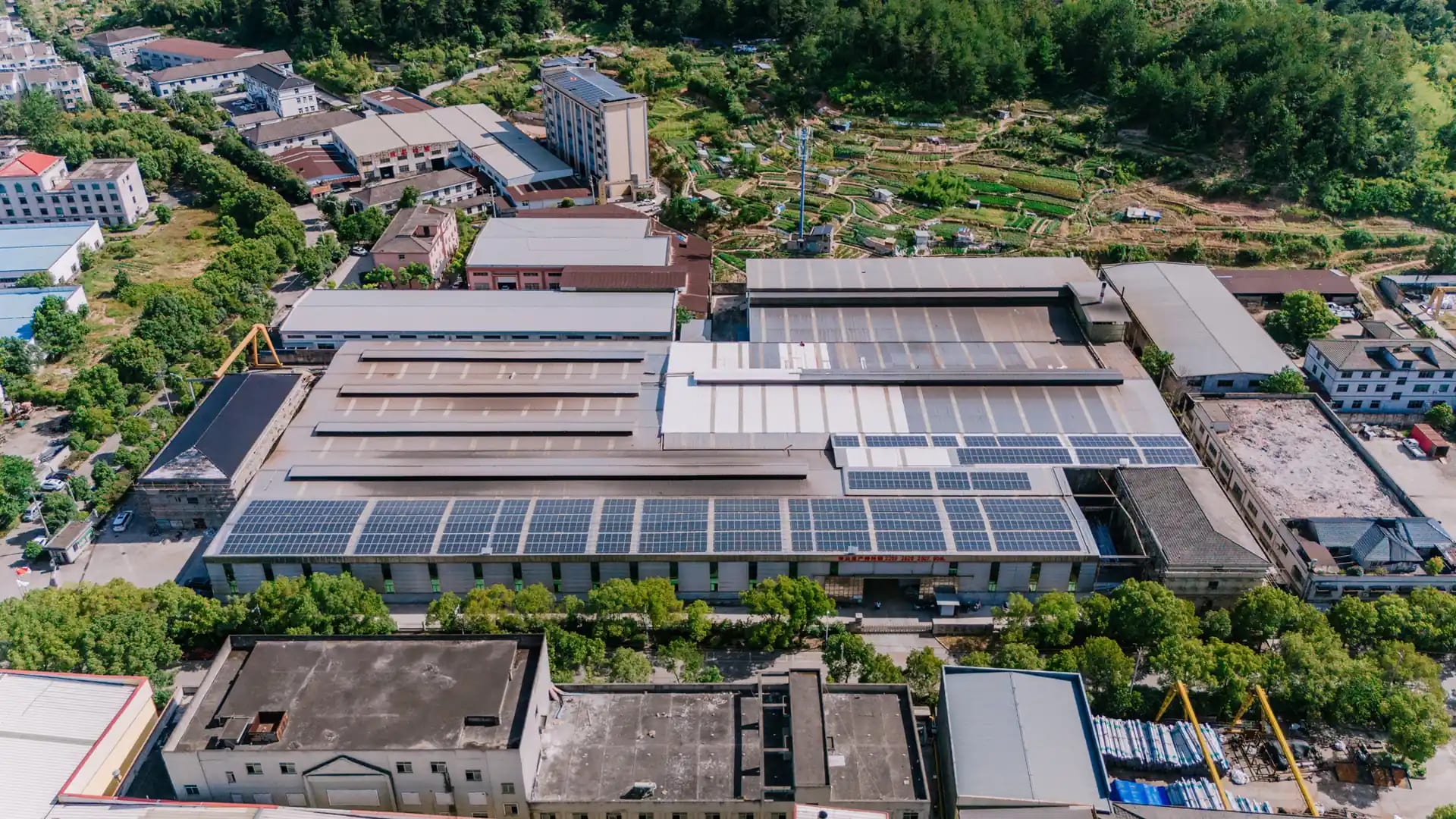
Production runs at 154 Moo.1 Map Phai, Ban Bueng, Chonburi 20170, Thailand, and commercial work is prepared at 89/18 Moo.15 Enterprize Park, Bangna-Trad Road, Bang Kaeo, Bang Phli, Samut Prakan 10540, Thailand. Domestic projects take delivery direct from the works, while export consignments go to Singapore, Malaysia, Vietnam, Indonesia, the Philippines and India.
Your design code sets it: the pressure and corrosion allowance for the line give a required wall, and the lightest schedule that covers it at that nominal size is the one to order. Schedules 10, 40 and 80 are the walls regularly available to nominal size 3 in.; above that, state the wall directly.
Because the specification assigns UNS numbers only. N10276 is the entry carrying the composition and strength limits, while Alloy C276 and C-276 are commercial names for the same material. Put UNS N10276 on the order and the chemistry is fixed beyond argument.
Usually not. The grade is welded with TIG or MIG and most installations go into service as welded, because carbon at 0.010% maximum limits carbide precipitation in the heat-affected zone. Send the weld procedure with your inquiry if the project specification calls for a post-weld solution anneal.
Alloy C22 at the strongly oxidizing end, with chromium at 20.0 to 22.5% against 14.5 to 16.5% here. C276 is the choice for reducing acids and for mixed streams one alloy has to cover. Give us the medium, its concentration and the temperature and we will confirm the grade.
Nickel is the remainder of the composition and molybdenum runs 15.0 to 17.0%, so the raw-material cost follows two of the dearer alloying metals instead of the iron and chromium in a stainless line. The premium buys service life in media that take 316L out of service.
Plain ends, cut and deburred, in the solution annealed and descaled condition that ASTM B622 requires on delivery. Descaling is unnecessary only where atmosphere control during annealing has already left the surface clean. End caps go on before the bundle or case is closed.
The analysis for the heat set beside the ASTM B622 limits for UNS N10276, the lot tension result, and confirmation that every length passed a hydrostatic or non-destructive electric test. It is issued as an EN 10204 3.1 (3.2 on request) certificate, with inspection reports added when the order asks for them.
Request a Quote for Alloy C276 Seamless Pipes
or email sales@thaida.co.th