Get a Quote
Stainless Steel Boiler Tubes Manufacturer in Thailand

ASTM A213 / ASME SA-213 / ASTM A1016 / EN 10204 3.1

Stainless Steel Boiler Tubes Manufacturer in Thailand

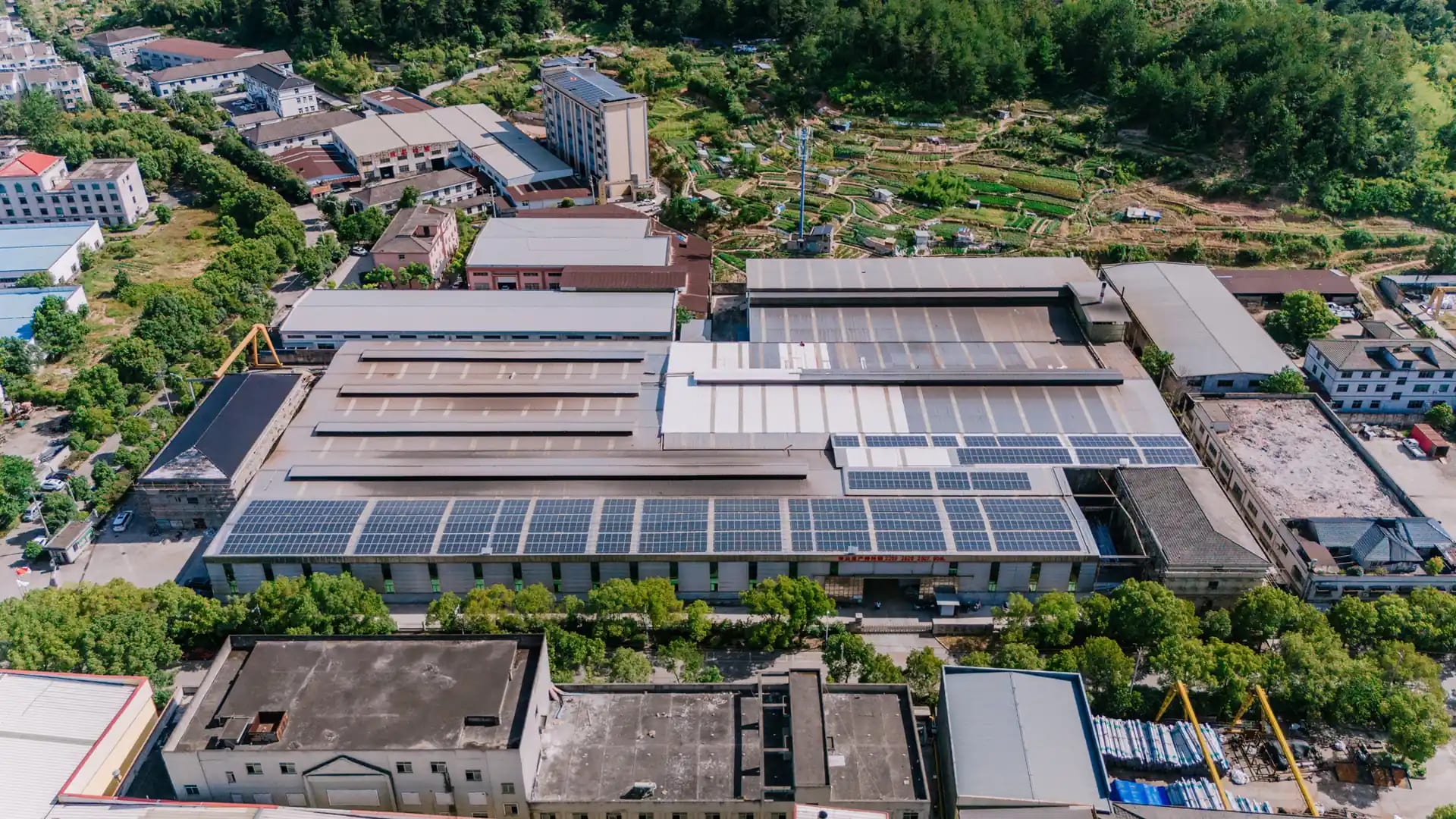
At our Ban Bueng, Chonburi plant, Thaida Stainless Steel Manufacturing (Thailand) Co., Ltd. produces stainless steel boiler tubes to ASTM A213 / ASME SA-213 for superheater, reheater, economizer and evaporator positions. Quotations, drawings and certificates are handled at our Bang Phli, Samut Prakan office. The range centers on the H grades, such as UNS S32109 boiler tube and WNR 1.4912 boiler tube for creep-loaded superheater sections. Every grade comes from the same pierced-billet production as our stainless steel seamless tubes.

Stainless Steel Boiler TubesASTM A213 / ASME SA-213 / ASTM A1016

  • 6.35 to 257 mmOutside diameter
  • 0.89 to 12.7 mmWall thickness
  • Specific or random lengthsLength
  • 10 gradesTP304 / TP304L / TP316 / TP316L / TP321 / ...

EN 10204 3.1 certificate / 3.2 on request

ASTM A213 Boiler Tube Specifications

Tube size is set by actual outside diameter and wall thickness rather than by schedule. Every stainless steel boiler tube in the table shares one production route and one test regime, so superheater, reheater and economizer lines can sit on a single request.

Standard
ASTM A213 / ASME SA-213, general requirements to ASTM A1016
Grades
  • TP304
  • TP304L
  • TP316
  • TP316L
  • TP321
  • TP321H
  • TP347
  • TP347H
  • TP310S
  • TP310H
Outside Diameter
6.35 to 257 mm
Wall Thickness
0.89 to 12.7 mmminimum wall or average wall
Length
Specific or random lengthsas ordered
Manufacturing Route
  1. Billet heated and rotary pierced
  2. Hot worked
  3. Then cold rolled to size
Heat Treatment
Solution annealedgrain size determined per lot on H grades
Surface
Pickled free of scaleor bright annealed
Ends
Smooth cut endsfree of burrs
Form
Seamlessround, straight lengths
Testing
  • Every tube hydrostatic or nondestructive electric tested
  • Tension, hardness, flattening and flaring tests per lot
Order Options
A213 Supplementary Requirements S2 (stabilizing heat treatment) and S4 (intergranular corrosion test)
Test Certificate
EN 10204 3.13.2 on request
Stainless Steel Boiler Tubes Manufacturer in Thailand

ASTM A213 covers seamless ferritic and austenitic tubes for boilers, superheaters and heat exchangers, and ASME SA-213 is the matching specification for boiler and pressure vessel code work. A213 allows tubes to be hot finished or cold finished, as specified, and requires every austenitic tube to be delivered heat treated. An ASME SA-213 boiler tube also follows the general requirements of ASTM A1016 for tolerances, test methods and marking.

Testing starts with every single tube: each ASTM A213 boiler tube passes a hydrostatic test or a nondestructive electric examination by eddy current or ultrasonic method, and we select the method unless your order fixes it. Lot testing comes on top, with a product analysis of each heat, tension and hardness checks, and flattening and flaring on specimens cut from both ends of two different sample tubes. The EN 10204 3.1 (3.2 on request) certificate carries every result, and third-party inspection is available on request.

H Grades for Superheaters and Reheaters

Superheater and reheater sections carry steam above its saturation temperature under sustained stress, the service in which creep and stress-rupture properties matter. ASTM A213 therefore gives TP310H, TP321H and TP347H requirements of their own: carbon held within a raised range, a grain size determination on every lot and, for the two stabilized grades, a higher minimum solution treatment temperature. The standard states that these requirements provide higher creep-rupture strength than similar grades reach without them. TP321H and TP347H, like TP321 and TP347, can also be ordered with Supplementary Requirement S2, a stabilizing heat treatment.

Production Route, Bending and Shop Fabrication

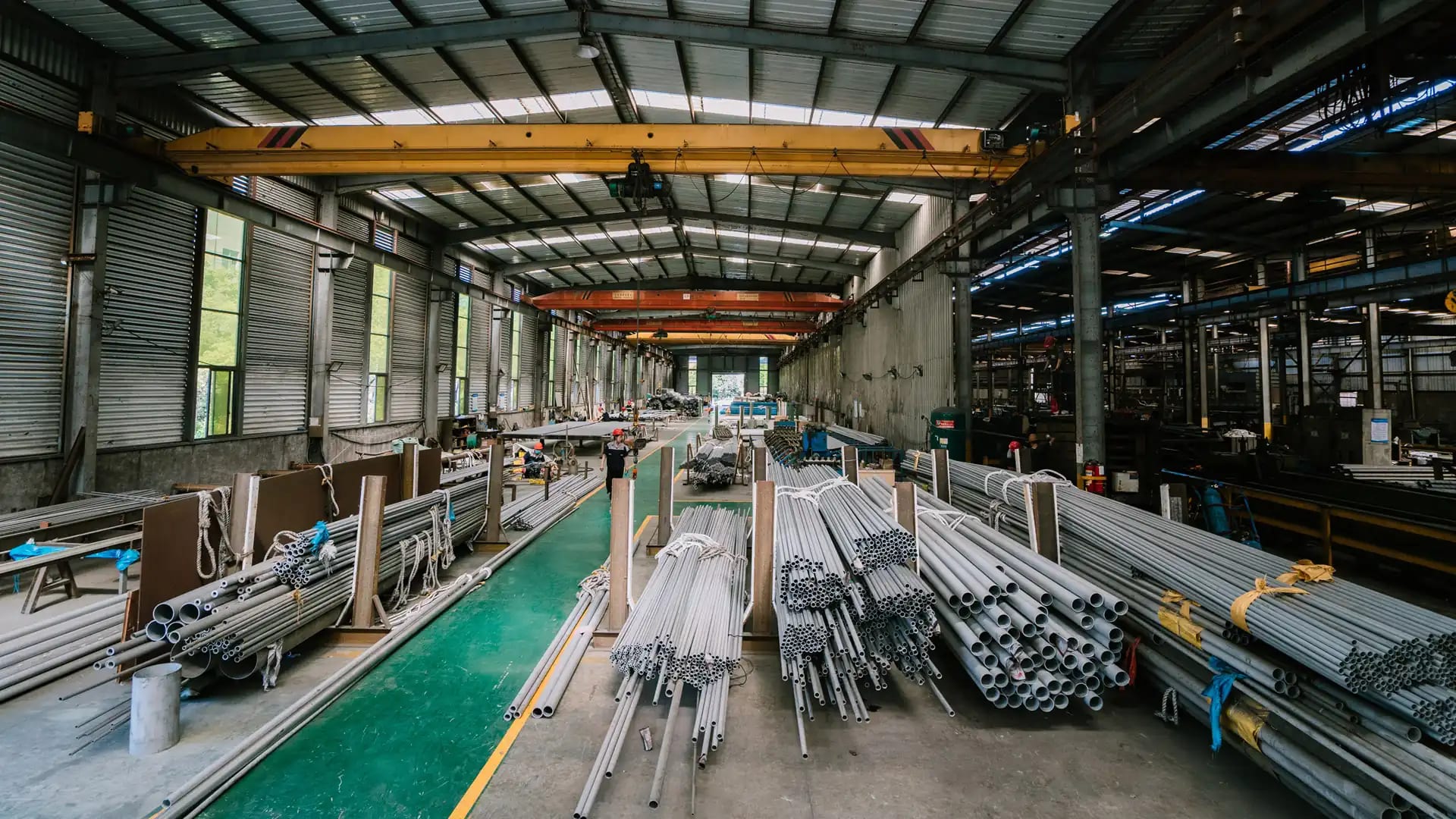
Production starts with a billet that is heated and rotary pierced into a hollow shell, hot worked and then cold rolled to the ordered OD and wall. Solution annealing follows, then pickling and straightening, after which each tube goes to testing; bright annealing replaces pickling where a scale-free surface is wanted. A stainless steel superheater tube must then survive the boiler shop, and A213 requires superheater material, properly manipulated, to stand the forging, welding and bending of its application without developing defects. The OD, minimum wall and length tolerances of ASTM A1016 apply to the straight tube before bending, so every bend starts from tube already accepted on size.

SS Boiler Tube Grades

Choosing a boiler tube stainless steel grade starts with the position in the boiler and what the water or steam carries. The five grades below cover general heating surfaces, chloride exposure and creep-loaded superheater and reheater duty, and each links to its own page with composition and size data.

TP304 for General Boiler Duty

TP304 is the basic chromium-nickel grade of the range, offered for good oxidation resistance with the weldability and general corrosion resistance of 304. UNS line lists call it UNS S30400 boiler tube and EN-based drawings WNR 1.4301 boiler tube. Data sit under stainless steel 304 seamless tubes, and TP304L is its low-carbon partner.

TP316L for Chloride Exposure

Molybdenum gives TP316L its resistance to pitting and crevice corrosion, and its low carbon limits carbide precipitation at grain boundaries after welding. That combination suits marine boiler systems and chloride-bearing water. Composition, strength and size data for this grade are collected under stainless steel 316L seamless tubes.

TP321H for Superheaters

TP321H combines titanium stabilization with the H-grade requirements of A213, which suits it to superheater and reheater sections that carry load at temperature. Boiler designs list it as ASTM A213 TP321H boiler tube or as UNS S32109 boiler tube. Its European cross-reference is WNR 1.4878 boiler tube, detailed under stainless steel 321H seamless tubes.

TP347H for Radiant Superheaters

Niobium stabilizes TP347H, and its niobium addition adds creep resistance to the raised carbon range and grain size control of an H grade, which helps radiant superheater coils resist sagging. Specify ASME SA-213 TP347H boiler tube or UNS S34709 boiler tube. European lists use WNR 1.4912 boiler tube, with data under 347H seamless tubes.

TP310H for Sustained Heat and Load

TP310H is the H grade of the 310 family: high chromium and nickel with a controlled carbon range and grain coarseness that raise creep-rupture strength above TP310S. SS 310H seamless tube serves superheater and reheater sections under sustained load. Higher carbon raises its sensitization risk at welds, so intergranular corrosion duty needs another grade.

Boiler, Marine and Process Applications

Steam generation is the core duty, and the same grades also serve heat recovery, process heat transfer and marine service.

Superheater and Reheater Banks duty for Stainless Steel Boiler Tubes

Superheater and Reheater Banks

Superheaters raise saturated steam above its saturation point, and reheaters lift steam temperature again before it enters the low-pressure turbine; these are the positions where TP321H, TP347H and TP310H carry sustained load.

Economizers duty for Stainless Steel Boiler Tubes

Economizers

Economizer banks preheat boiler feedwater with residual heat from the exhaust gases before those gases leave the boiler, recovering flue-gas heat and improving the thermal efficiency of the whole unit.

Evaporator and Watertube Circuits duty for Stainless Steel Boiler Tubes

Evaporator and Watertube Circuits

Evaporator sections convert water into steam by absorbing combustion heat. In watertube boilers the water flows inside each tube while hot combustion gases pass over the outside surface.

Chemical Process Plants duty for Stainless Steel Boiler Tubes

Chemical Process Plants

Chemical plants use boiler grades in tube bundles for process heat transfer and in condensers handling corrosive fluids, while dedicated exchanger bundles are covered by our stainless steel heat exchanger tubes.

Marine Boiler Systems duty for Stainless Steel Boiler Tubes

Marine Boiler Systems

Marine boiler systems, seawater-cooled condensers and shipboard heat exchange circuits use SS boiler tube, with each grade matched to the chloride level of the cooling seawater.

Offshore Oil and Gas and Fluid Transport duty for Stainless Steel Boiler Tubes

Offshore Oil and Gas and Fluid Transport

Offshore oil and gas platforms run heat exchanger bundles in these grades, and plants carry high-temperature fluids through them where resistance to scaling and corrosion keeps heat transfer steady.

Shipping and Packaging

Bundling

Tubes grouped by grade, size and heat-treatment lot, then bundled in woven PE fabric or packed in plywood cases for seaworthy export.

Identification

Every tube marked to A213, with your item or position codes added on request.

Bore protection

Plastic caps close both ends of each tube to keep the bore clean in transit.

Lengths

Tubes cut to the specific length ordered or supplied in random lengths, with ends deburred.

Commercial terms

FOB, CIF or CFR, agreed in the order confirmation.

Delivery

By truck to sites in Thailand and by export container to Singapore, Malaysia, Vietnam, Indonesia, the Philippines and India.

Order Stainless Steel Boiler Tubes from Thaida

Every stainless steel boiler tube is pierced, finished, solution annealed and tested at 154 Moo.1 Map Phai, Ban Bueng, Chonburi 20170, Thailand. Our office at 89/18 Moo.15 Enterprize Park, Bangna-Trad Road, Bang Kaeo, Bang Phli, Samut Prakan 10540, Thailand, reviews boiler drawings, prepares quotations and issues the certificates. A single request can combine UNS S30400 boiler tube with H-grade superheater lines, and each quotation states the test method, any S2 or S4 requirement and the lot plan for every grade.

Factory
154 Moo.1 Map Phai, Ban Bueng,
Chonburi 20170, Thailand
Office
89/18 Moo.15 Enterprize Park, Bangna-Trad Road,
Bang Kaeo, Bang Phli, Samut Prakan 10540, Thailand
Exporting to
  • Singapore
  • Malaysia
  • Vietnam
  • Indonesia
  • Philippines
  • India

Frequently Asked Questions

Can TP321 or TP347 replace the H grades in a superheater?

Only where the boiler design names them. The non-H grades share the stabilizing element but not the raised carbon range and grain size requirement that A213 ties to higher creep-rupture strength, so a design built on H-grade strength needs TP321H or TP347H. Both versions are made in the same sizes and can take the S2 option.

How is grain size verified on an H-grade boiler order?

On one end of one finished tube from each lot, and that result stands for every tube in the lot, since a lot shares one heat, one size and the same heat treatment. The reading is reported on the EN 10204 3.1 (3.2 on request) certificate for TP310H, TP321H and TP347H; the non-H grades carry no grain size requirement.

When should the S2 stabilizing heat treatment be added?

Add S2 when stabilized grades must keep their resistance to intergranular attack after sensitizing exposure. A high solution temperature can impair that resistance, so S2 adds a lower-temperature stabilizing treatment agreed with you. Order it for TP321, TP347 or their H versions, such as UNS S34709 boiler tube or WNR 1.4878 boiler tube.

Can the tubes be expanded and beaded into boiler drums and headers?

Yes. Every ASME SA-213 boiler tube must stand expanding and beading in a boiler or tube sheet without cracks or flaws, and the flattening and flaring tests on each lot check that ductility before shipment. OD and minimum wall tolerances apply to the tube before expanding, so size the tube holes and expansion allowance on the ordered dimensions.

For a superheater, how do I choose between TP347H and TP321H?

Follow the grade in the boiler design first, because both are A213 H grades with the same grain size check, lot marking and S2 option. Where the choice is open, an ASME SA-213 TP347H boiler tube suits radiant superheater coils that must not sag, and an ASTM A213 TP321H boiler tube suits superheater and reheater sections.

What does the marking on an H-grade boiler tube tell the inspector?

It identifies the manufacturer, specification, grade, finishing condition and whether the wall is minimum or average. For its grain size grades, A213 adds the heat number and heat-treatment lot, so the inspector can match each tube to the lot whose grain size and tension results appear on the certificate.

What OD, wall and length can be ordered for boiler service?

OD runs from 6.35 to 257 mm and wall from 0.89 to 12.7 mm, from WNR 1.4301 boiler tube to the H grades. State minimum or average wall, since A213 treats wall as minimum unless average is specified, and give a specific cut length or random lengths per item. OD tolerances are confirmed per size with the quotation.