
Shell and Tube Exchangers in Nitration Service
Exchanger tubes on nitration duty see concentrated nitric acid on one side and process heat on the other, and the chromium range in this grade is what holds the passive film there.
ASTM B622 / ASME SB-622 / UNS N06022 / W.Nr. 2.4602
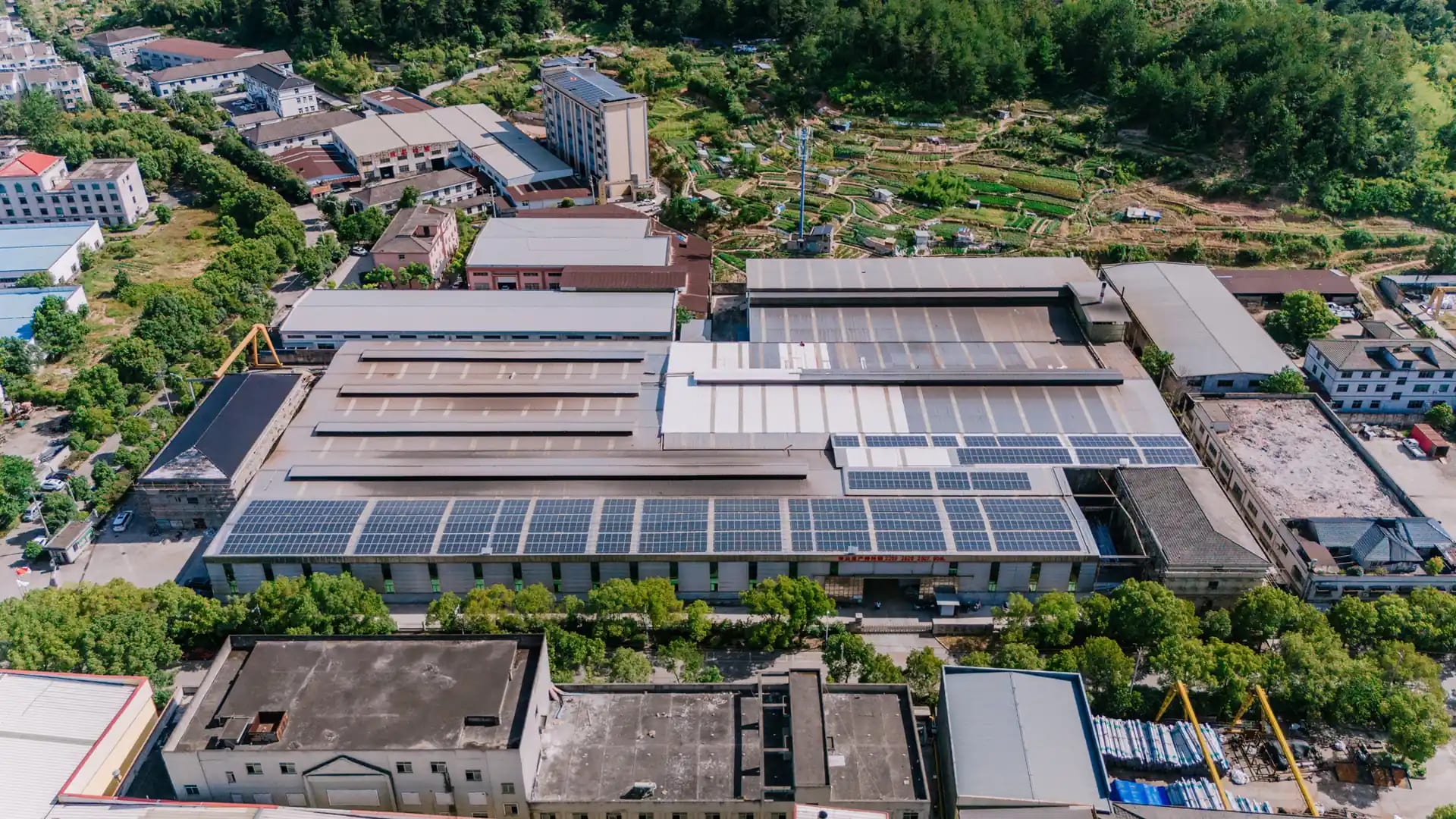
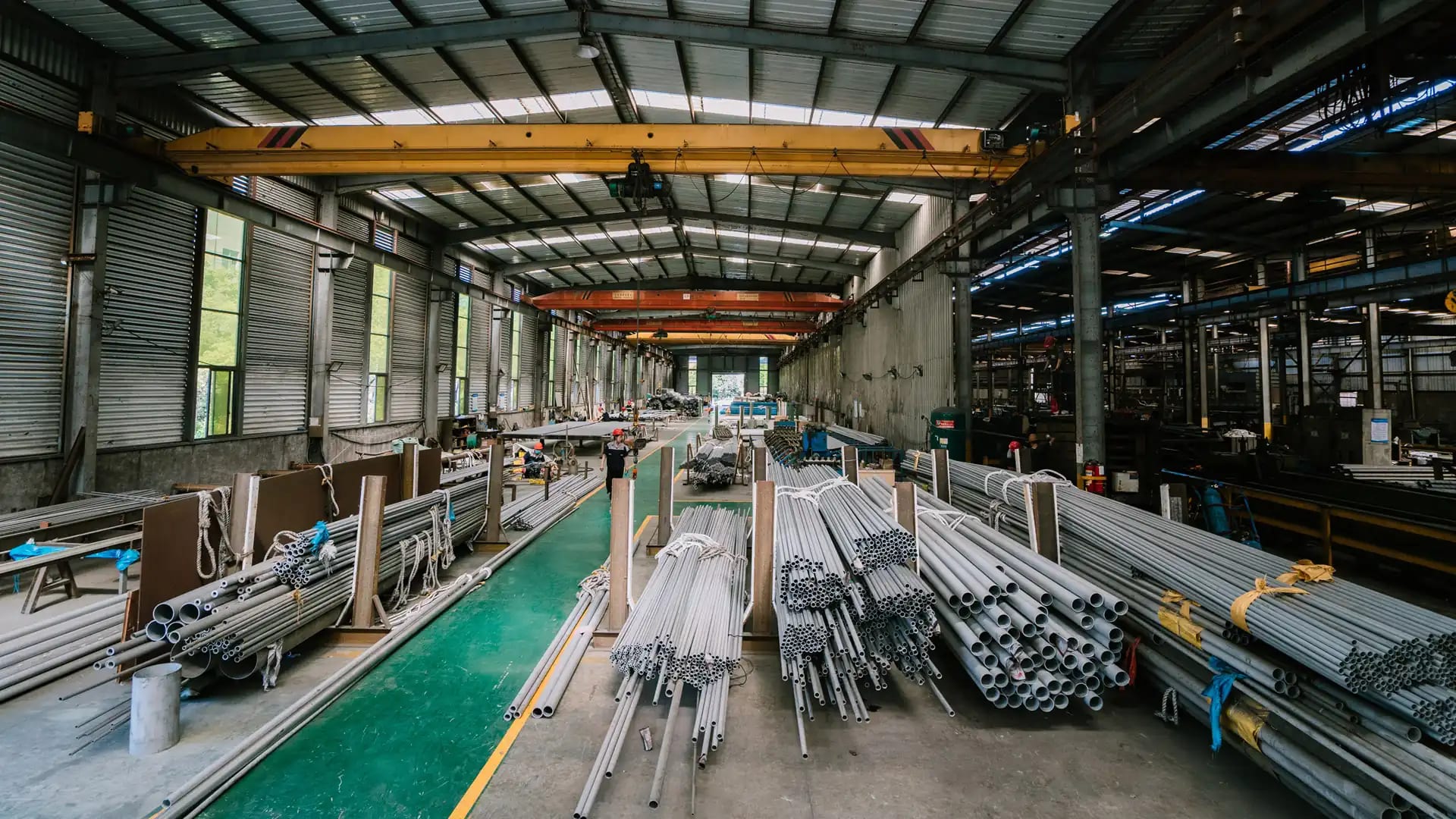
Thaida Stainless Steel Manufacturing (Thailand) Co., Ltd. draws ASTM B622 Alloy C22 seamless tubes to finished size at Ban Bueng, Chonburi, Thailand, and quotes them out of its Bang Phli, Samut Prakan office, for condenser and exchanger bundles put into mixed-acid and flue gas duty. The alloy is identified as UNS N06022, and as W.Nr. 2.4602 where a European drawing governs. These sizes belong with our Hastelloy Seamless Tubes.
Alloy C22 seamless tubeUNS N06022 / W.Nr. 2.4602
EN 10204 3.1 certificate / 3.2 on request
A tube order in this alloy is written as an outside diameter, a wall on either a minimum or an average basis, and a cut length. The table fixes the envelope each of those three entries has to fall inside, together with the condition and tests that follow the material.

ASTM B622, Standard Specification for Seamless Nickel and Nickel-Cobalt Alloy Pipe and Tube, is the single product standard behind this range, and ASME carries it as SB-622 for Boiler and Pressure Vessel Code work. The alloy list in it runs on UNS numbers, and the standard pins no grade name to any of them, so Alloy C22 is a commercial name that lives on drawings and requisitions. Diameter and wall are the ordering basis on this form, while Alloy C22 seamless pipes are called off by nominal size and schedule instead.
Chemistry is analyzed once per lot and one tension result represents that lot; should the specimen miss a requirement, two more are drawn from different pieces and both have to pass. Every finished UNS N06022 seamless tube is then put under internal hydrostatic pressure, or examined by a nondestructive electric method in its place, at our option unless the order names one of the two. Results reach you on an EN 10204 3.1 (3.2 on request) certificate, together with the raw material record, a 100% PMI report and heat treatment charts, with size and surface roughness measured and reported. Impact, bend, intergranular and pitting corrosion, grain size, eddy current and ultrasonic figures go onto the manufacturer test certificate where a project specification calls for them. An independent laboratory report, or third-party inspection at the works, is set up on request.
Chromium between 20.0 and 22.5% is what sets this grade apart inside the C family, and it is why a seamless nickel alloy C22 tube keeps a passive film in oxidizing streams, against a 14.5 to 16.5% chromium range on Alloy C276. Molybdenum at 12.5 to 14.5% answers the reducing side of the same service, tungsten at 2.5 to 3.5% works against crevice attack under chloride deposits, and carbon capped at 0.015% keeps carbide precipitation down in a weld heat-affected zone. Every heat is reported against the ASTM B622 limits below.
UNS N06022C22
| Element | Limit per ASTM B622 (%) |
|---|---|
| Ni (Nickel) | Remainder |
| Cr (Chromium) | 20.0 to 22.5 |
| Mo (Molybdenum) | 12.5 to 14.5 |
| Fe (Iron) | 2.0 to 6.0 |
| W (Tungsten) | 2.5 to 3.5 |
| Co (Cobalt) | 2.5 max |
| Mn (Manganese) | 0.50 max |
| V (Vanadium) | 0.35 max |
| Si (Silicon) | 0.08 max |
| P (Phosphorus) | 0.02 max |
| S (Sulfur) | 0.02 max |
| C (Carbon) | 0.015 max |
No nickel minimum is printed for this alloy; what the other elements leave is nickel. Titanium, copper and niobium have no limit set against them. A goods-in check works down that column heat by heat before tube is released into a bundle build.
Three room-temperature minimums apply, and they come from a table in ASTM B622 that treats pipe and tube in one row, so these are also the figures a spool of the same alloy is held to. What separates them from the rest of the family is the 45% elongation floor, since both Alloy C276 and Alloy C4 stop at 40%: an ASME SB-622 C22 seamless tube therefore carries more ductility reserve in a thin wall drawn to a close tolerance.
| Property | Value | Unit |
|---|---|---|
| Tensile Strength, min | 690 (100) | MPa (ksi) |
| Yield Strength (0.2% offset), min | 310 (45) | MPa (ksi) |
| Elongation in 2 in. (50.8 mm) or 4D, min | 45 | % |
Yield is the second gap: 310 MPa here, where Alloy C276 is set at 283 MPa and Alloy C4 at 276 MPa, all three lifted from the same ASTM B622 table. On a thin exchanger wall the elongation reserve is usually what settles a bundle specification, because a tube has to be drawn, cut and set into a tubesheet before it ever carries a load.
Alloy C22 turns up under several numbering systems on incoming drawings. Only the UNS number comes from the product standard; the rest are cross-references for matching a callout, with no conformity claim attached to any EN, DIN or GB standard.
The number we mark on the material and print on the certificate is N06022. A requisition raised against 2.4602, DIN 2.4602 or NS3308 is describing the same nickel-chromium-molybdenum-tungsten analysis, and we reconcile it at order entry rather than swapping one national standard in for another.
We draw a seamless WNR 2.4602 tube between 6 mm and 457 mm on diameter and 1 mm and 65 mm on wall, in single lengths reaching 22 m. Which tolerance set a piece answers to follows the condition on the order: our standard route finishes cold, and material left at size hot is held to the other band.
Material brought to final size hot, with no cold draw after it, is held to the limits ASTM B622 applies to the hot-finished condition.
| Nominal OD (D) mm | OD or ID Tolerance (mm) | Wall Tolerance, Nominal Wall | Wall Tolerance, Minimum Wall |
|---|---|---|---|
| 19 ≤ D ≤ 38 | +0.4 / -0.8 | ±12.5% | +28.5% / 0 |
| 38 < D ≤ 102 | ±0.8 | ±12.5% | +28.5% / 0 |
| 102 < D ≤ 235 | +1.6 / -0.8 | ±12.5% | +28.5% / 0 |
Swipe sideways to see the full table.
Three consequences follow for a bundle built from hot-finished material. The band opens only at 19 mm and closes at 235 mm, so a small-bore condenser size, or any diameter above 235 mm, has to be quoted cold drawn instead. The diameter limit is written against outside or inside diameter and leans to the minus side at the bottom of the range, where a 38 mm nominal tube may finish 0.8 mm under size but only 0.4 mm over, which the tubesheet hole clearance and the ligament between holes have to absorb rather than the drawing nominal. And wall is symmetric at 12.5% either way on nominal wall, so a bundle bought on that basis can arrive with 12.5% less metal than the thermal calculation assumed; ordering minimum wall closes the minus side off, at the cost of up to 28.5% over and a heavier tube with a smaller bore.
On tube of 127 mm outside diameter and under, the hot-finished figures apply reading by reading, ovality included. Past that size it is the mean of the largest and smallest diameter readings that the table governs, while one reading on its own may run to double the tabulated figure.
Most of what leaves our draw benches in this alloy is finished cold, and the limits tighten accordingly. Below are the ASTM B622 cold-worked bands covering the diameters an exchanger or condenser bundle is normally built from; every seamless alloy 2.4602 tube we release is measured against the band its nominal diameter falls in.
| Nominal OD (D) mm | OD Tolerance (mm) | Wall Tolerance, Nominal Wall | Wall Tolerance, Minimum Wall |
|---|---|---|---|
| Up to 10 | ±0.10 | ±15% | +30% / 0 |
| Over 10, under 16 | ±0.13 | ±15% | +30% / 0 |
| 16 to 38 | ±0.19 | ±10% | +22% / 0 |
| Over 38 to 76 | ±0.25 | ±10% | +22% / 0 |
| Over 76 to 114 | ±0.38 | ±10% | +22% / 0 |
Swipe sideways to see the full table.
A 25 mm seamless 2.4602 tube therefore sits in the 16 to 38 mm band at ±0.19 mm on diameter, against +0.4 / -0.8 mm for the same nominal size finished hot. That gap is the practical reason a bundle specification names the cold-drawn condition: the hole pattern is drilled to a tolerance the tube itself has to live inside. Above 114 mm the diameter limit opens in steps to ±0.51 mm, ±0.64 mm and ±0.79 mm out to 219 mm, on nominal wall of ±12.5% and minimum wall of +28% / 0, then widens to +1.57 / -0.79 mm as far as 356 mm and +3.18 / -0.79 mm as far as 610 mm, on nominal wall of +15% / -12.5% and minimum wall of +30% / 0, and we confirm the applicable band with the quotation.
The split between the two grades is chromium. We hold 20.0 to 22.5% here, where Alloy C276 seamless tubes are held to 14.5 to 16.5%, and that gap is what carries this alloy through chlorine dioxide, nitric acid, chromic acid and hypochlorite bleach liquor. Reducing acid service stays C276 territory.
Alloy B2 seamless tubes are the stronger pair on paper, with a 760 MPa tensile and 350 MPa yield minimum against 690 and 310 for this grade, which tells on a thin reboiler wall. Chromium in Alloy B2 is capped at 1.0% maximum, though, so it belongs on hydrochloric and sulfuric acid duty that stays reducing, and a circuit that turns oxidizing in service comes back to C22.
With carbon held to a 0.015% ceiling, too little remains to build carbide along the grain boundaries as the heat-affected zone of a weld cools, so the risk of intergranular corrosion stays down in a seamless Alloy C22 tube assembly left as welded. Tube leaves us solution annealed and descaled, and where atmosphere control is used in annealing, descaling is unnecessary. Both of those are conditions the standard sets, not a temperature schedule, which stays a mill matter.
Alloy C-22 seamless tube goes into circuits that carry oxidizing and reducing chemistry in turn, with chloride never leaving the stream.
Exchanger tubes on nitration duty see concentrated nitric acid on one side and process heat on the other, and the chromium range in this grade is what holds the passive film there.

Pulp mills run chlorine dioxide through reactor tubing, bleaching stage lines and the exchangers between them, a duty that opens up pitting in lower-alloyed tube within a single season.

Scrubber liquor carrying ferric chloride attacks condenser tubes and spray header runs at the wet and dry boundary, which is where an ASTM B622 Alloy C22 seamless tube earns its cost.

Thermocouple and gas sensor protection tubes on exhaust and emissions test rigs are drawn small bore in this alloy, where the sheath has to resist acidic condensate rather than carry pressure.

Exhaust runs and waste incineration units on ships combine salt-laden air with acidic combustion products, and tube in this grade is specified for the sections closest to the gas path.

Multipurpose reactor tubing and transfer lines change chemistry between campaigns and absorb nitric acid cleaning between them, and food processing plant specifies the grade for the same reason.
Packing
Nested bundles with plastic end caps, thin-wall and close-tolerance items boxed in wooden cases, every case marked to the purchase order.
Marking
Manufacturer name, UNS N06022, the letters ASTM, the specification number, heat and nominal size, put on by a route that will not contaminate the surface; diameter and length decide whether a piece is marked on its own or on a tag with the bundle.
Documents
An EN 10204 3.1 (3.2 on request) material test certificate carrying the heat analysis, the tension figures for that lot and the pressure or electric test record for each tube.
Terms
FOB, CIF and CFR are all quoted, and the offer names the port the price runs to.
Dispatch
Against a confirmed draw-bench slot, repeated on the order acknowledgement.
Alloy C-22 seamless tube runs indicatively USD 27 to 68 per kg, above the band the same alloy carries in pipe form because tube is drawn to closer diameter and wall limits and in smaller lots. Thin-wall and small-bore bundle items, short runs and orders that call for an independent inspector sit in the upper half; heavier mill-finish lengths sit lower. Nickel, molybdenum and chromium on the pricing date move the whole band. A tube schedule with quantities turns the indication into a dated offer.
Indicative only. Send your sizes and specification to Thaida for a firm quotation.
Tube is drawn at 154 Moo.1 Map Phai, Ban Bueng, Chonburi 20170, Thailand. Quotations, order acknowledgements and shipping documents come out of 89/18 Moo.15 Enterprize Park, Bangna-Trad Road, Bang Kaeo, Bang Phli, Samut Prakan 10540, Thailand. Thai plants are served direct from the works, and consignments leave for Singapore, Malaysia, Vietnam, Indonesia, the Philippines and India.
The hot-finished bands cover 19 mm to 235 mm nominal diameter. A 60 mm tube sits in the middle band at 0.8 mm either way on diameter, with nominal wall at 12.5% either way and minimum wall at +28.5% with nothing under. Outside 19 to 235 mm we quote cold drawn.
Because a bundle is designed around an actual diameter and wall, not a nominal size. Tube is ordered on outside diameter, on a wall taken as either the minimum or the average, and on a length, which is what a tubesheet drilling pattern and a heat transfer calculation both work from. Pipe takes nominal size and schedule instead.
C22 in most bleach plant positions. The swap costs nothing on the drawing: both grades carry the same 690 MPa tensile minimum and the same 6 to 457 mm envelope, so a bundle's tube count, diameter and wall stay as drawn. Send the liquor analysis where a circuit also runs strong reducing acid.
The tolerance moves entirely to the plus side. On cold-drawn tube of 16 to 38 mm diameter, nominal wall is held to 10% either way while minimum wall is +22% with nothing under; hot-finished tube reads 12.5% either way and +28.5% / 0. Minimum wall guarantees the thin point and costs bore.
EN 10204 3.1 (3.2 on request) is how we quote it. Level 3.1 is the default; 3.2 adds an independent inspector's countersignature, which buys validation evidence rather than a different tube, and costs money and lead time. Both report the same heat analysis, lot tension figures and per-tube test result.
6 mm outside diameter on a 1 mm wall. The envelope reaches 457 mm diameter and 65 mm wall, with single lengths to 22 m. Small-bore sensor protection and instrument sizes come from the bottom of that range and are quoted cold finished.
Yes, where the order calls for it. ASTM B622 has the purchaser state on the order whether check-analysis samples are to be furnished, and makes the check analysis itself the purchaser's responsibility. The heat analysis we certify comes from a sample taken during pouring or later processing, so the two are separate exercises.
Request a Quote for Alloy C22 Seamless Tubes
or email sales@thaida.co.th