
Superheater, Reheater and Main Steam Service
Power stations run the grade in boiler superheater and reheater elements and on main steam lines, where every tube-to-header joint is welded on site and then cycles with the unit.
ASTM A213 / ASME SA-213 / UNS S34700 / W.Nr. 1.4550
Thaida Stainless Steel Manufacturing (Thailand) Co., Ltd. finishes ASTM A213 TP347 stainless steel seamless tubes at the Ban Bueng, Chonburi works in Thailand and ships them against boiler, steam line and condenser schedules, with every quotation and certificate written up at our Bang Phli, Samut Prakan office. The grade is UNS S34700, listed in Europe as EN 1.4550 (X6CrNiNb18-10), and it is the niobium-stabilized 18-10 entry in our stainless steel seamless tubes range.
Stainless Steel 347 seamless tubeUNS S34700 / W.Nr. 1.4550
EN 10204 3.1 certificate / 3.2 on request
Each line on your order carries the outside diameter, the wall and the basis that wall is read on, because the condition and the wall basis together decide which permitted variations apply and what goes into the marking.

ASTM A213 is written for seamless boiler, superheater and heat-exchanger tubes in ferritic and austenitic steels, and ASME issues the same text as SA-213 for code work. TP347 sits among its austenitic grades, so a single ASTM A213 TP347 stainless steel seamless tube line item carries its own chemistry, solution treatment, strength limits, test plan, surface and marking with no second specification behind it. A213 treats 127 mm as the largest diameter usually furnished and allows others wherever the rest of its clauses are met, and that allowance is what takes our range to 257 mm. Work drawn up in NPS and schedule sizes belongs with our stainless steel 347 seamless pipes instead.
One billet or one finished tube from each heat goes for a product analysis, so the carbon and niobium printed on your certificate come from the steel that was worked into your order. The lot comes next, meaning tubes of one size out of one heat: tension testing of one tube in a lot of 50 or fewer and of two tubes in a larger lot, hardness on two tubes, then a flattening test on both ends of one finished tube, with the flaring test taken from both ends of a different tube. Hardness is read by Brinell, Vickers or Rockwell from 5.1 mm of wall upward, by Rockwell or Vickers between 1.65 and 5.1 mm, and is left out where the wall is thinner than 1.65 mm. Every individual tube is then proved under hydrostatic pressure or examined by the nondestructive electric method that may replace it, and we choose between them wherever the order leaves that open. The findings travel on an EN 10204 3.1 (3.2 on request) certificate, together with the raw material certificate, PMI coverage of every tube, solution-anneal charts, the recorded diameters, walls and surface roughness readings and, where the order asks for it, an independent laboratory test certificate. Where you ask for it, an independent inspector attends the lot tests.
Niobium is the element that makes the grade, and A213 states it as a ratio instead of a flat figure: no less than ten times the carbon present, no more than 1.10%. Carbon itself is capped at 0.08%, which is what the ratio works against. Limits in weight percent, single figures read as maximums:
UNS S34700347
| Element | TP347 Limit, % |
|---|---|
| C (Carbon) | 0.08 max |
| Mn (Manganese) | 2.00 max |
| P (Phosphorus) | 0.045 max |
| S (Sulfur) | 0.030 max |
| Si (Silicon) | 1.00 max |
| Cr (Chromium) | 17.0 to 20.0 |
| Ni (Nickel) | 9.0 to 13.0 |
| Nb (Niobium) | 10 x C min, 1.10 max |
| Mo, N and Ti (Molybdenum, Nitrogen, Titanium) | No requirement |
A213 records columbium (Cb) as the second accepted name for this element, so a drawing that calls up Cb stabilization is answered by the niobium figures above. Tantalum carries no limit of its own in the tube grade, and neither nitrogen nor molybdenum does, so none of the three is reported against a limit unless your order adds one. Every 347 stainless steel seamless tube we release comes from a heat read against this table and confirmed by the product analysis.
Carbon left dissolved in an austenitic structure will come out as chromium carbide along the grain boundaries once the steel is welded or held hot, and those stripped boundaries are where intergranular attack begins. Niobium reaches the carbon first and forms niobium carbides that stay put at temperature, so the chromium remains dissolved and the boundary keeps its corrosion resistance. That is why a seamless S34700 stainless steel tube is specified for assemblies that cannot be put back through a solution anneal once they are welded up.
Niobium is in the grade for stability rather than for room-temperature strength, so TP347 answers to the same A213 figures as the plain austenitic tube grades. Each lot is tested after solution treatment:
| Requirement | TP347 under ASTM A213 |
|---|---|
| Tensile strength, min | 515 MPa (75 ksi) |
| Yield strength, min | 205 MPa (30 ksi) |
| Elongation on a 50 mm (2 in.) gauge, min | 35% |
| Hardness, Brinell or Vickers, max | 192 HBW or 200 HV |
| Hardness, Rockwell, max | 90 HRB |
Solution treatment is written as a floor of 1040 °C (1900 °F) and not as a window, and the water quench or other rapid cool behind it is there to stop carbides precipitating again on the way down. There is a ceiling to respect as well: A213 cautions that a solution temperature above 1065 °C (1950 °F) can leave the grade less resistant to intergranular corrosion should it later see a sensitizing exposure, and where that governs, the order can call for a lower-temperature stabilization or re-solution anneal to follow. Grain size is no part of the TP347 requirement, so no grain size result appears on its certificate.
Grade 347 answers to the numbers and names below. What governs an order is the UNS number alongside the A213 grade; the other entries exist for reading a drawing or an older certificate against it.
WNR 1.4550 is the European number for the 18-10 niobium steel, so an inquiry raised against seamless WNR 1.4550 tube is quoted, produced, marked and certified as A213 TP347. The European limits for that number are drawn tighter than the TP347 limits, so we keep 1.4550 as the cross-reference between your drawing and the ASTM grade rather than as a second specification the same heat answers to.
Seamless 1.4550 stainless steel tube leaves Ban Bueng with outside diameters between 6.35 and 257 mm, walls between 0.89 and 12.7 mm and single pieces reaching 22 m. Below are the permitted variations our cold-finished A213 seamless tubing is measured against, across the diameters that steam lines and condenser bundles call up most often.
| Specified Outside Diameter | Permitted Variation |
|---|---|
| 50 mm up to but not including 65 mm | ±0.25 mm |
| 65 mm up to but not including 75 mm | ±0.3 mm |
| 75 mm through 100 mm | ±0.38 mm |
Each band already contains out-of-roundness, apart from the separate ovality provisions the standard keeps for very thin walls and for the smallest cold-finished diameters, so it is not an allowance added on top of one. The band also describes the tube in the condition we ship it, because the limit is written to apply before upsetting, swaging, expanding, bending or polishing. Nothing is tabulated past 225 mm of diameter, so for the largest sizes we make the diameter limit is agreed with you and written into the order.
Where the wall comes to 2% of the outside diameter or less, the measuring method itself becomes a matter for the order: the standard asks us to agree with you how that wall will be read, because at such a proportion the instrument and the measuring position decide the answer. Condenser and instrument sizes are where this clause earns its place, and settling it at inquiry stage keeps our inspection figures and yours on the same basis.
TP347 caps carbon at 0.08% and asks nothing of grain size. The H grade reverses both points for creep service: in 347H seamless tubes carbon is held inside a 0.04 to 0.10% window, the niobium floor drops to eight times carbon under the same 1.10% ceiling, grain size must read ASTM No. 7 or coarser, and solution treatment climbs to a minimum of 1100 °C for cold worked material and 1050 °C for hot rolled. TP347H also holds chromium between 17.0 and 19.0%, narrower than the 17.0 to 20.0% written for TP347. Specify the H grade where sustained load at temperature sizes the wall.
Titanium is the alternative stabilizer inside the same standard. TP321, the grade behind our 321 stainless steel seamless tubes, sets its titanium floor at five times the sum of carbon and nitrogen and its ceiling at 0.70%, so the stabilizer a heat needs moves with its nitrogen as well as its carbon. Nickel sits a little higher in TP347, reaching 13.0% against 12.0% for TP321, while the tensile and yield minimums are identical, which leaves the decision between them a stabilizer question rather than a strength one.
SS 347 seamless tube goes in where an assembly joined by welding has to stay sound through long spells at temperature, with hot gas, steam or a hydrocarbon stream inside it.
Power stations run the grade in boiler superheater and reheater elements and on main steam lines, where every tube-to-header joint is welded on site and then cycles with the unit.

Chemical and petrochemical plants put the grade into condensers handling hot hydrocarbons and into convection zone passes, specifying each item by outside diameter and minimum wall to suit the tubesheet layout.

Thermal desalination trains, evaporator bodies, distillation units and boiler feed water systems take the grade where repeated heating and cooling would sensitize an unstabilized austenitic steel.

Refinery furnace coils, fired heater passes and crude and vacuum distillation service draw on the grade where heat and a corrosive feed arrive together, with cut lengths set by the coil drawing.

Aerospace fabricators weld exhaust manifolds and bleed-air lines from thin-wall sections of the grade, assemblies that go into thermal cycling without any anneal after fabrication.
Bundles
Sorted by diameter and wall, banded and sleeved against dust and salt air, with small-diameter and thin-wall items laid into timber cases instead.
Identification
Our mark with ASTM A213 and TP347, the finishing condition and the wall basis, repeated on the bundle tag together with your item number where you give one.
Bore protection
Both ends of every piece take a plastic cap, so the inside reaches site as clean as it left the pickling line.
Long pieces
Lengths near the 22 m limit ride on battens spaced closely enough that they reach site as straight as they were loaded.
Papers in the cargo pouch
The EN 10204 3.1 (3.2 on request) certificate, the raw material certificate, solution-anneal charts, PMI records, measured size and surface roughness readings and a packing list broken out line by line.
Trade terms
FOB, CIF or CFR, as the offer states.
Seamless stainless steel 347 tube carries an indicative band of USD 3.75 to 7 per kg. Nickel, which the grade holds at 9.0 to 13.0%, drives most of that figure, and the niobium addition accounts for a further step; inside the band the diameter, the wall, the cut length, the lot size, the finish and the test scope decide where an item lands. Send your size list and Thaida answers with a firm price against each line.
Indicative only. Send your sizes and specification to Thaida for a firm quotation.
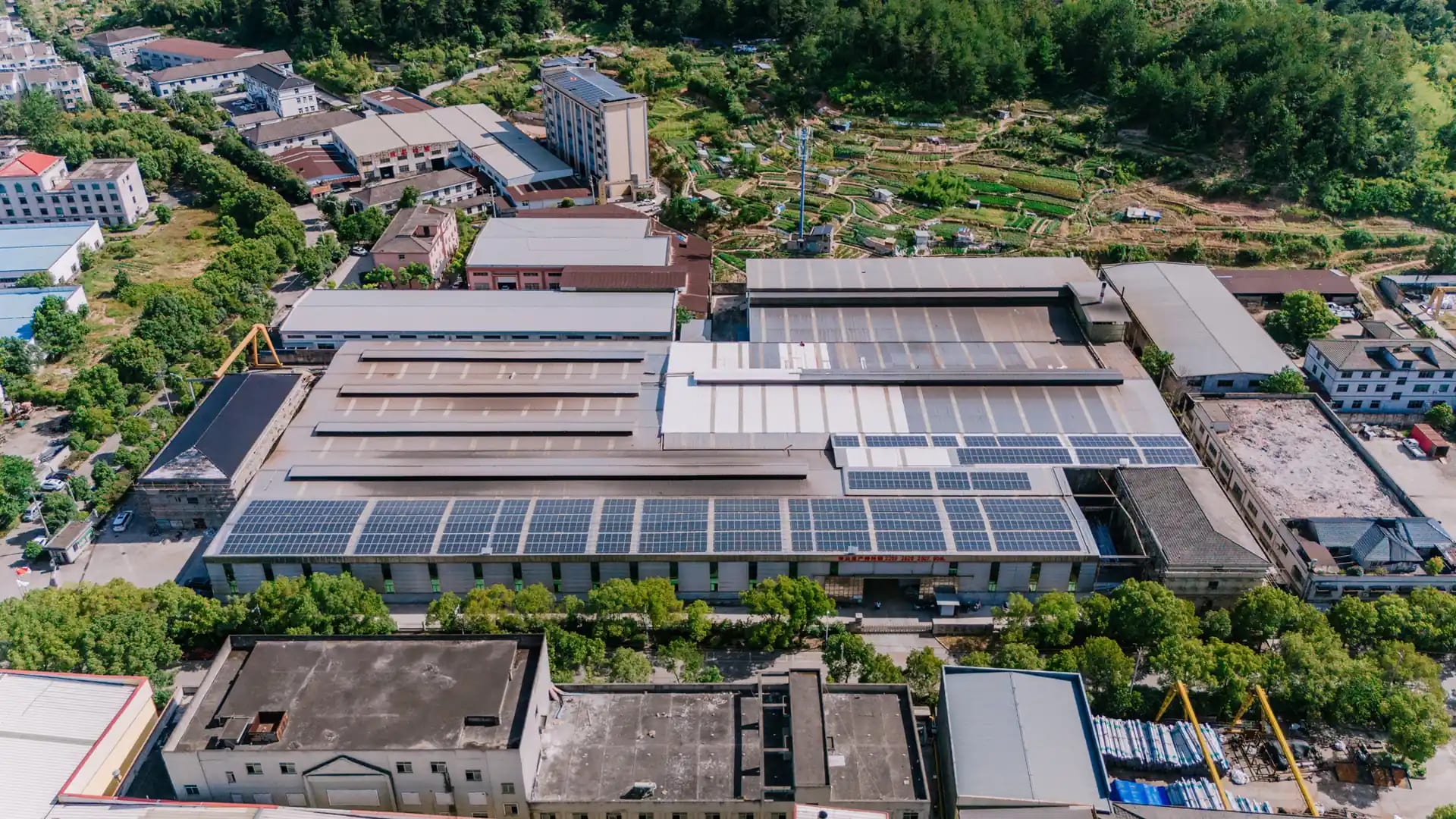
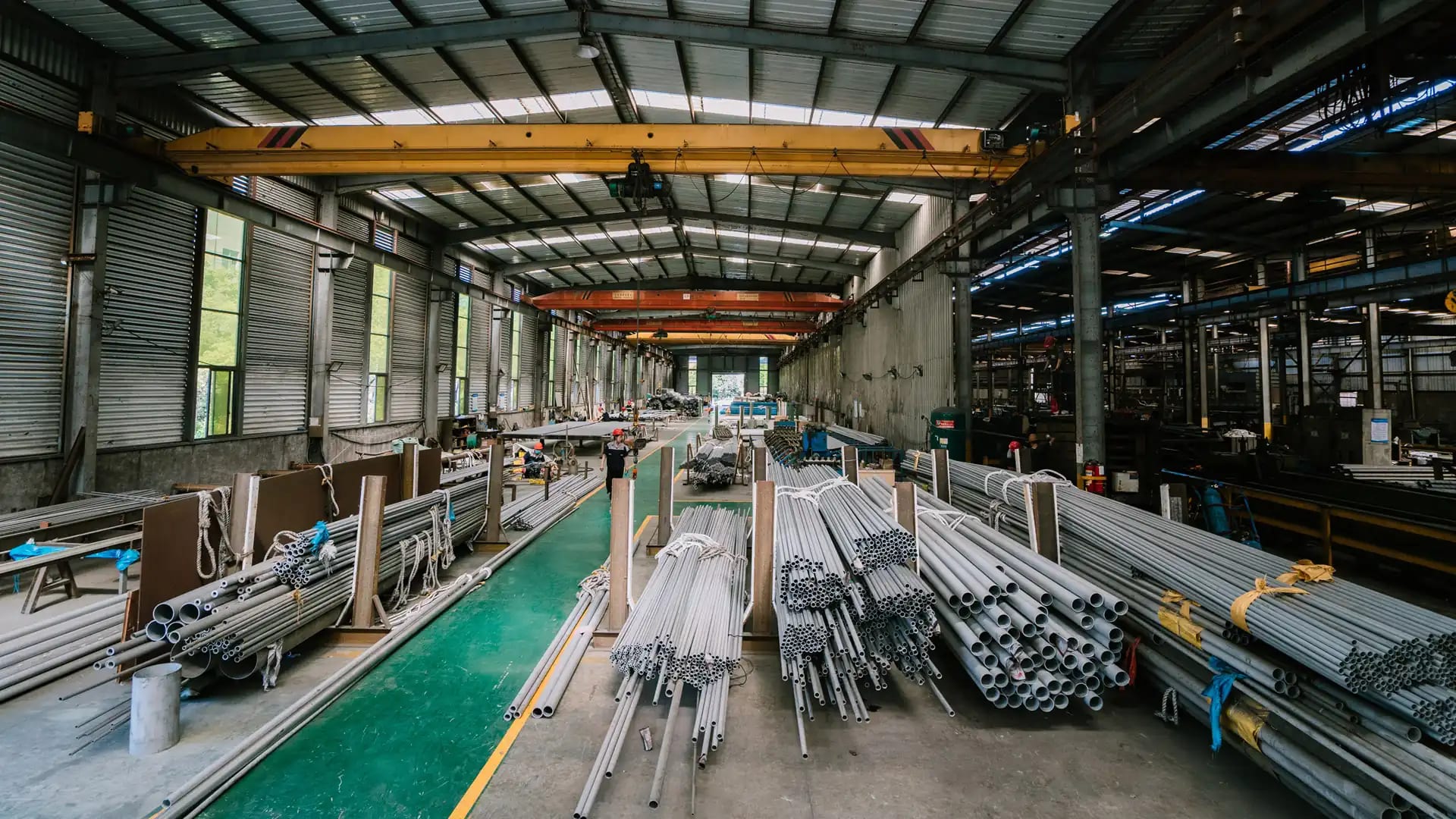
Piercing, cold drawing, solution annealing, pickling, straightening and inspection are all done at our works, 154 Moo.1 Map Phai, Ban Bueng, Chonburi 20170, Thailand. Offers, order acknowledgments, certificates and export papers are prepared at 89/18 Moo.15 Enterprize Park, Bangna-Trad Road, Bang Kaeo, Bang Phli, Samut Prakan 10540, Thailand. Every ASTM A213 stainless steel 347 seamless tube bound for a Thai project moves by road, while export consignments sail for Singapore, Malaysia, Vietnam, Indonesia, the Philippines and India.
Niobium ties up carbon alone, so the minimum is a flat ten times the carbon in the heat, with 1.10% as the ceiling. Titanium in TP321 has to cover nitrogen as well, at five times the carbon and nitrogen together. Both routes keep chromium in solution; the niobium ratio is simply the easier one to audit from a certificate.
A213 sets chromium at 17.0 to 20.0% and niobium at ten times the carbon content as a minimum, with 1.10% as the maximum. Carbon itself stops at 0.08%. Because the niobium requirement is a ratio, a leaner heat satisfies it with less niobium, and the certificate prints carbon beside niobium so the ratio can be checked.
TP347H is the grade written for sustained load at temperature: carbon inside 0.04 to 0.10%, a niobium minimum of eight times carbon, a grain size of ASTM No. 7 or coarser and a solution treatment set higher. TP347 caps carbon at 0.08% and carries no grain size requirement at all. Where creep sizes the wall, order the H grade.
No. The permitted variation already contains it, so a cold-finished tube of 60 mm outside diameter holds ±0.25 mm with ovality counted in, not before it. The figure also describes the tube as delivered, since upsetting, swaging, expanding, bending or polishing all fall outside the limit.
By a method agreed on the order. Once the wall comes to 2% of the outside diameter or less, the standard hands the measuring method to agreement between us, because at that proportion the gauge and the measuring position govern the reading. Settle it at inquiry stage and our inspection record matches your own checks.
Yes, as ordered extras. A213 names TP347 for a stabilizing treatment run below the solution anneal temperature, agreed with us, and for the stress-relieved condition, annealed between 815 and 900 °C once the tube has been roll straightened and with no mechanical straightening after that. An A262 Practice E intergranular test can be ordered too.
Outside diameters run 6.35 to 257 mm, walls 0.89 to 12.7 mm, and a single piece can reach 22 m. Sizing is by diameter and wall rather than by a nominal bore, and we cut to the length your drawing gives. Say with each item whether its wall is minimum or average.
It prints the heat analysis and the product analysis with carbon beside niobium, so the ratio can be verified, then the tension and hardness readings for the lot, both flattening and both flaring results, and the proof test applied to each tube. UNS S34700 with the A213 grade identifies the material, 1.4550 as cross-reference.
Request a Quote for Stainless Steel 347 Seamless Tubes
or email sales@thaida.co.th