
Heat Exchanger Tubes for Acidic Media
Shell-and-tube exchangers on hydrochloric, sulfuric and organic acid streams are the core duty, with the tube wall holding an aggressive process side apart from service water or steam.
ASTM B622 / ASME SB-622 / UNS N10675 / W.Nr. 2.4600
Sulfuric and hydrochloric acid plant work is where Thaida Stainless Steel Manufacturing (Thailand) Co., Ltd. places its ASTM B622 Alloy B3 seamless tubes, drawn at Ban Bueng, Chonburi, Thailand, for exchanger bundles, condensers and acid transfer service. The alloy carries UNS N10675 with W.Nr. 2.4600, and the grade appears in our Hastelloy Seamless Tubes range. Sizes, order files and certificates come out of the Bang Phli premises in Samut Prakan.
Alloy B3 seamless tubeUNS N10675 / W.Nr. 2.4600
EN 10204 3.1 certificate / 3.2 on request
Read the envelope below before the line item is written. An ASTM B622 Alloy B3 seamless tube is bought as a diameter, a wall and a length, and every tube is released against the lot test regime the same specification sets.

The product standard here is ASTM B622, the Standard Specification for Seamless Nickel and Nickel-Cobalt Alloy Pipe and Tube, adopted by ASME as SB-622; nothing else is quoted against this material. Because the specification names its alloys by UNS number only, N10675 is what gets marked and certified, while Alloy B3 stays a commercial name beside it. A tube item gives the outside diameter, the wall as a minimum or an average figure, and the length, whereas Alloy B3 seamless pipes are ordered as a nominal pipe size with a schedule.
Documentation follows the lot. The EN 10204 3.1 (3.2 on request) material test certificate carries the heat analysis against the ASTM B622 limits beside that lot's tension figures, supported by the raw material certificate, 100% PMI records, heat treatment charts and a measurement report covering diameter, wall and surface. Third-party inspection can be witnessed where a project calls for it.
Nickel on this grade is a stated minimum of 65.0%, and nickel with molybdenum together is held inside a 94.0 to 98.0% window, so neither element is left to be whatever remains once the rest of the analysis is counted. Molybdenum takes 27.0 to 32.0% of that window and carries the resistance to reducing acid.
UNS N10675B3
| Element | Limit per ASTM B622 / ASME SB-622 (%) |
|---|---|
| Ni (Nickel) | 65.0 min |
| Mo (Molybdenum) | 27.0 to 32.0 |
| Cr (Chromium) | 1.0 to 3.0 |
| Fe (Iron) | 1.0 to 3.0 |
| W (Tungsten) | 3.0 max |
| Co (Cobalt) | 3.0 max |
| Mn (Manganese) | 3.0 max |
| Al (Aluminum) | 0.50 max |
| V (Vanadium) | 0.20 max |
| Ti (Titanium) | 0.20 max |
| Cu (Copper) | 0.20 max |
| Ta (Tantalum) | 0.20 max |
| Cb (Niobium) + Ta (Tantalum) | 0.20 max |
| Si (Silicon) | 0.10 max |
| Zr (Zirconium) | 0.10 max |
| P (Phosphorus) | 0.030 max |
| C (Carbon) | 0.01 max |
| S (Sulfur) | 0.010 max |
| Ni (Nickel) + Mo (Molybdenum) | 94.0 to 98.0 |
Chromium and iron each sit in a 1.0 to 3.0% band and zirconium is kept to 0.10% maximum. Those three limits are why a UNS N10675 seamless tube keeps its structure through welding and slow cooling, where an unmodified nickel-molybdenum alloy precipitates ordered phases. Manganese is allowed as high as 3.0%, copper stops at 0.20%, phosphorus at 0.030% and sulfur at 0.010%, and carbon is limited to 0.01%, which is what leaves a weld heat-affected zone as corrosion resistant as the tube wall beside it.
ASTM B622 prints one set of room-temperature minimums for both product forms, so these three figures govern a seamless nickel alloy B3 tube exactly as they govern pipe from the same heat. They are floors rather than typical readings, and the tension test described further down is where they are proved.
| Property | Value | Unit |
|---|---|---|
| Tensile Strength, min | 760 (110) | MPa (ksi) |
| Yield Strength (0.2% offset), min | 350 (51) | MPa (ksi) |
| Elongation in 2 in. (50.8 mm) or 4D, min | 40 | % |
On thin-wall exchanger tube the yield figure is the one that bears on installation, since it governs how the tube behaves while it is rolled or expanded into a tubesheet, and the 40% elongation minimum is what lets that deformation happen without splitting the wall.
Alloy B3 answers to the four entries below. Only the UNS number comes out of the product specification; the European material number and its German form are listed so that a drawing or piping class quoting either one can be matched to the same alloy, and no conformity to a European standard is implied by printing them.
Each lot of seamless Alloy B3 tube is certified by one tension test, and that single result stands for the strength of every tube the lot holds. Testing follows Test Methods E8/E8M, and the rules around it settle where the specimen comes from, what shape it may take and what follows a failure.
Specimens are cut from material that has already had its final heat treatment, and they are pulled in the direction of fabrication. Both conditions tie the result to the tube as it ships: a sample taken earlier in the route, or across the drawing direction, would not describe the delivered product, so the certificate figures and the annealed condition belong together.
Wherever it is possible, an ASME SB-622 B3 seamless tube is tested in full tubular size, which keeps the specimen geometry the same as the product and avoids machining away the drawn surface. Where full size cannot be tested, either a longitudinal strip specimen or the largest round specimen that can be prepared to E8/E8M is used. Which route applies follows from the diameter and wall on test, and every route is judged against the same three minimums.
If the specimen representing a lot fails to meet a requirement, two more specimens are taken from different sample pieces and both have to pass. Tensile and yield results reach the certificate rounded to the nearest 7 MPa (1000 psi). Material that still falls short may be reheat treated and resubmitted for test, with not more than two reheat treatments permitted on the same material.
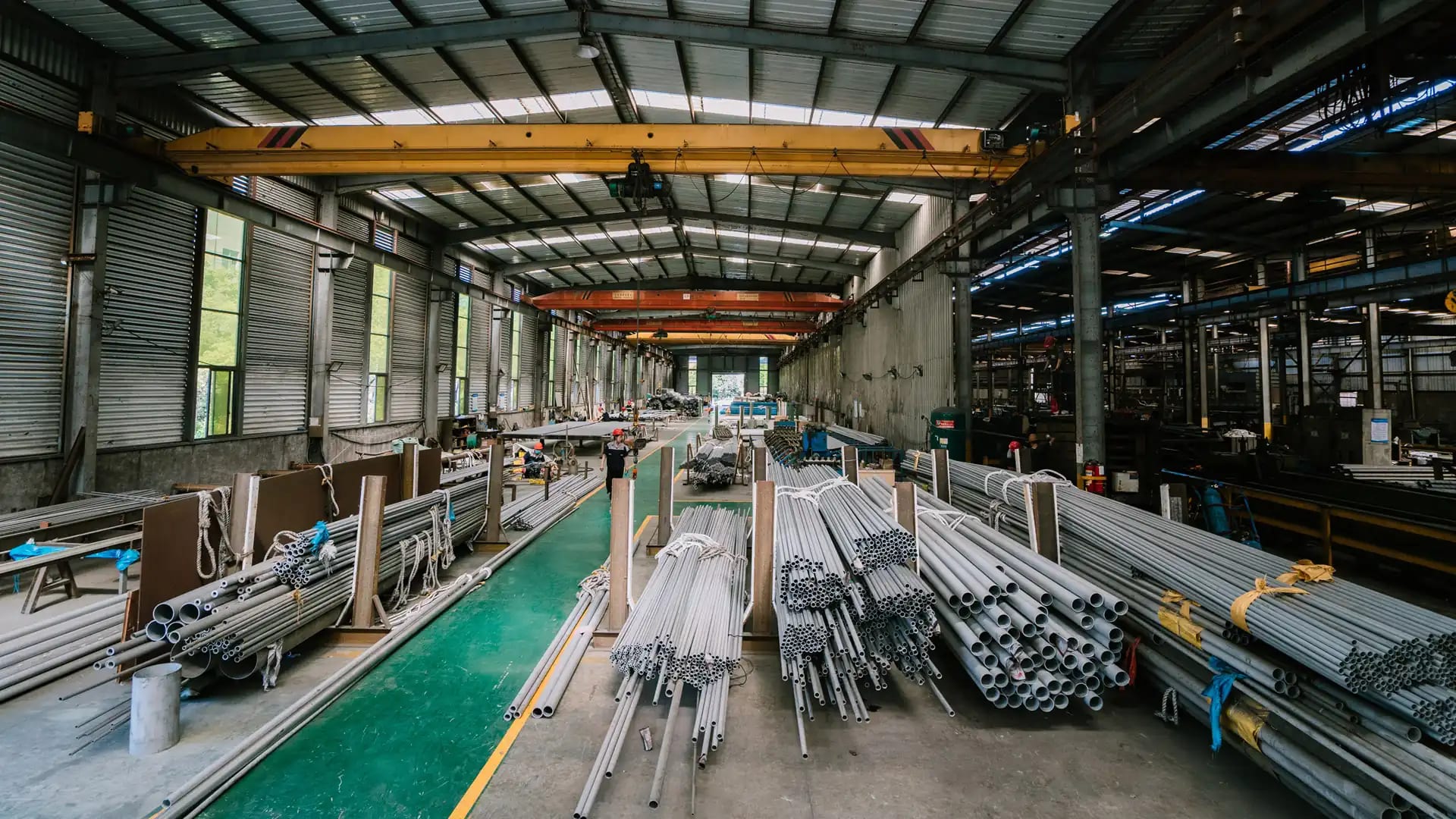
A seamless B3 tube is drawn in diameters of 6 mm to 457 mm, in walls of 1 mm to 65 mm, and in single lengths as long as 22 m, which covers a long exchanger or condenser bundle without a joint in the tube. Wall is bought either as a nominal, that is average, figure or as a minimum, and the two bases are held to different limits.
The diameter and wall limits ASTM B622 applies to cold-worked tube, across the sizes that exchanger, condenser and small-bore acid service call for:
| Tube OD (mm) | Diameter Limit (mm) | Wall Limit on Nominal Wall | Wall Limit on Minimum Wall |
|---|---|---|---|
| Up to 10 | ±0.10 | ±15% | +30% / 0 |
| Over 10, under 16 | ±0.13 | ±15% | +30% / 0 |
| 16 to 38 | ±0.19 | ±10% | +22% / 0 |
| Over 38 to 76 | ±0.25 | ±10% | +22% / 0 |
| Over 76 to 114 | ±0.38 | ±10% | +22% / 0 |
| Over 114 to 152 | ±0.51 | ±12.5% | +28% / 0 |
| Over 152 to 168 | ±0.64 | ±12.5% | +28% / 0 |
| Over 168 to 219 | ±0.79 | ±12.5% | +28% / 0 |
Swipe sideways to see the full table.
Above 219 mm the diameter band turns asymmetric: the minus limit stays at 0.79 mm while the plus limit opens to 1.57 mm up to 356 mm and to 3.18 mm over it, with nominal wall at +15% / -12.5% and minimum wall at +30% / 0. Where the wall does not exceed 3% of the diameter, those limits govern the mean of the maximum and minimum readings, and a single reading across an oval section may fall 0.5% of the nominal diameter outside them.
Each tube ships in the solution annealed and descaled condition, which an atmosphere-controlled anneal delivers without a separate descaling step. Ends are cut plain and deburred, and lengths arrive straight, with no bends or kinks to work out on site.
Inside the B family the choice turns on thermal history rather than strength, because the two grades carry the same tensile, yield and elongation minimums in ASTM B622 and neither is the stronger tube. The separation shows up in the composition table, which caps chromium at 1.0% and iron at 2.0% for B2 and sets no zirconium limit on it, while the B3 row opens chromium and iron to a 1.0 to 3.0% band each and holds zirconium to 0.10%. A bundle welded into a tubesheet and then cycled in temperature is the case for B3, and Alloy B2 seamless tubes remain sound for steady reducing-acid duty that is not repeatedly reheated. Neither grade belongs in an oxidizing stream: once oxidizing species appear, Alloy C4 seamless tubes take the duty on 14.0 to 18.0% chromium with 14.0 to 17.0% molybdenum, at a 276 MPa yield minimum that wall selection has to allow for.
Seamless alloy 2.4600 tube goes into service where the medium is reducing with no oxidizing species in it, and where the duty is heat transfer rather than plain conveyance.
Shell-and-tube exchangers on hydrochloric, sulfuric and organic acid streams are the core duty, with the tube wall holding an aggressive process side apart from service water or steam.

Synthesis condensers, absorption column internals and overhead coolers in hydrochloric acid plants are tubed in this grade, which holds up across a wide span of acid concentrations.

Acid concentration and distillation units tube their reboilers and overhead condensers here, where a bundle is heated and cooled repeatedly and an earlier B-family alloy would lose ductility.

Plants recovering hydrochloric acid from steel pickling liquor run bundles through repeated thermal cycles, and the stability this grade adds over the plain nickel-molybdenum alloy is the clearest reason to choose it.

Downhole strings and sour gas lines take UNS N10675 seamless tube where hydrogen sulfide and chlorides act together and stress corrosion cracking decides the material rather than strength.

Power plants tube flue gas desulfurization circuits and coal gasification waste streams in seamless nickel alloy B3 tube, where acid condensate in the gas path attacks a stainless steel bundle.

Cooling and transfer tube exposed to seawater or to a marine atmosphere is specified in this alloy for its resistance to chloride-induced attack, which is what pits a stainless bundle instead.
Every seamless WNR 2.4600 tube is packed and documented so that a bundle standing on site can still be traced to its own tested lot.
Packing
Tubes strapped into bundles with plastic end caps, while small-bore and thin-wall tube travels in wooden cases with internal separation.
Marking
The heat number and the nominal size beside UNS N10675, plus ASTM and the specification number, marked in a way that leaves no harmful residue, or carried on a tag attached to the bundle where a piece falls under the marking size.
Trade terms
Quoted FOB, CIF or CFR against the discharge port you name.
Paperwork
An EN 10204 3.1 (3.2 on request) certificate for each lot in the consignment, with the raw material certificate, the annealing charts and the measurement report behind it.
Added mill tests
PMI on 100% of the material, together with eddy current, ultrasonic, bend, impact, intergranular corrosion, pitting corrosion and grain size results printed on the manufacturer test certificate when an order asks for them.
Delivery
From finished stock where the size is held, otherwise against a production slot confirmed with the offer.
An Alloy B-3 seamless tube is indicatively priced at USD 30 to 66 per kg. Treat the band as a budgeting guide and not as an offer: it is indicative, it allows for the step this grade carries from pipe into tube, and only the sizes themselves fix a figure. Inside the band, small diameters, thin walls, short run lengths and added inspection all pull a quotation upward, while nickel and molybdenum on the pricing day move the whole band together. Send the bundle or the line list for a firm number.
Indicative only. Send your sizes and specification to Thaida for a firm quotation.
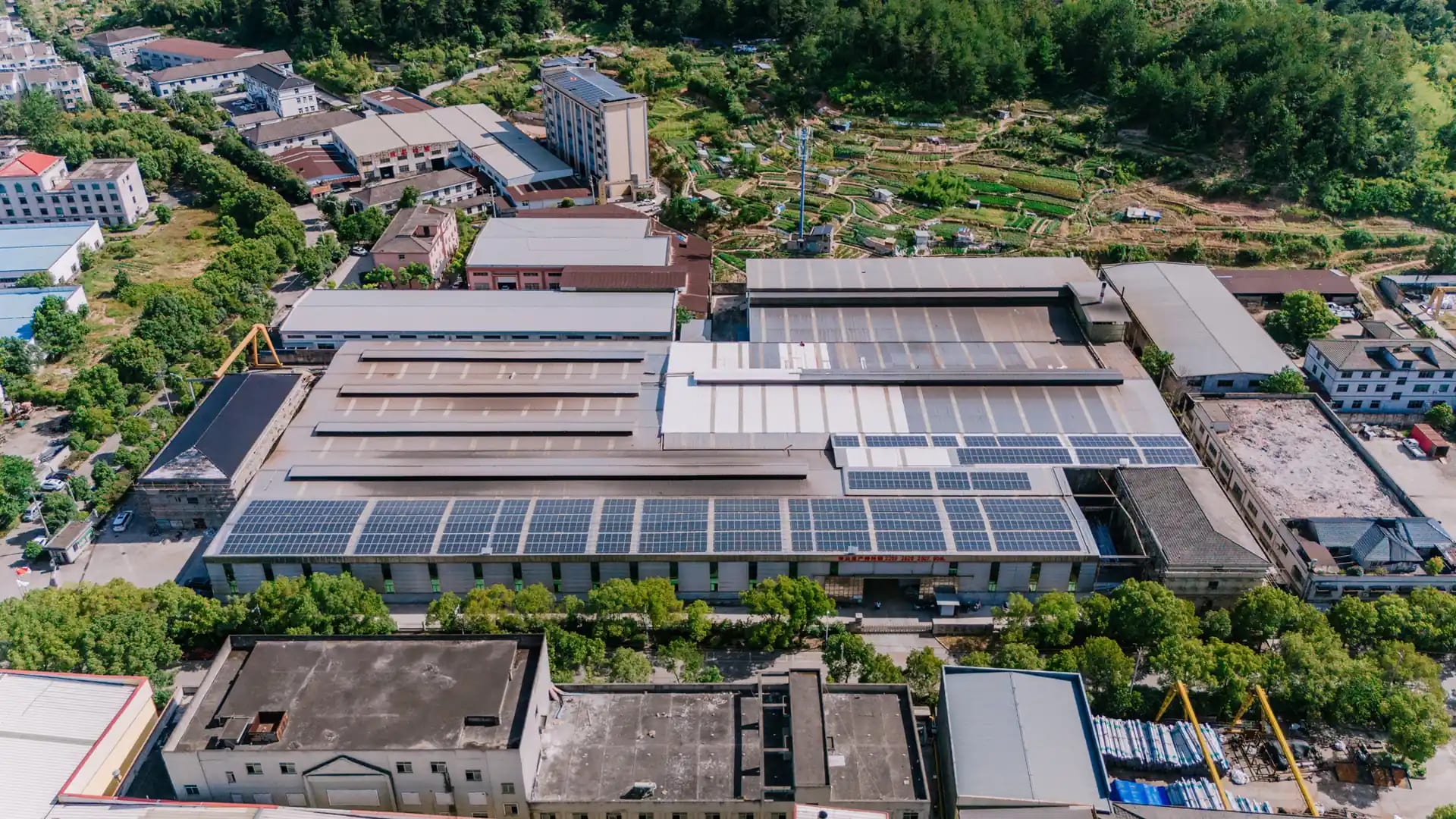
Drawing, annealing and testing of this grade happen at 154 Moo.1 Map Phai, Ban Bueng, Chonburi 20170, Thailand. Offers, order files and certificates are issued from 89/18 Moo.15 Enterprize Park, Bangna-Trad Road, Bang Kaeo, Bang Phli, Samut Prakan 10540, Thailand. Thai projects collect from the works, and export consignments go to Singapore, Malaysia, Vietnam, Indonesia, the Philippines and India.
From material that has already had its final heat treatment, and tested in the direction of fabrication. That order matters when a certificate is read: the figures describe the tube as delivered, not the hollow it was drawn from, and one test stands for the whole lot it represents.
No. Full tubular testing is used wherever the size of the tube allows it, because the specimen then has the same geometry as the product. Where it cannot be done, a longitudinal strip specimen or the largest round specimen that can be machined to E8/E8M is tested instead, against the same minimums.
Two further specimens are taken from different sample pieces, and both of them have to meet the requirements before the lot is accepted. One pass out of the two is not enough. A lot that still fails may be reheat treated and resubmitted for test.
Not more than twice. Material that misses a mechanical requirement may be reheat treated and offered for test again, but no more than two reheat treatments are permitted, so a third attempt is not available. Ask for the test history where an inspection plan calls for it.
Tensile and yield strength are rounded to the nearest 7 MPa (1000 psi) before they reach the certificate. A number sitting a few MPa clear of a limit is therefore a rounded one, which is worth remembering when a result is checked against the 760 MPa and 350 MPa floors.
That nickel is certified against a floor instead of being inferred as the remainder. The heat analysis has to show 65.0% nickel or more, and nickel with molybdenum together between 94.0 and 98.0%, so both entries are verified as stated limits.
B3 only while the stream stays reducing. Once an oxidizing species is present, or oxidizing and reducing media mix, the chromium-bearing C grade is the right call: C4 is specified with 14.0 to 18.0% chromium where B3 carries 1.0 to 3.0%. Send the medium and its contaminants for confirmation.
Plus or minus 0.25 mm on diameter, and wall within plus or minus 10% when it is bought as nominal wall or plus 22% and nothing under when it is bought as minimum wall. Diameters above 76 mm move into the wider bands set out in the sizes table.
Request a Quote for Alloy B3 Seamless Tubes
or email sales@thaida.co.th