Petrochemical Heat Exchangers and Reformer Lines
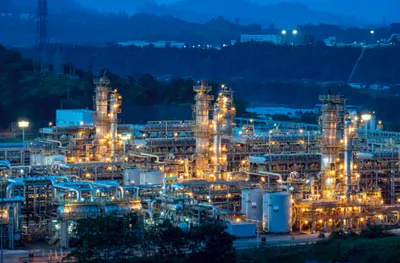
Petrochemical plants fit the tube in heat exchangers and reformer piping, where nickel and chromium give the alloy resistance to sulfidation and chemical attack over long periods at temperature.
ASTM B407 / ASME SB-407 / UNS N08800 / W.Nr. 1.4876
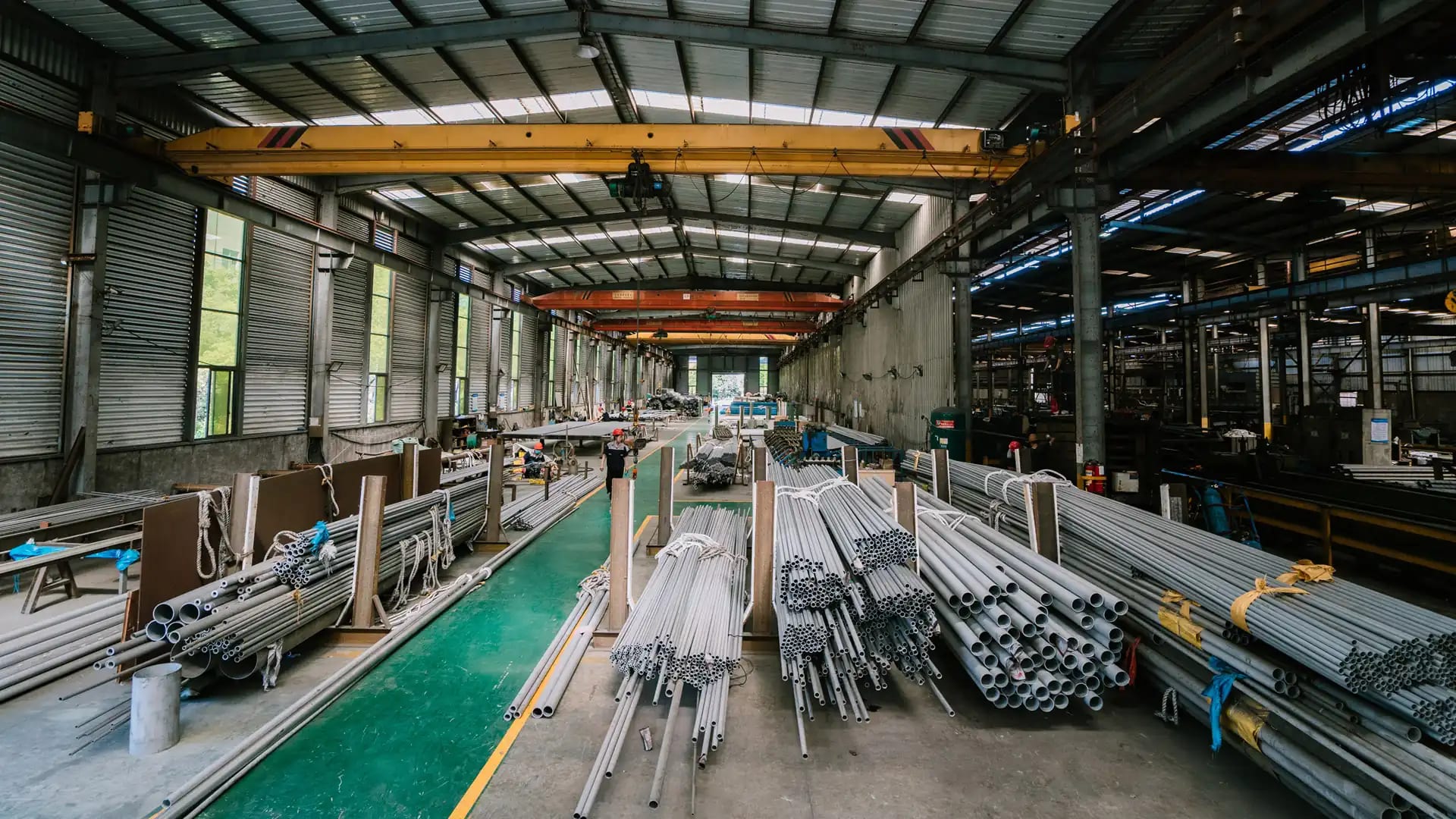
Thaida Stainless Steel Manufacturing (Thailand) Co., Ltd. supplies Incoloy 800 seamless tubes to ASTM B407 / ASME SB-407 from its plant in Ban Bueng, Chonburi, in the nickel-iron-chromium alloy UNS N08800, known in Europe as W.Nr. 1.4876. Each tube starts as a billet hot-pierced into a hollow shell and reaches its final OD and wall through cold drawing with intermediate annealing. The grade sits in our Incoloy seamless tubes range, and our Bang Phli, Samut Prakan office handles quotations and certificates.
Incoloy 800 seamless tubeUNS N08800 / W.Nr. 1.4876
EN 10204 3.1 certificate / 3.2 on request
A tube line is fixed by two dimensions and a condition, and ASTM B407 ties its permitted variations, cut-length allowance and straightness rule to that condition. The table gives our range and the checks made on every tube.

ASTM B407 is titled Standard Specification for Nickel-Iron-Chromium Alloy Seamless Pipe and Tube, and ASME SB-407 is the related specification for Boiler and Pressure Vessel Code applications. The standard lists its alloys by UNS number alone, so each ASME SB-407 800 seamless tube is marked and certified as N08800, while Incoloy 800 remains the commercial name. The same standard governs Incoloy 800 seamless pipes, which are ordered by NPS and schedule rather than by tube dimensions.
Each tube is proven by a hydrostatic test or by a nondestructive electric test, the method being the mill's choice unless your purchase order fixes it. Chemical analysis and a tension test are each made once per lot, and the tension result is read against the strength row of the condition ordered. Results are issued on an EN 10204 3.1 (3.2 on request) material test certificate, and third-party inspection is available on request.
The heat analysis on each certificate for UNS N08800 seamless tube is checked against the N08800 column of ASTM B407. Nickel at 30.0 to 35.0% and chromium at 19.0 to 23.0% sit on an iron base of 39.5% minimum, determined by difference, while carbon is capped at 0.10% with no lower limit.
UNS N08800800
| Element | Limit per ASTM B407 / ASME SB-407 (%) |
|---|---|
| Ni (Nickel) | 30.0 to 35.0 |
| Cr (Chromium) | 19.0 to 23.0 |
| Fe (Iron) | 39.5 min |
| Mn (Manganese) | 1.5 max |
| C (Carbon) | 0.10 max |
| Cu (Copper) | 0.75 max |
| Si (Silicon) | 1.0 max |
| S (Sulfur) | 0.015 max |
| Al (Aluminum) | 0.15 to 0.60 |
| Ti (Titanium) | 0.15 to 0.60 |
| P (Phosphorus) | 0.045 max |
ASTM B407 gives N08800 two sets of minimums, one for each condition, and the tension test made on every lot is judged against the set the order names.
| Condition | Tensile Strength, min, psi (MPa) | Yield Strength (0.2% offset), min, psi (MPa) | Elongation in 2 in. or 50 mm (or 4D), min (%) |
|---|---|---|---|
| Cold-worked annealed | 75 000 (520) | 30 000 (205) | 30 |
| Hot-finished annealed or hot-finished | 65 000 (450) | 25 000 (170) | 30 |
Swipe sideways to see the full table.
Cold drawing followed by annealing places our tube in the first row. The second row covers tube finished hot, with or without a final anneal: its tensile and yield minimums are lower, its elongation stays at 30%, and its dimensions follow the separate hot-finished rules of the standard.
Incoloy 800, also written Alloy 800, appears under different designations on American, European and Japanese drawings. ASTM B407 identifies the alloy by its UNS number; the W.Nr. and JIS values serve as cross-references for reading a foreign specification sheet.
An exchanger datasheet that quotes 1.4876 or NCF800 is entered on our order as N08800, and the certificate is issued against that UNS number.
Seamless alloy 1.4876 tube is produced from 6 mm to 457 mm OD, in walls from 1 mm to 65 mm and lengths up to 22 m. ASTM B407 has tube specified in two dimensions only, length excepted: OD with average or minimum wall, ID with average wall, or OD with ID, and the permitted variations then apply to those two dimensions. Tube made to OD and minimum wall is supplied by agreement at the order stage.
For cold-finished tube, B407 grades the OD variation in six bands from 1/2 in. (12.7 mm) to 6 5/8 in. (168.3 mm), starting at ±0.005 in. (0.127 mm) and widening to ±0.025 in. (0.635 mm), with wall variations of 15.0, 10.0 or 12.5% depending on the band. Wall eccentricity in any cross section of cold-finished tube is held to ±10% of the measured average wall. Sizes outside the printed bands carry variations stated in the quotation.
ASTM B407 gives hot-finished tube a regime of its own: separate OD bands, a wall rule with eccentricity built in, a longer cut-length allowance, a numeric camber limit and its own surfaces. ASTM B407 sets these limits for hot-finished tube.
| Specified OD, in. (mm) | OD or ID Variation, in. (mm) | Wall Variation (%) |
|---|---|---|
| 2 1/2 to 5 1/2 (63.5 to 139.7), excl | ±0.031 (0.787) | ±12.5 |
| 5 1/2 to 9 1/4 (139.7 to 234.9), incl | ±0.047 (1.19) | ±12.5 |
Ovality: at 5 in. (127.0 mm) OD and under, individual measurements include ovality; above 5 in., the mean OD must lie within the table and no individual measurement may exceed twice the permitted variation.
Minimum wall: tube specified as minimum wall takes a wall tolerance of +28.5%, -0.
Eccentricity: the wall tolerance includes eccentricity up to ±12.5%.
Cut length: never shorter than ordered, with up to +3/16 in. (4.8 mm) over, against +1/8 in. (3.2 mm) for cold-worked tube.
Camber: 0.01 in./ft (0.8 mm/m) maximum at 5 in. (127 mm) OD and under, and 0.015 in./ft (1.4 mm/m) above that size.
The two bands span 63.5 to 234.9 mm OD; B407 prints no hot-finished tube band outside them.
The informative appendix of ASTM B407 names five surfaces, two for cold-finished tube and three for hot-finished tube, and each seamless WNR 1.4876 tube is described by one of them:
Cold-finished, annealed, with ground outside diameter: 1/2 to 4 in. (12.7 to 102 mm), in normal and heavy-wall tube.
Cold-finished, annealed and pickled, not ground: 1/2 to 6 5/8 in. (12.7 to 168 mm).
Hot-finished, not pickled: an oxide surface intended generally for machined parts.
Hot-finished and pickled.
Hot-finished with machined outside and inside diameters.
The ground and pickled cold-finished surfaces are tied to the sizes shown, so tube above those diameters takes a surface agreed when the order is placed.
Incoloy 800H seamless tubes are made to the same ASTM B407 and share the nickel, chromium, iron, aluminum and titanium limits of 800. Carbon is where they part: 800H holds 0.05 to 0.10%, while seamless nickel alloy 800 tube is made to a 0.10% maximum with no minimum. B407 also sets a grain-size requirement and a minimum final heat-treatment temperature for 800H, and gives it one strength row for both conditions, equal to the hot-finished row of 800.
Incoloy 825 seamless tubes are made to a different product standard and supplied annealed only, with minimums of 85 ksi (586 MPa) tensile, 35 ksi (241 MPa) yield and 30% elongation. Their chemistry adds 2.5 to 3.5% molybdenum and 1.5 to 3.0% copper on a nickel range of 38.0 to 46.0%. Each order line names its UNS number, so the certificate is read against the right standard and table.
Alloy 800 seamless tube serves petrochemical and power plants, industrial furnaces, aerospace and marine equipment, and food and dairy plants, wherever heat and corrosive media act on the tube wall together.
Petrochemical plants fit the tube in heat exchangers and reformer piping, where nickel and chromium give the alloy resistance to sulfidation and chemical attack over long periods at temperature.

Power plants use the tube for superheater and reheater tubing in steam boilers, where oxidation resistance matters and each tube is ordered by OD and wall to the bundle drawing.

Industrial heat-treating furnaces build radiant tubes and muffles from the alloy, which resists oxidation and carburization in hot, controlled atmospheres and so extends the life of furnace parts.

Exhaust systems in aerospace and pipeline parts in marine service rely on the strength and corrosion resistance of the alloy where salt water and heat reach the tube together.

Food, dairy and brewery plants install the tube in heat exchangers, condensers and piping systems, ordered with the pickled or ground surface that suits the equipment drawing.
Packing
Tubes bundled and strapped, or packed in wooden cases for ground and pickled surfaces, with end caps fitted.
Marking
Each seamless 1.4876 tube of 3/4 in. (19.0 mm) OD and larger and longer than 3 ft (914 mm) shows our name, ASTM B407, UNS N08800, the heat number and the nominal size; smaller or shorter tubes are marked individually or on a tag fixed to the bundle or box.
Package marking
Each bundle or case also states the condition.
Documents
EN 10204 3.1 (3.2 on request) material test certificate with the heat analysis and lot test results, plus a packing list for every bundle or case.
Terms
FOB, CIF or CFR, with the loading port named in the offer.
Seamless Incoloy 800 tube carries an indicative price of USD 20 to 50 per kg. Where a quote falls in that band follows the nickel market first. Tube size comes next, since small-diameter, thin-wall tube needs more cold-drawing and annealing passes per kilogram than heavier sections. Short lots, cut lengths and added testing or inspection move a quote toward the top of the band, so send your size list with quantities for a firm price.
Indicative only. Send your sizes and specification to Thaida for a firm quotation.
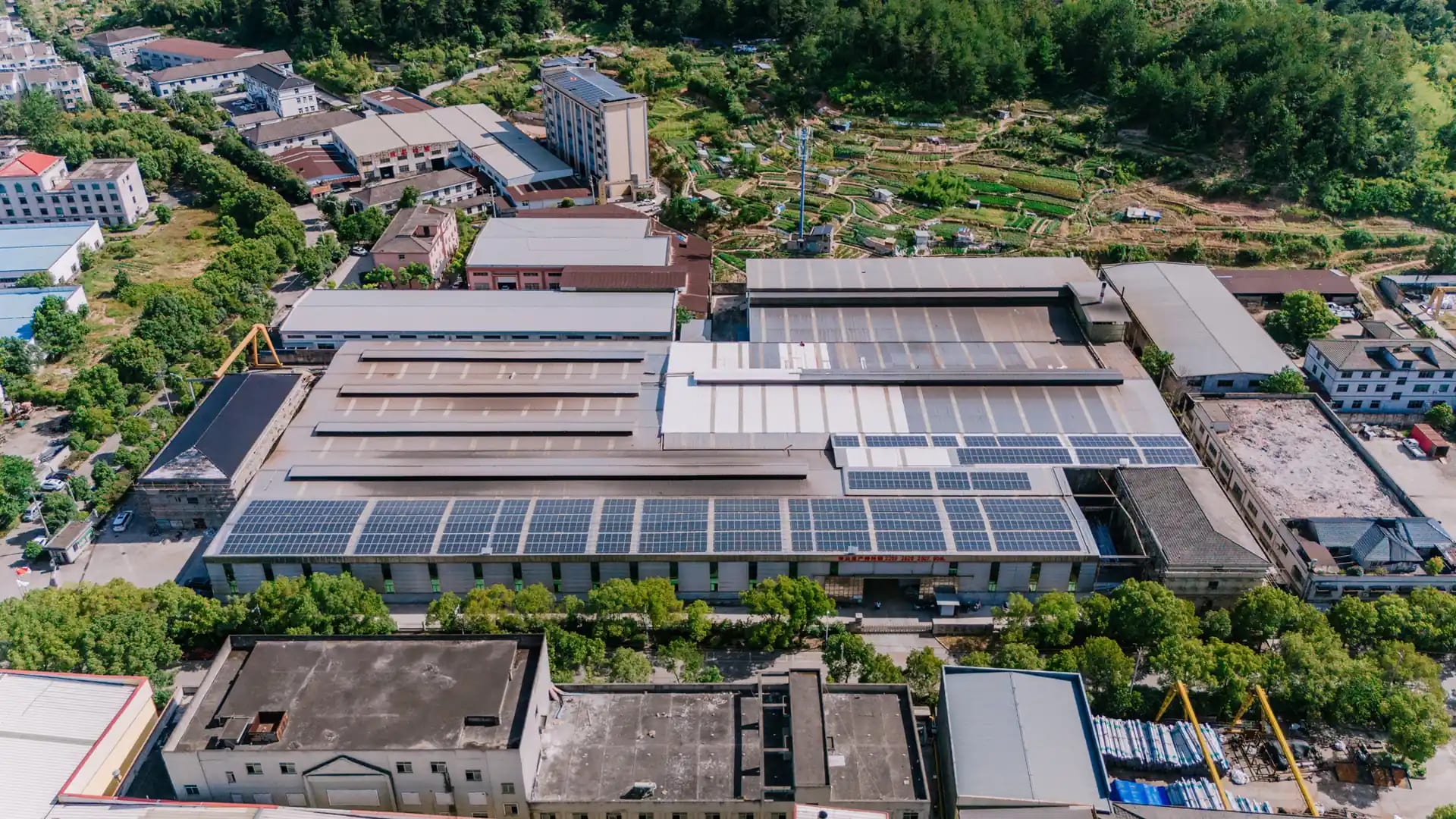
Incoloy 800 seamless tubes are drawn and annealed at 154 Moo.1 Map Phai, Ban Bueng, Chonburi 20170, Thailand. Quotations, certificates and shipping documents come from 89/18 Moo.15 Enterprize Park, Bangna-Trad Road, Bang Kaeo, Bang Phli, Samut Prakan 10540, Thailand. We supply projects across Thailand and export to Singapore, Malaysia, Vietnam, Indonesia, the Philippines and India.
When the order names hot-finished tube. The cold-finished bands run from 12.7 to 168.3 mm OD and start at ±0.127 mm, while the hot-finished bands start at 63.5 mm with ±0.787 mm. Between 63.5 and 168.3 mm both regimes exist, so the condition written on the order line decides which limits the tube is measured against.
Yes, by agreement when the order is placed, paired with the OD. The wall is then a floor rather than a nominal: hot-finished tube ordered to minimum wall may run up to 28.5% thicker and nothing thinner. An order states minimum wall or average wall, never both, so the tolerance is read against one value.
Because ASTM B407 applies its permitted variations to two dimensions only. Once two of them are fixed with tolerances, the third follows from them, and a third set of limits could contradict the first two. Choose the pair your drawing controls and add the length.
Not for standard sizes. ASTM B407 requires cold-drawn tube to be reasonably straight and free of bends and kinks, without a figure; only small-diameter, light-wall tube ordered to its own table has one. The camber limits apply to hot-finished tube, so a bundle that needs a measured straightness on cold-drawn tube carries that figure on the purchase order.
That depends on the design basis. ASTM B407 places UNS N08800 in general service and assigns service where creep and rupture resistance is required to UNS N08810, the 800H grade, which carries its own grain-size requirement and heat-treatment minimum. A bundle designed on creep and rupture properties is therefore specified in 800H.
The not-pickled hot-finished surface, an oxide finish that ASTM B407 describes as intended generally for machined parts where the oxide will be removed. B407 also lists a machined finish for hot-finished tube, with the OD held to +0.031 in. (0.787 mm), -0 and the ID to +0, -0.062 in. (1.57 mm), so a machined bore is never oversize.
Plus 1/4 in. (6.4 mm) over and nothing under, for cold-worked and hot-finished tube alike. That allowance replaces the 1/8 in. and 3/16 in. limits once a cut length passes 30 ft (9.1 m), and it applies up to the 22 m end of our range; small-diameter, light-wall tube ordered to its own table keeps that table's length limits.
The heat analysis against the ASTM B407 limits for UNS N08800, the lot tension result judged against the row of the ordered condition, and confirmation that every tube passed the hydrostatic or electric test, all tied to the heat number marked on the tube. It is issued as EN 10204 3.1 (3.2 on request).
Request a Quote for Incoloy 800 Seamless Tubes
or email sales@thaida.co.th