
Boiler and Heat Transfer Circuits
High-pressure boiler tubing and heat transfer systems take the grade on surfaces swept by hot flue gas, with every tube specified by OD and minimum wall from the boiler drawing.
ASTM A213 / ASME SA-213 / UNS S31008 / W.Nr. 1.4845
Made to ASTM A213 at our Ban Bueng, Chonburi, Thailand mill, TP310S stainless steel seamless tubes supplied by Thaida Stainless Steel Manufacturing (Thailand) Co., Ltd. serve boiler, superheater and heat exchanger circuits assembled by welding and exposed to hot, oxidizing gas. Listed as UNS S31008, with EN 1.4845 (WNR) as its European cross-reference, the grade keeps the chromium and nickel of 310 under a lower carbon ceiling. Our Bang Phli, Samut Prakan sales desk quotes it within the stainless steel seamless tubes family.
Stainless Steel 310S seamless tubeUNS S31008 / W.Nr. 1.4845
EN 10204 3.1 certificate / 3.2 on request
Production of each SS 310S seamless tube begins with a solid round billet, which is heated and pierced into a shell; cold drawing or cold rolling then brings it to size before solution annealing and a final pickle. All values in the table refer to that cold-finished condition.

ASTM A213, adopted by ASME as SA-213, lists TP310S as one of the austenitic grades it accepts for seamless tubing in boiler, superheater and heat-exchanger duty. Austenitic tubes must be shipped in the heat-treated condition and pickled free of scale. The standard calls 127 mm OD the upper end of sizes usually furnished and accepts other diameters when all remaining requirements are met, which is how each ASTM A213 TP310S stainless steel seamless tube above that size, up to 257 mm OD, is supplied. For hot-gas headers and transfer lines drawn up in NPS and schedule sizes, the same grade is made as 310S seamless pipes to ASTM A312.
Every 310S stainless steel seamless tube passes an individual proof test, either hydrostatic, with pressure held for 5 seconds or longer, or nondestructive electric using eddy current or ultrasonic equipment; unless your order names one, the choice is ours. Lot sampling covers one size from one heat: tension testing of a single tube, or two tubes once the lot exceeds 50; hardness checks on two tubes wherever the wall is 1.65 mm or heavier, thinner walls being exempt; flattening of specimens taken at each end of one tube; and flaring of a further tube at both of its ends. A product analysis is also taken from one billet or tube of every heat. The mill certificate, an EN 10204 3.1 (3.2 on request) document, carries the results together with heat treatment charts, PMI records covering every tube, the raw material certificate and logs of measured sizes and surface roughness. An independent third-party inspector may witness the testing on request.
The heat analysis and the A213 product analysis behind every seamless S31008 stainless steel tube must fall inside the TP310S limits tabled here, in weight percent with single figures read as maximums. Nitrogen and other elements outside the table carry no requirement either.
UNS S31008310S
| Element | TP310S limit, % by weight |
|---|---|
| C (Carbon) | 0.08 max |
| Mn (Manganese) | 2.00 max |
| P (Phosphorus) | 0.045 max |
| S (Sulfur) | 0.030 max |
| Si (Silicon) | 1.00 max |
| Cr (Chromium) | 24.0 to 26.0 |
| Ni (Nickel) | 19.0 to 22.0 |
| Mo (Molybdenum) | No requirement |
After solution treatment, each lot must reach the tensile minimums and stay under the hardness ceilings that A213 sets for TP310S.
| Requirement | TP310S (ASTM A213) |
|---|---|
| Tensile strength | Not below 515 MPa (75 ksi) |
| Yield strength | Not below 205 MPa (30 ksi) |
| Elongation over a 50 mm (2 in.) gauge | Not below 35% |
| Hardness, Brinell or Vickers | Not above 192 HBW or 200 HV |
| Hardness, Rockwell B | Not above 90 HRB |
Grade 310S carries one UNS number but several national names, collected below for drawing and certificate checks.
Requisitions written for seamless WNR 1.4845 tube are quoted and certified as A213 TP310S, with the European number kept as a cross-reference rather than a second specification.
The permitted variations that follow are the ones that apply to cold-finished A213 tube up to 225 mm OD; they hold for the tube as delivered, before expanding, swaging or any other forming.
| OD Band, mm | Plus, mm | Minus, mm |
|---|---|---|
| Under 25 | 0.1 | 0.11 |
| 25 through 40 | 0.15 | 0.15 |
| Exceeding 40, under 50 | 0.2 | 0.2 |
| 50 to under 65 | 0.25 | 0.25 |
| 65 to under 75 | 0.3 | 0.3 |
| 75 through 100 | 0.38 | 0.38 |
| Exceeding 100, through 200 | 0.38 | 0.64 |
| Exceeding 200, through 225 | 0.38 | 1.14 |
Ovality is part of these limits for most sizes, with two exceptions. Thin-wall tube, whose wall is at or below 3% of the OD, is judged against the table on the average of its largest and smallest readings, and the gap between those two readings may reach 0.5 mm at 25.4 mm OD and under, or 2.0% of the OD above that. On cold-finished sizes under 50.8 mm OD, single readings may sit as much as 0.25 mm over or under nominal, provided their average still falls inside the band; where both allowances apply, the larger one governs.
Order on minimum wall and the tube is never thinner than the figure you give; the excess allowed is 20% up to 38.1 mm OD and 22% beyond it. Heavy-wall tube, where the bore measures at most 60% of the OD, is held to the hot-finished excess instead: 40% for walls up to 2.4 mm, 35% above 2.4 and up to 3.8 mm, 33% above 3.8 and up to 4.6 mm, and 28% above 4.6 mm at 100 mm OD and under, with the three heavier bands also used above 100 mm OD. Order on average wall and cold-finished tube stays within 10% either side of the figure.
Cut lengths carry zero minus tolerance. Over-length is limited to 3 mm on tubes smaller than 50.8 mm OD and to 5 mm on tubes of 50.8 mm OD or more. Tubes longer than 7.3 m gain 3 mm of extra over-length allowance for every further 3 m, counting a part length as a whole step, and the extra allowance tops out at 13 mm.
Grade 310 (UNS S31000) is not one of the A213 grades and is made to its own composition with up to 0.25% carbon, whereas TP310S stops at 0.08%. That lower ceiling leaves less carbon free to form chromium carbides beside tube-to-header and tube-to-tubesheet welds, so seamless stainless steel 310S tube suits assemblies that stay as welded. Where a drawing names the higher-carbon grade for radiant tubes or thermowells, our stainless steel 310 seamless tubes follow that composition.
TP310H moves in the other direction. A213 gives its H grades separate requirements that raise creep-rupture strength, and TP310H holds carbon inside a 0.04 to 0.10% window. When creep under sustained load is what sizes a superheater or reheater tube, 310H seamless tubes are the A213 grade to specify; where oxidation resistance and weldability matter more than creep strength, TP310S is the usual pick.
Seamless TP310S tube is chosen where hot, scaling gas meets tube assemblies joined by welding in boilers, furnaces and process heaters.
High-pressure boiler tubing and heat transfer systems take the grade on surfaces swept by hot flue gas, with every tube specified by OD and minimum wall from the boiler drawing.

Power plants fit SS 310S seamless tube in coal gasifier internals and pulverized coal burner assemblies, where chromium-rich scale shields the tube surface from hot, sulfur-bearing gases.

Industrial furnace builders make burner tubes from the grade, ordering cut lengths that match the burner drawing so each piece goes straight to welding into the burner assembly.

Thermal processing lines use the tube in annealing furnace components and muffle assemblies, relying on its 24.0 to 26.0% chromium to hold a protective oxide scale through each furnace campaign.

Refineries use the grade in flare tips and catalytic recovery systems, choosing seamless tube where hot hydrocarbon gas and flame contact call for a scale-resistant alloy without a longitudinal seam.

Steel plants place the tube in smelter equipment and continuous casting lines, while sinter and cement plants fit it to discharge systems and burner shields around rotating kilns, where hot kiln dust is constant.
Bundling
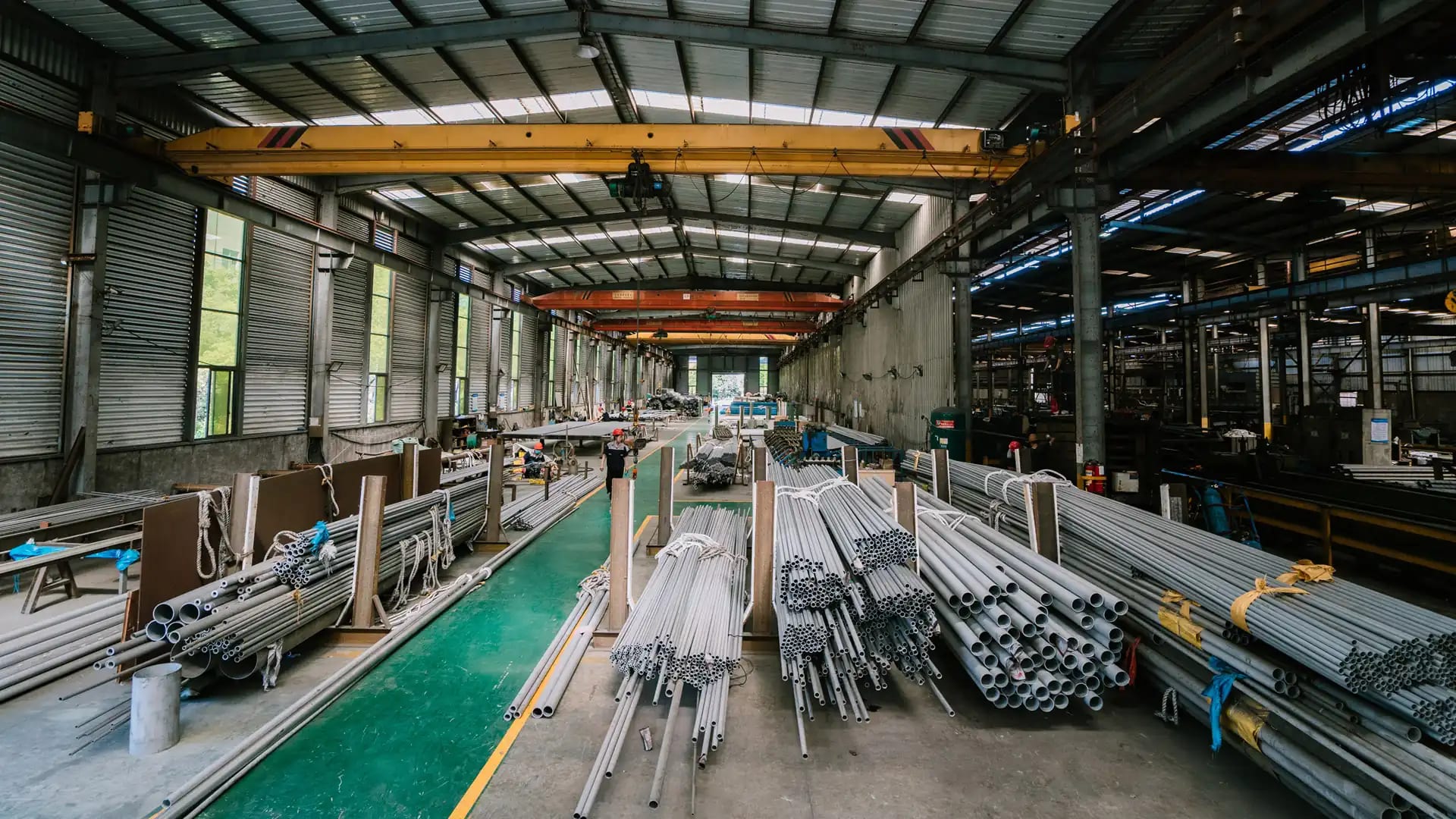
Tubes grouped by OD and wall, sleeved in woven polypropylene and steel strapped; small-OD and thin-wall sizes travel in wooden cases.
Identification
Marking on each tube or bundle tag shows the manufacturer, ASTM A213, TP310S, cold finished and minimum or average wall; project item numbers are added when requested.
End protection
Plastic caps pressed into both ends of every tube to keep the bore clean.
Long tubes
Full-length tubes are supported on evenly spaced timber saddles to keep them straight in transit.
Paperwork in the shipment
EN 10204 3.1 (3.2 on request) certificate, heat treatment charts, PMI records and a case list giving the contents of each bundle.
Delivery terms
FOB Thai port, CFR or CIF, as stated in the offer.
Destinations
By truck to plants inside Thailand, or by container ship to Singapore, Malaysia, Vietnam, Indonesia, the Philippines and India.
The indicative range for seamless stainless steel 310S tube to ASTM A213 is USD 6 to 10 per kg. With 19.0 to 22.0% nickel in the grade, the rate tracks the nickel market closely. Standard boiler and exchanger sizes in mill quantities price below small-OD instrumentation tube and small lots, which land in the upper part of the band. Thaida confirms a firm figure once your size list is in hand.
Indicative only. Send your sizes and specification to Thaida for a firm quotation.
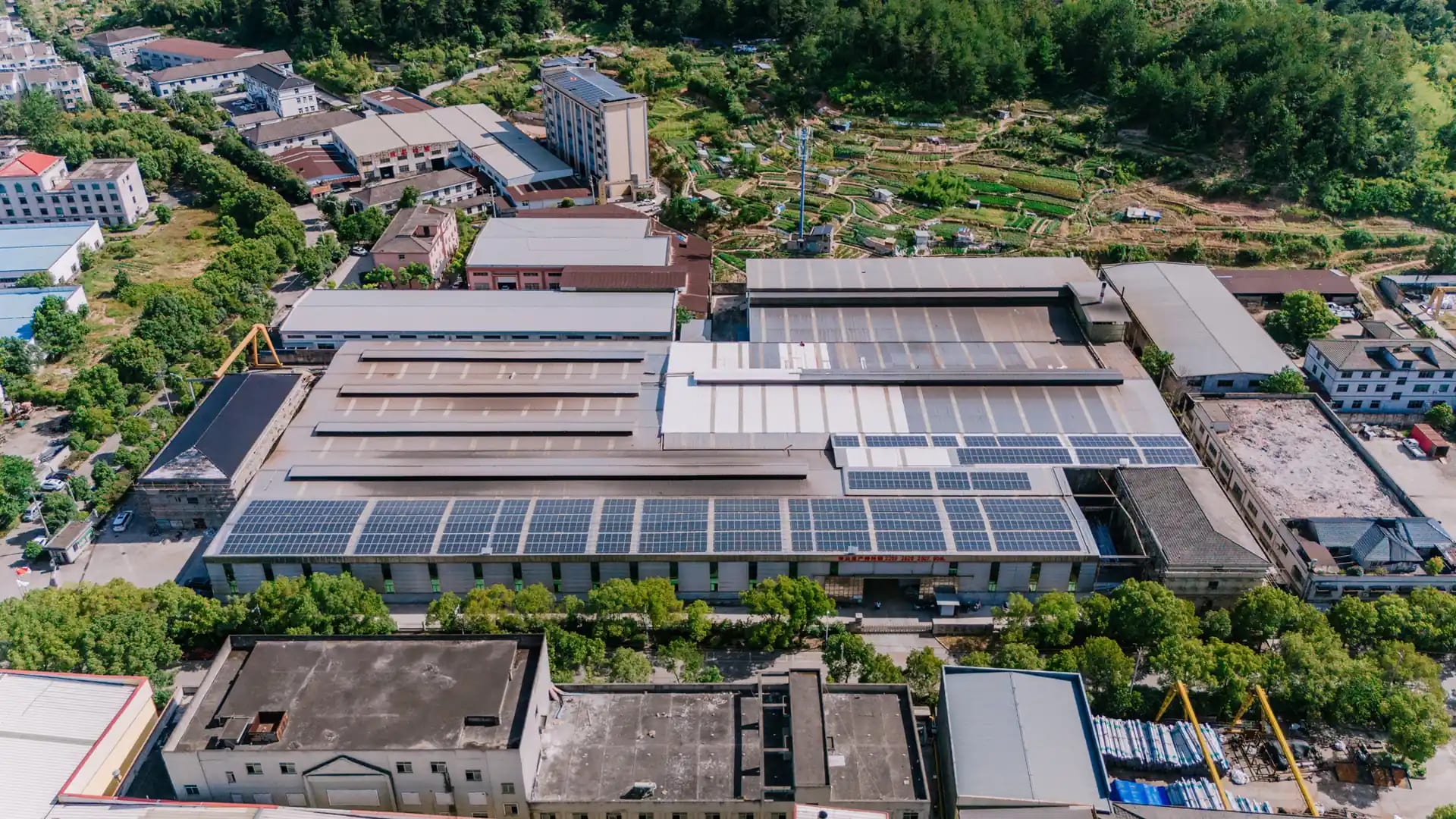
Our Stainless Steel 310S Seamless Tubes are made at the Ban Bueng mill, where billets go through piercing, cold drawing, annealing and inspection: 154 Moo.1 Map Phai, Ban Bueng, Chonburi 20170, Thailand. Offers, acknowledgments and shipping documents are issued by the sales office, 89/18 Moo.15 Enterprize Park, Bangna-Trad Road, Bang Kaeo, Bang Phli, Samut Prakan 10540, Thailand. Every offer marks which seamless 1.4845 stainless steel tube sizes are on the shelf and which join the next cold-drawing campaign.
No. A213 sets no molybdenum requirement for TP310S, so the heat analysis need not report it. The 0.75% maximum linked with 310S is a pipe-standard limit and does not apply to A213 tube. If your project specification applies that cap to tube, state the limit when you inquire and each heat's molybdenum result is reported against it.
By UNS number and ASTM grade. Our tubes are certified as UNS S31008 and TP310S, while grade 310 is UNS S31000 and has no A213 listing. The marking on every UNS S31008 seamless tube or its bundle tag shows the specification and grade, and the certificate reports the heat's carbon against the 0.08% maximum.
No. A213 sets no grain size requirement for TP310S, so its certificate carries no grain size result. Grain size No. 7 or coarser, checked on one end of one finished tube per lot, belongs to TP310H, the H grade with higher creep-rupture strength. If your design data assume H-grade properties, order TP310H.
No. A213 offers its stress-relief supplement, S1, only for TP304L, TP316L, TP321, TP347 and TP348, so TP310S has no stress-relieved condition under that standard. Each seamless TP310S tube is supplied in the solution-treated condition that the A213 tensile and hardness limits refer to. If a specification adapted from a 304L or 316L order lists S1, delete it from TP310S lines.
Yes. A213 expects superheater tubes to come through the forging, welding and bending that their service involves, and tubes rolled into boiler drums or tubesheets to expand and bead with no cracking or flaws. Each lot's flattening and flaring results, taken at both tube ends, confirm that ductility, and the 0.08% carbon ceiling of TP310S favors the welded joints.
Each ASTM A213 stainless steel 310S seamless tube is made from 6.35 to 257 mm OD and 0.89 to 12.7 mm wall, in lengths to 22 m. The tolerance tables that apply to A213 tube end at 225 mm OD, so diameter limits for larger sizes are agreed with you before the order is confirmed.
Request a Quote for Stainless Steel 310S Seamless Tubes
or email sales@thaida.co.th