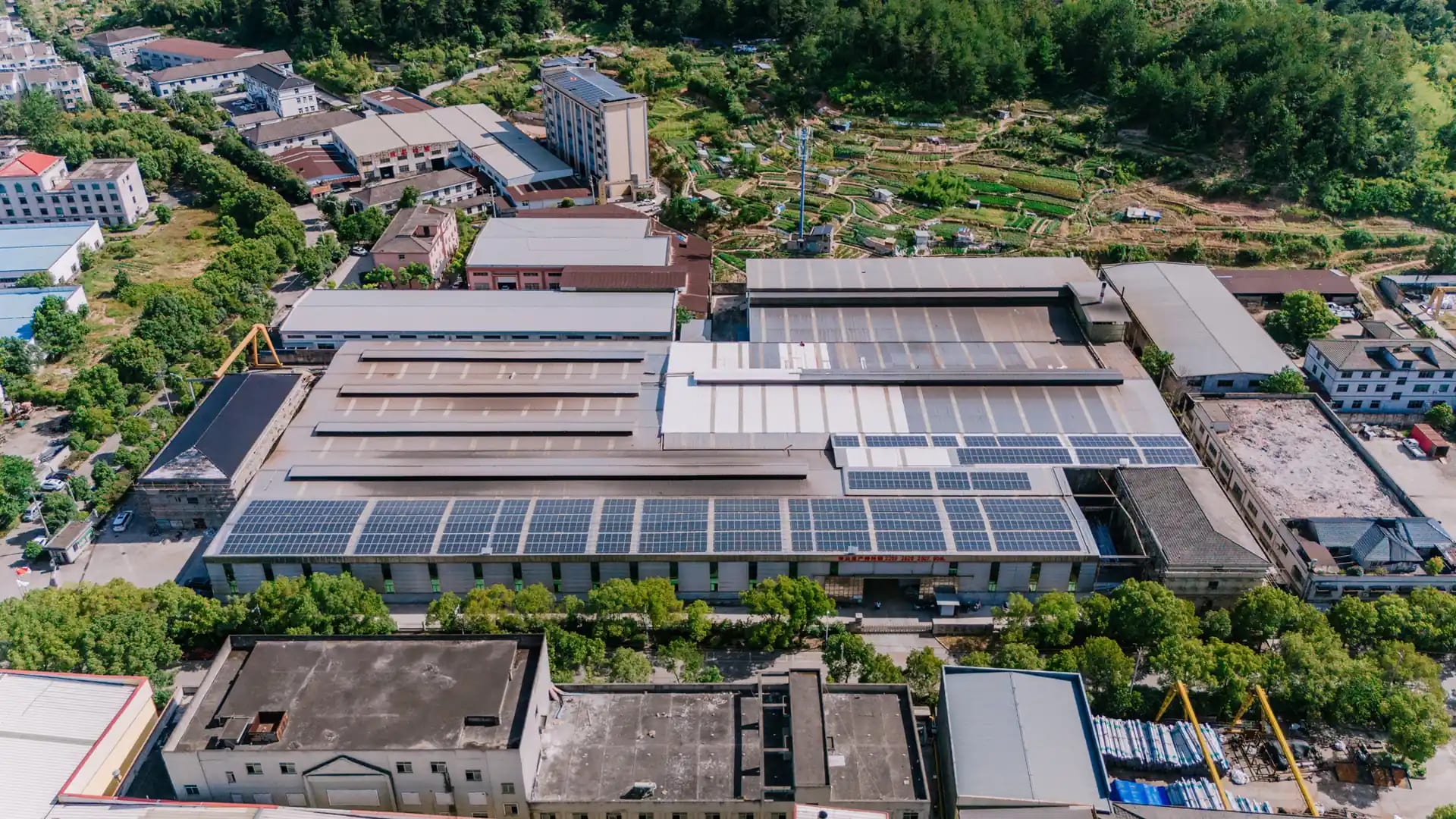

Seawater-Cooled Condensers
Surface condensers in coastal power and process plants pass seawater or brackish water through the bores, where molybdenum and nitrogen help the alloy resist pitting and crevice corrosion in chloride water.
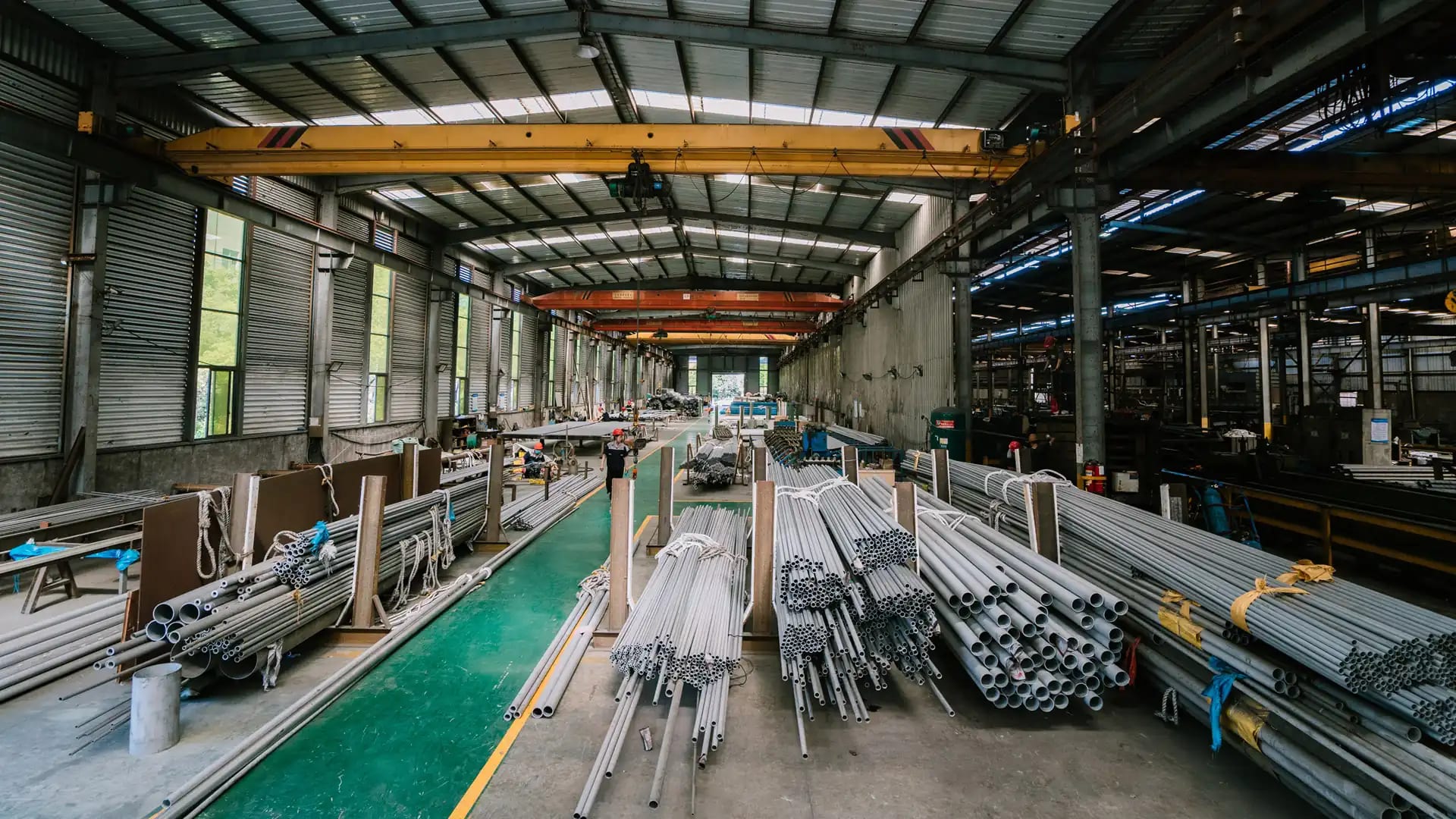
ASTM A213 / ASME SA-213 / UNS N08926 / W.Nr. 1.4529
For seawater-cooled heat exchangers and condensers, Thaida Stainless Steel Manufacturing (Thailand) Co., Ltd. manufactures Alloy 926 seamless tubes at its Ban Bueng, Chonburi plant, solution treated and hardness checked lot by lot under ASTM A213 / ASME SA-213. The alloy is UNS N08926, W.Nr. 1.4529, a high-molybdenum austenitic alloy with nitrogen and copper, and it belongs to our Incoloy seamless tubes range. Quotations, test certificates and export documents are prepared at our office in Bang Phli, Samut Prakan.
Alloy 926 seamless tubeUNS N08926 / W.Nr. 1.4529
EN 10204 3.1 certificate / 3.2 on request
The controls below apply to every lot we release: the A213 listing by UNS number, the solution treatment range, the hardness ceiling and the release test on each tube. The diameter, wall and length on offer are set out under sizes.

ASTM A213 covers seamless boiler, superheater and heat-exchanger tubes, and it lists this alloy by its UNS number alone, without a grade name. UNS N08926 is therefore the designation marked on every tube and printed on the certificate, and an ASTM A213 UNS N08926 seamless tube is checked against the chemistry, heat treatment, tensile and hardness rows of that standard. For Boiler and Pressure Vessel Code work, the related specification is ASME SA-213, so an ASME SA-213 UNS N08926 seamless tube is held to the same limits. Each tube is solution treated in the range 2010 to 2100 °F (1100 to 1150 °C) and quenched in water or rapidly cooled by other means. Where a line is drawn in nominal pipe size and schedule instead of outside diameter and wall, the same alloy leaves our mill as Alloy 926 seamless pipes.
Each seamless Incoloy 926 tube passes a hydrostatic test or a nondestructive electric test before release, the electric test by eddy current or ultrasonic examination, and the choice rests with us unless the order names one. Under hydrostatic test, each ASTM A213 UNS N08926 seamless tube sees a pressure set from its wall and diameter, which need not exceed 7 MPa (1000 psi) and is held for at least 5 seconds; a tube that leaks is rejected. One billet or one tube from each heat goes to product analysis, and every lot gives up a tension test: one tube for a lot of up to 50 tubes, two tubes above 50.
A213 makes the hardness ceiling a requirement for UNS N08926, not an informative note: 256 HBW on the Brinell scale, or 100 HRB on the Rockwell B scale. Specimens are taken from two tubes in each lot, and the result for every lot of seamless alloy N08926 tube is reported on the certificate.
Both forming checks come from finished tubes of the lot, each from its own tube: flattening specimens from each end of one tube, flaring specimens from each end of another. The flaring section, about 100 mm long, is driven onto a tool with a 60° included angle until the bore has opened by the minimum that its ratio of inside diameter to specified outside diameter demands: 21 % at a ratio of 0.9, 25 % at 0.7 and 39 % at 0.5. A213 separately requires a tube inserted in a tube sheet to stand expanding and beading without cracks or flaws.
An intergranular corrosion test to ASTM A262 Practice E is an order option under supplementary requirement S4 and runs only when the order calls for it. All results appear on an EN 10204 3.1 (3.2 on request) certificate, and third-party inspection is available on request.
Molybdenum at 6.0 to 7.0 % and nitrogen at 0.15 to 0.25 % define the analysis, carried on 24.0 to 26.0 % nickel and 19.0 to 21.0 % chromium with 0.50 to 1.50 % copper, and iron makes up the balance. Each heat of seamless 1.4529 alloy tube is analyzed against the A213 limits below, where a single figure is a maximum.
UNS N08926926
| Element | Limit per ASTM A213 / ASME SA-213 for UNS N08926 (%) |
|---|---|
| C (Carbon) | 0.020 max |
| Mn (Manganese) | 2.00 max |
| P (Phosphorus) | 0.030 max |
| S (Sulfur) | 0.010 max |
| Si (Silicon) | 0.50 max |
| Cr (Chromium) | 19.0 to 21.0 |
| Ni (Nickel) | 24.0 to 26.0 |
| Mo (Molybdenum) | 6.0 to 7.0 |
| N (Nitrogen) | 0.15 to 0.25 |
| Cu (Copper) | 0.50 to 1.50 |
A213 gives the alloy one row of minimums together with a hardness ceiling. Each lot of ASME SA-213 UNS N08926 seamless tube is tested in the solution-treated condition against the values below.
| Property | Requirement for UNS N08926 |
|---|---|
| Tensile Strength, min | 650 MPa (94 ksi) |
| Yield Strength, min | 295 MPa (43 ksi) |
| Elongation in 2 in. or 50 mm, min | 35 % |
| Hardness, Brinell, max | 256 HBW |
| Hardness, Rockwell B, max | 100 HRB |
Nitrogen is the strengthening addition behind these minimums. A213 applies its mechanical requirements to tubing of 3.2 mm (1/8 in.) inside diameter and larger, with walls of 0.4 mm (0.015 in.) and over.
Drawings and data sheets refer to Alloy 926 by its UNS number, its German material number or its European steel name. The rows below help read such a callout; they are cross-references and make no claim of conformity with European standards.
Whatever number appears on the drawing, our offer and the certificate name UNS N08926 as the designation of record.
Our mill range for seamless WNR 1.4529 tube runs from 6 to 457 mm outside diameter and from 1 to 65 mm wall, in single lengths up to 18 m, with each size confirmed in the offer. The permitted variations below are those that apply to A213 tube, and the printed diameter bands end at 225 mm.
| Specified OD | Over | Under |
|---|---|---|
| Under 25 mm (1 in.) | 0.1 mm (0.004 in.) | 0.11 mm (0.004 in.) |
| 25 to 40 mm (1 to 1 1/2 in.), incl. | 0.15 mm (0.006 in.) | 0.15 mm (0.006 in.) |
| Over 40 to 50 mm (1 1/2 to 2 in.), excl. | 0.2 mm (0.008 in.) | 0.2 mm (0.008 in.) |
| 50 to 65 mm (2 to 2 1/2 in.), excl. | 0.25 mm (0.010 in.) | 0.25 mm (0.010 in.) |
| 65 to 75 mm (2 1/2 to 3 in.), excl. | 0.3 mm (0.012 in.) | 0.3 mm (0.012 in.) |
| 75 to 100 mm (3 to 4 in.), incl. | 0.38 mm (0.015 in.) | 0.38 mm (0.015 in.) |
| Over 100 to 200 mm (4 to 7 1/2 in.), incl. | 0.38 mm (0.015 in.) | 0.64 mm (0.025 in.) |
| Over 200 to 225 mm (7 1/2 to 9 in.), incl. | 0.38 mm (0.015 in.) | 1.14 mm (0.045 in.) |
These bands include out-of-roundness and apply before bending, expanding or other fabrication. On thin-wall tube, with a wall of 3 % of OD or less, or 0.5 mm or less, the band applies to the mean of the extreme readings, and ovality may reach 0.5 mm at 25.4 mm OD and under, or 2.0 % of OD above that. Hot-finished seamless tube follows its own, wider bands, and a diameter above 225 mm has its tolerance agreed in our offer.
Wall is ordered either as a minimum or as an average, never both, and the marking on each tube states which basis applies.
| Wall Basis and Product | Permitted Variation |
|---|---|
| Minimum wall, cold-finished, 38.1 mm OD and under | +20 % / 0 |
| Minimum wall, cold-finished, over 38.1 mm OD | +22 % / 0 |
| Average wall, cold-formed | ±10 % |
Cold-finished tube with a wall of 19.1 mm or more, or with an inside diameter of 60 % of OD or less, takes the hot-finished wall bands instead.
A tube ordered to a cut length is never delivered short. Cold-finished tube under 50.8 mm OD may run up to 3 mm over, while cold-finished tube of 50.8 mm OD and larger, like all hot-finished tube, may run up to 5 mm over. For cut lengths above 7.3 m, the over-tolerance grows by 3 mm for each 3 m or part of it, up to 13 mm more, and it applies before any bending.
Three neighboring grades on exchanger schedules are also listed by UNS number in A213, and the printed ranges show where they part.
904L seamless tubes are made to UNS N08904, which A213 sets at 4.0 to 5.0 % molybdenum, 0.10 % nitrogen maximum and 1.00 to 2.00 % copper, with minimums of 490 MPa tensile and 215 MPa yield and a hardness ceiling of 192 HBW / 200 HV. UNS N08926 carries 6.0 to 7.0 % molybdenum and 0.15 to 0.25 % nitrogen, with 650 MPa and 295 MPa minimums.
A seamless SMO 254 tube is UNS S31254, which A213 sets at 17.5 to 18.5 % nickel, 6.0 to 6.5 % molybdenum, 0.18 to 0.25 % nitrogen and 0.50 to 1.00 % copper. N08926 runs 24.0 to 26.0 % nickel, 6.0 to 7.0 % molybdenum and 0.50 to 1.50 % copper.
Incoloy 028 seamless tubes follow UNS N08028, which A213 sets at 26.0 to 28.0 % chromium, 30.0 to 34.0 % nickel and 3.0 to 4.0 % molybdenum, with no nitrogen requirement and no hardness limit. The choice among the four starts from the duty and the analysis named in the exchanger specification, and a seamless Alloy 926 tube is checked only against the N08926 rows.
Seamless Alloy 926 tube is specified where chloride-bearing water or acid process streams run on the tube side of an exchanger or condenser.
Surface condensers in coastal power and process plants pass seawater or brackish water through the bores, where molybdenum and nitrogen help the alloy resist pitting and crevice corrosion in chloride water.
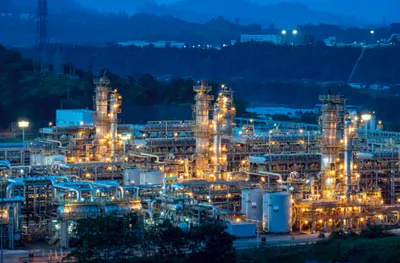
Process coolers in coastal process plants run brackish water or seawater on the tube side, with each tube cut to the bundle drawing and its wall declared as minimum or average.

Brine heaters in desalination plants take the alloy as heater tubing, where concentrated brine on the tube side calls for resistance to pitting, crevice corrosion and chloride stress corrosion cracking.

Flue gas desulfurization units cool their chloride-rich recirculating liquor in exchangers tubed with the alloy, each lot released with its hardness, flattening and flaring results on the certificate.

Bleach plants in pulp mills use the tube in exchangers on chlorine dioxide stage liquors, ordered by outside diameter with a minimum or average wall rather than by nominal pipe size.

Chemical and pharmaceutical plants handling mixed acids and organic chlorides tube their exchangers with the alloy, whose copper content supports its resistance in sulfuric and phosphoric acid streams.
Packing
Tubes bundled by heat and size in wooden cases, with both ends of every tube capped.
Tube marking
Our name or brand, ASTM A213, UNS N08926, hot finished or cold finished, and minimum wall or average wall.
Project marks
Exchanger item numbers or your order reference added when the order asks for them.
Documents
An EN 10204 3.1 (3.2 on request) certificate for each heat and lot of seamless WNR 1.4529 tube in the load, with a packing list per case.
Trade terms
FOB, CIF or CFR, with the loading port named in the offer.
Timing
The mill date and ship date confirmed on the order acknowledgement.
Alloy 926 seamless tubes are indicatively priced at USD 22 to 50 per kg. Where a quotation lands in that range follows the nickel and molybdenum markets first, then the solution-treated condition and the size: small outside diameters and thin walls need more cold-working and annealing passes per kilogram than heavier tube. Lot size, cut lengths and any added inspection move the figure as well. Send the tube schedule with quantities for a firm price.
Indicative only. Send your sizes and specification to Thaida for a firm quotation.
Alloy 926 seamless tubes are produced at 154 Moo.1 Map Phai, Ban Bueng, Chonburi 20170, Thailand. Quotations, certificates and shipping papers are issued from 89/18 Moo.15 Enterprize Park, Bangna-Trad Road, Bang Kaeo, Bang Phli, Samut Prakan 10540, Thailand. We supply plants across Thailand and export to Singapore, Malaysia, Vietnam, Indonesia, the Philippines and India.
Every lot of seamless alloy N08926 tube is held to 256 HBW or 100 HRB maximum, with readings from two tubes. The wall decides the scale: from 5.1 mm upward, Brinell, Rockwell or Vickers may be used, and from 1.65 mm to under 5.1 mm, Rockwell or Vickers.
Ductility. Specimens of at least 60 mm from each end of one finished seamless 1.4529 alloy tube are flattened, and in the first step no crack may appear before the plates close to a height H, worked out from the wall, the outside diameter and a factor of 0.09 for austenitic steel.
Two rules apply together. The mean diameter must meet the cold-finished band, for example ±0.15 mm from 25 to 40 mm OD, and below 50.8 mm OD the largest and smallest readings at any cross section may not stray more than ±0.25 mm from nominal. Where the thin-wall ovality allowance is larger, that allowance governs.
Order minimum wall when the pressure or thermal design rests on the thinnest wall allowed, because no tube may then fall below the stated figure. Order average wall when tube weight and bore matter more than a guaranteed floor, since the excess allowed on a minimum-wall order adds metal to every length.
Up to 18 m in one straight length. Our range for the alloy runs from 6 to 457 mm outside diameter with walls from 1 to 65 mm, and each size is confirmed with the offer. Long bundle tubes are best ordered at the shortest length the drawing accepts, because cut lengths carry an over-tolerance only.
Yes. Tube-side seawater and brackish water in shell-and-tube exchangers and condensers is a core duty for UNS N08926 seamless tube, whose 6.0 to 7.0 % molybdenum and 0.15 to 0.25 % nitrogen resist pitting, crevice corrosion and stress corrosion cracking in chlorides. Send the water analysis, flow velocity and design conditions with your tube schedule.
UNS S31254 must reach 675 MPa tensile at walls of 5 mm and under and 655 MPa above, with 310 MPa yield, against a single 650 MPa tensile and 295 MPa yield for N08926. The hardness ceilings are 220 HBW / 230 HV and 96 HRB for S31254, and 256 HBW and 100 HRB for N08926.
An EN 10204 3.1 (3.2 on request) certificate covering every heat and lot in the load. It reports the heat and product analysis for each heat of ASTM A213 UNS N08926 seamless tube against the standard, the tension, hardness, flattening and flaring results per lot, and the hydrostatic or electric test each tube passed. Third-party inspection is available on request.
Request a Quote for Alloy 926 Seamless Tubes
or email sales@thaida.co.th