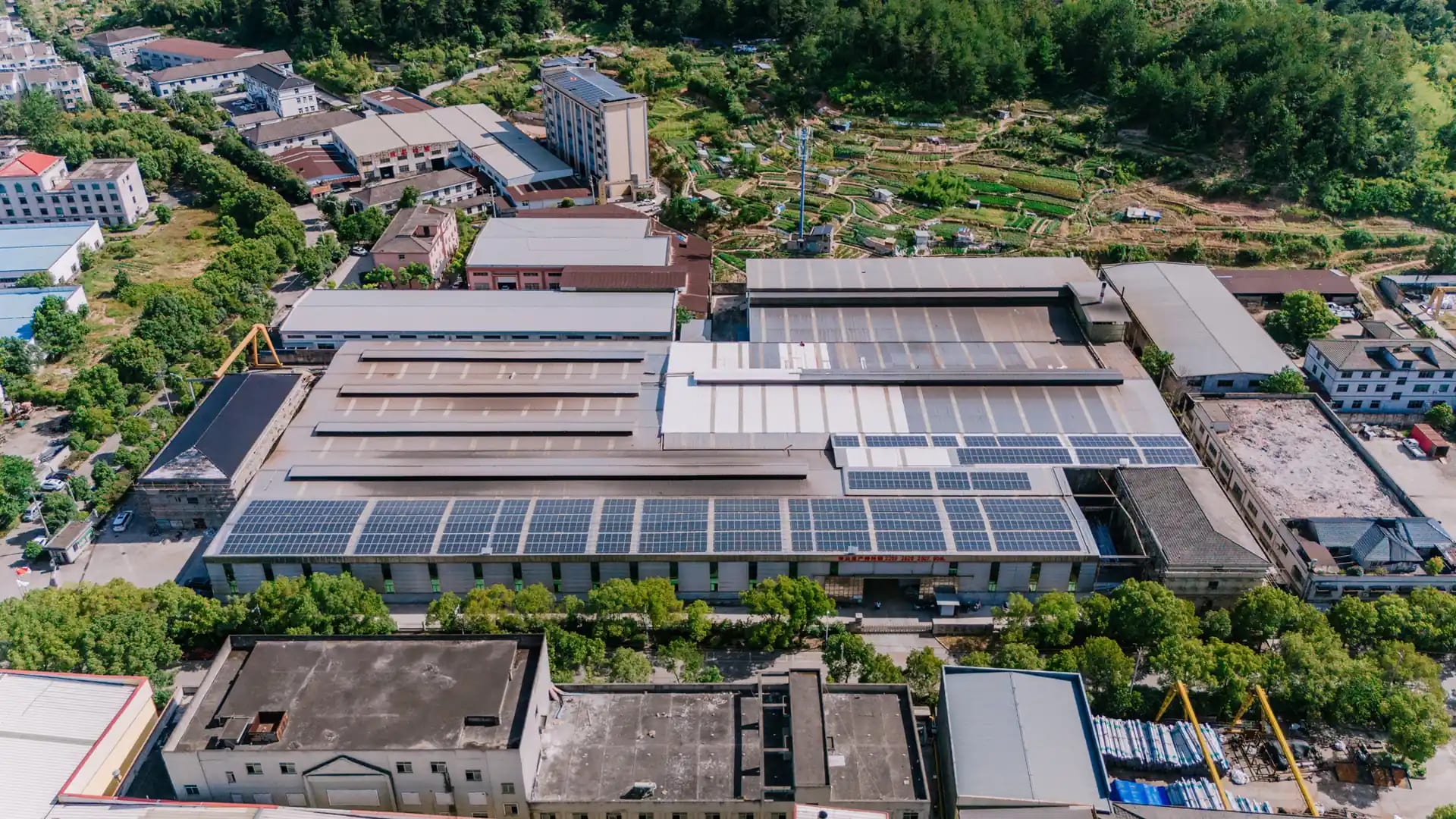

Condensers and Exchanger Bundles
Shell-and-tube bundles and condensers in multipurpose chemical plants take this grade where the shell side carries reducing acid and the assembly is too large to solution anneal once it has been welded up.
ASTM B622 / ASME SB-622 / UNS N06455 / W.Nr. 2.4610
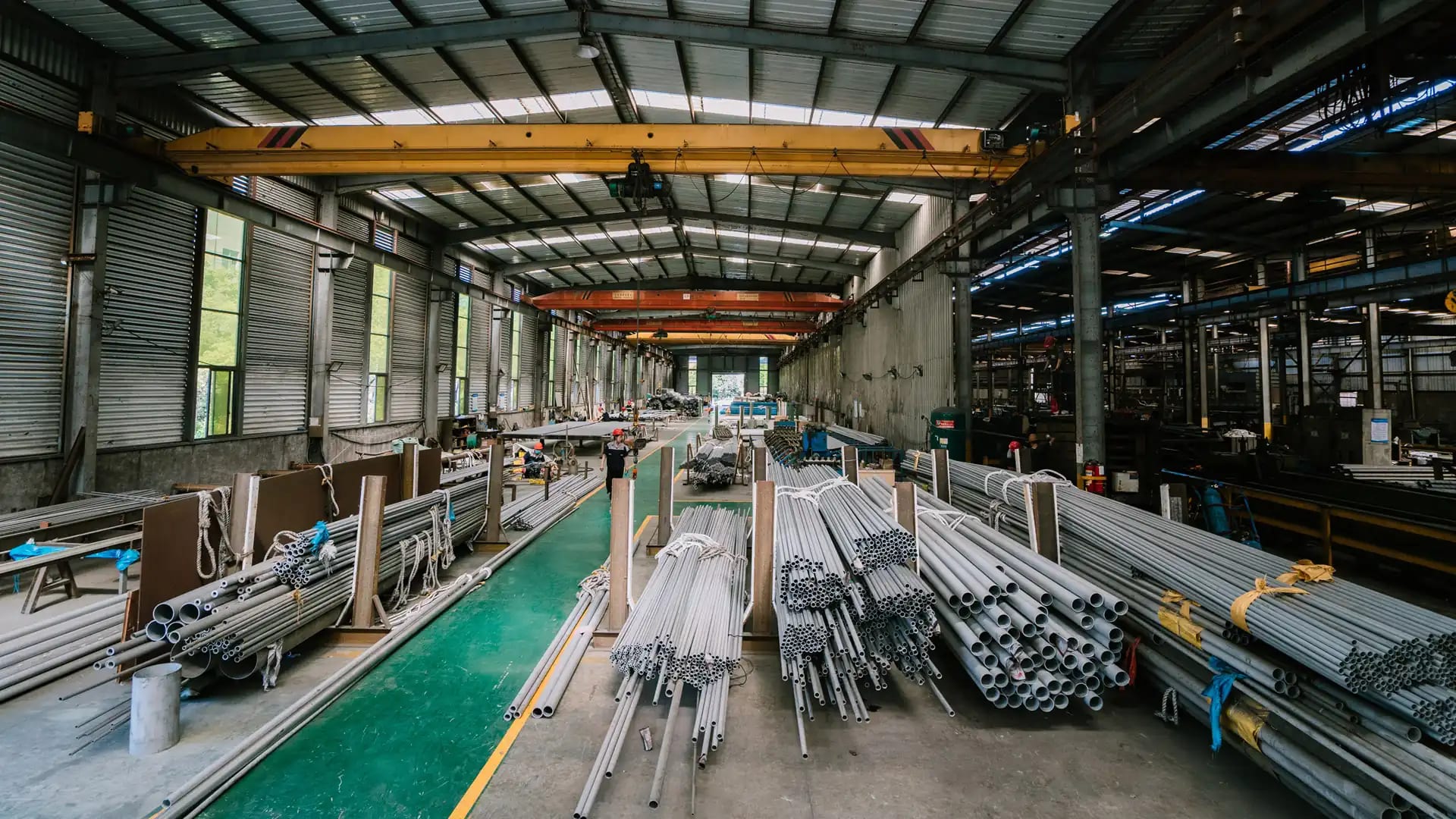
ASTM B622 Alloy C4 seamless tubes are part of what Thaida Stainless Steel Manufacturing (Thailand) Co., Ltd. draws at Ban Bueng, Chonburi, Thailand, for tube bundles that sit hot between cleanings and for assemblies welded into place. The alloy is numbered UNS N06455 and W.Nr. 2.4610, and it is one of the grades gathered under our Hastelloy Seamless Tubes. The Bang Phli, Samut Prakan office issues quotations and certificate sets.
Alloy C4 seamless tubeUNS N06455 / W.Nr. 2.4610
EN 10204 3.1 certificate / 3.2 on request
The envelope below is the range we draw in this grade. Read your bundle drawing against it, then send an outside diameter, wall and cut length for every item you need priced.

ASTM B622, carried into ASME work as SB-622, covers seamless nickel and nickel-cobalt alloy pipe and tube. It identifies the alloys in its scope by UNS number and attaches no grade name to any of them, which is why N06455 is the number stamped on the material and entered on the certificate. The specification orders tube by outside diameter, by a wall called out as minimum or average, and by length; where the same alloy has to follow a line list dimensioned as pipe, our Alloy C4 seamless pipes take that route. Material ships solution annealed and descaled, and atmosphere control during the anneal removes the need for a separate descaling step.
Testing is organized by lot: one chemical analysis and one tension test per lot, and no tube reaches release before it has held a hydrostatic pressure test or passed a nondestructive electric examination used in place of one. A lot certificate to EN 10204 3.1 (3.2 on request) travels with every ASME SB-622 C4 seamless tube, and an independent inspection report is available on request.
In a seamless Alloy C4 tube nickel makes up the remainder. Two ceilings are what make the grade worth specifying for bundle work: iron stops at 3.0 % and ASTM B622 sets no tungsten requirement at all, so the intermetallic phases that gather in a heat-affected zone have less to build on.
Chromium at 14.0 to 18.0 % and molybdenum at 14.0 to 17.0 % sit close to equal, which is how one tube material follows a circuit whose oxidation potential moves from pass to pass. Carbon stops at 0.015 % and titanium at 0.70 %, and titanium is a ceiling no other grade we draw in this family carries.
The limits are the ASTM B622 values. The analysis of the heat supplied is listed on the certificate issued for the lot.
UNS N06455C4
| Element | Composition limit, ASTM B622 (%) |
|---|---|
| Ni (Nickel) | Remainder |
| Cr (Chromium) | 14.0 to 18.0 |
| Mo (Molybdenum) | 14.0 to 17.0 |
| Fe (Iron) | 3.0 max |
| Co (Cobalt) | 2.0 max |
| Mn (Manganese) | 1.0 max |
| Ti (Titanium) | 0.70 max |
| Si (Silicon) | 0.08 max |
| P (Phosphorus) | 0.04 max |
| S (Sulfur) | 0.03 max |
| C (Carbon) | 0.015 max |
| W (Tungsten), V (Vanadium), Cu (Copper), Cb (Niobium) | No requirement |
ASTM B622 carries one table of room-temperature minimums covering both product forms, so the three figures below are the same ones an item ordered in the matching pipe form answers to.
| Property | Value | Unit |
|---|---|---|
| Tensile Strength, min | 690 (100) | MPa (ksi) |
| Yield Strength (0.2% offset), min | 276 (40) | MPa (ksi) |
| Elongation in 2 in. (50.8 mm) or 4D, min | 40 | % |
At 276 MPa the yield minimum sits below every other C-family grade we draw, with ASTM B622 putting UNS N10276 at 283 MPa and UNS N06022 at 310 MPa, so a thin-wall bundle designed in this alloy starts from a slightly lower material input than the same bundle in either of those. Nothing in the row is divided by wall thickness, so a single set of minimums covers walls right across the 1 to 65 mm range.
Fewer national numbers exist for this alloy than for the rest of the family, and what follows is a cross-reference set for checking drawings. None of it is a conformity claim: the material is certified to ASTM B622 / ASME SB-622.
UNS N06455 is the one designation the specification itself assigns, and it is what appears on the material and on the certificate. The European number for the same alloy is W.Nr. 2.4610, which older drawings print as DIN 2.4610. When a drawing asks for a seamless WNR 2.4610 tube we set that number beside the UNS entry, and no European standard is claimed behind it.
We draw seamless 2.4610 tube between 6 and 457 mm outside diameter, on walls between 1 and 65 mm, and we cut to any length up to 22 m. Every item is confirmed as an outside diameter against either a nominal (average) wall or a minimum wall, so state which basis your bundle drawing works in, and ends ship plain, cut and deburred.
Cold-worked tolerances govern what we release in this grade, and the bands widen as the diameter grows. The five below are the exchanger, condenser and small-bore sizes that most C4 bundles are built from; the same regime runs on above them, on wider bands, to the top of the envelope.
| OD (D) mm | OD Tolerance (mm) | Nominal (Average) Wall | Minimum Wall |
|---|---|---|---|
| D ≤ 10 | ±0.10 | ±15% | +30% / 0 |
| 10 < D < 16 | ±0.13 | ±15% | +30% / 0 |
| 16 ≤ D ≤ 38 | ±0.19 | ±10% | +22% / 0 |
| 38 < D ≤ 76 | ±0.25 | ±10% | +22% / 0 |
| 76 < D ≤ 114 | ±0.38 | ±10% | +22% / 0 |
Swipe sideways to see the full table.
Ovality is accounted for. Where a wall is no more than 3 % of the outside diameter, the mean sits inside the band above and individual readings may fall outside it by a further 0.5 % of the nominal outside diameter. On tube over 114 mm outside diameter carrying a wall thicker than that 3 %, the mean again meets the band while an individual reading may run to twice the tabulated figure.
Two things decide whether a bundle can be assembled from the tubes as delivered: how far an end can be expanded without splitting, and how much a cut length is allowed to run over its nominal figure. Both are set out below.
A flare test is not among the requirements the product specification places on this grade, and we carry it out when the purchase order asks for it. The procedure is fixed. A specimen end is expanded by a tool whose included angle is 60 degrees, and the expansion carries on until the specified outside diameter has grown by 30 %. The flared specimen must show no cracking right through the wall.
Put the flare test on the order line where the fabrication sequence expands or rolls tube ends into a tube sheet, since that is the duty the test models. No test frequency is printed against it, so the number of specimens is agreed with the order rather than assumed, and the outcome appears on the manufacturer test certificate beside the other mill tests.
The 30 % figure is one fixed increase of the specified outside diameter and it does not move with the ratio between inside and outside diameter. Stainless tube practice grades its flare requirement from that ratio instead, which is why a percentage carried across from a stainless procedure will not line up here. Where a welding or expansion procedure has to be written, the 30 % outside-diameter figure is the one to quote.
| OD (mm) | Cut Length Tolerance (mm) |
|---|---|
| OD < 50.8 | +3.2 / 0 |
| OD ≥ 50.8 | +4.8 / 0 |
A cut length is allowed to come out over the figure ordered and nothing under it, which is the right way round for a bundle that will be trimmed back to a tube sheet pitch. The table holds for cuts of 7.3 m and under. A longer cut earns an extra 3.2 mm of over-tolerance per 3 m step or part of one, and that extra is capped at 12.7 mm, so even a tube cut close to our 22 m maximum has a known ceiling on overlength. Plan the trim allowance at the tube-sheet end instead of ordering to an exact finished dimension.
Condenser and exchanger duty in chlorinated and acid service is the center of this grade's range, together with bundles that are put to work in the as-welded condition.
Shell-and-tube bundles and condensers in multipurpose chemical plants take this grade where the shell side carries reducing acid and the assembly is too large to solution anneal once it has been welded up.

Reboiler and evaporator tubing in formic and acetic acid plants is a settled use for UNS N06455 seamless tube, where the organic acid duty and the welded construction of the bundle decide the material.

Exchanger tubes and the tubing that connects them in sulfuric acid concentration and dilution circuits run in this alloy, chosen for the acid and chloride mix in the stream rather than for its strength.

Bleach plants working with chlorine dioxide, hypochlorite and wet chlorine gas use seamless Alloy C4 tube in digester components and in the acid handling and transfer runs around them.

Reactor, transfer and storage vessel tubing in pharmaceutical and fine chemical work takes C4 seamless tube, where a plant changes product between campaigns and the oxidizing load in the stream moves with it.

Tube bundles in batch chemical manufacturing are taken hot and cold between campaigns, so an Alloy C-4 seamless tube is specified where the microstructure has to stay stable without a repeat anneal.
Specify this grade when a bundle has to enter acid service as welded and a solution anneal on the finished assembly is impractical. Where the duty turns strongly oxidizing, the chromium in Alloy C22 seamless tubes is higher, and the ASTM B622 row for UNS N06022 carries a 310 MPa yield minimum with elongation of 45 %. Where one tube has to cover oxidizing and reducing passes together, Alloy C276 seamless tubes bring tungsten into a comparable molybdenum base, specified at 3.0 to 4.5 %, with iron running 4.0 to 7.0 %. C4 narrows its chemistry rather than widening it, and that is the trade worth making when the fabrication route, more than the medium alone, settles the material.
Every seamless alloy 2.4610 tube is packed for sea freight and tagged so a bundle can be reconciled on arrival.
Packing
Wooden cases or bundles, with end caps fitted to keep the bore clean.
Tagging
The heat number and nominal size remain legible on the tube itself, and on the bundle tag where a piece is too small or too short to hold them.
Trade terms
FOB, CIF or CFR against the destination port you nominate.
Documents
The EN 10204 3.1 (3.2 on request) certificate, the raw material certificate, heat treatment charts for the lot, and a dimensional and surface measurement record.
Mill tests available on the manufacturer test certificate: 100% PMI, flare, bend, impact, grain size, pitting corrosion, intergranular corrosion, ultrasonic (UT) and eddy current (ET) examination, and hydrostatic pressure.
Dispatch
Production and shipping dates are fixed with the quotation.
Seamless C4 tube sits indicatively at around USD 28 to 68 per kg. Treat that as an opening band and not a quotation. C4 is a project material far more often than a stock one, so melt lot size, lead time and the short list of mills able to take the work move the figure as much as the alloy content does, and outside diameter, wall, cut length, quantity and added testing shift it further on top of nickel and molybdenum input costs. Settle one point first: this alloy is often bought to a European or mill specification rather than to ASTM B622, so confirm the certificate basis when the sizes come over, and each item is then priced on its own.
Indicative only. Send your sizes and specification to Thaida for a firm quotation.
Our mill is at 154 Moo.1 Map Phai, Ban Bueng, Chonburi 20170, Thailand. Quotations, order entry and documentation are handled at 89/18 Moo.15 Enterprize Park, Bangna-Trad Road, Bang Kaeo, Bang Phli, Samut Prakan 10540, Thailand. Projects inside Thailand are served direct, and we export to Singapore, Malaysia, Vietnam, Indonesia, the Philippines and India.
Only when the order calls for it. The product specification for this grade asks for a chemical analysis and a tension test on each lot, plus a pressure or electric test on every tube, and the flare test sits outside that list. Put it on the order line and it is run and reported.
An end is opened out by a 60 degree included-angle tool until the specified outside diameter has grown by 30 %, and the flared end has to come through with no cracking right through the wall. No test frequency is attached to the requirement, so the number of specimens is settled on the order.
Because the figure here is a single fixed one, a 30 % increase of the specified outside diameter. Stainless tube practice grades its flare requirement against the ratio of inside to outside diameter instead, so a percentage carried over from a stainless procedure will not line up. Use the 30 % outside-diameter figure.
Cut lengths may run over the ordered figure and nothing under it: 3.2 mm on tube below 50.8 mm outside diameter, 4.8 mm at 50.8 mm and above, for cuts of 7.3 m or less. A longer cut adds 3.2 mm of over-tolerance for each 3 m step or part of one, to a 12.7 mm ceiling.
That size sits in the band over 10 mm and under 16 mm, where the outside diameter is held to 0.13 mm either way. Nominal wall is held to 15 % either way, and ordering the same item to minimum wall changes the wall allowance to plus 30 % with nothing below the figure you state.
The specification caps iron at 3.0 % and carbon at 0.015 %, and asks for no tungsten at all. Fewer intermetallic phases can form as a joint cools, so the weld zone holds its corrosion resistance without the furnace pass that a fully assembled bundle cannot be given.
Take C4 where the bundle goes into service as welded. Take C22 where the duty is firmly oxidizing: it carries higher chromium, and the ASTM B622 row for UNS N06022 sets a 310 MPa yield minimum with 45 % elongation against 276 MPa and 40 % for C4. Send the medium, concentration and chloride level with the bundle drawing.
The heat analysis set against the ASTM B622 limits, the tension result for the lot, and confirmation that each tube passed its pressure or electric test. It is issued as EN 10204 3.1 (3.2 on request), carries UNS N06455, and lists any flare or other mill test the order added.
Request a Quote for Alloy C4 Seamless Tubes
or email sales@thaida.co.th