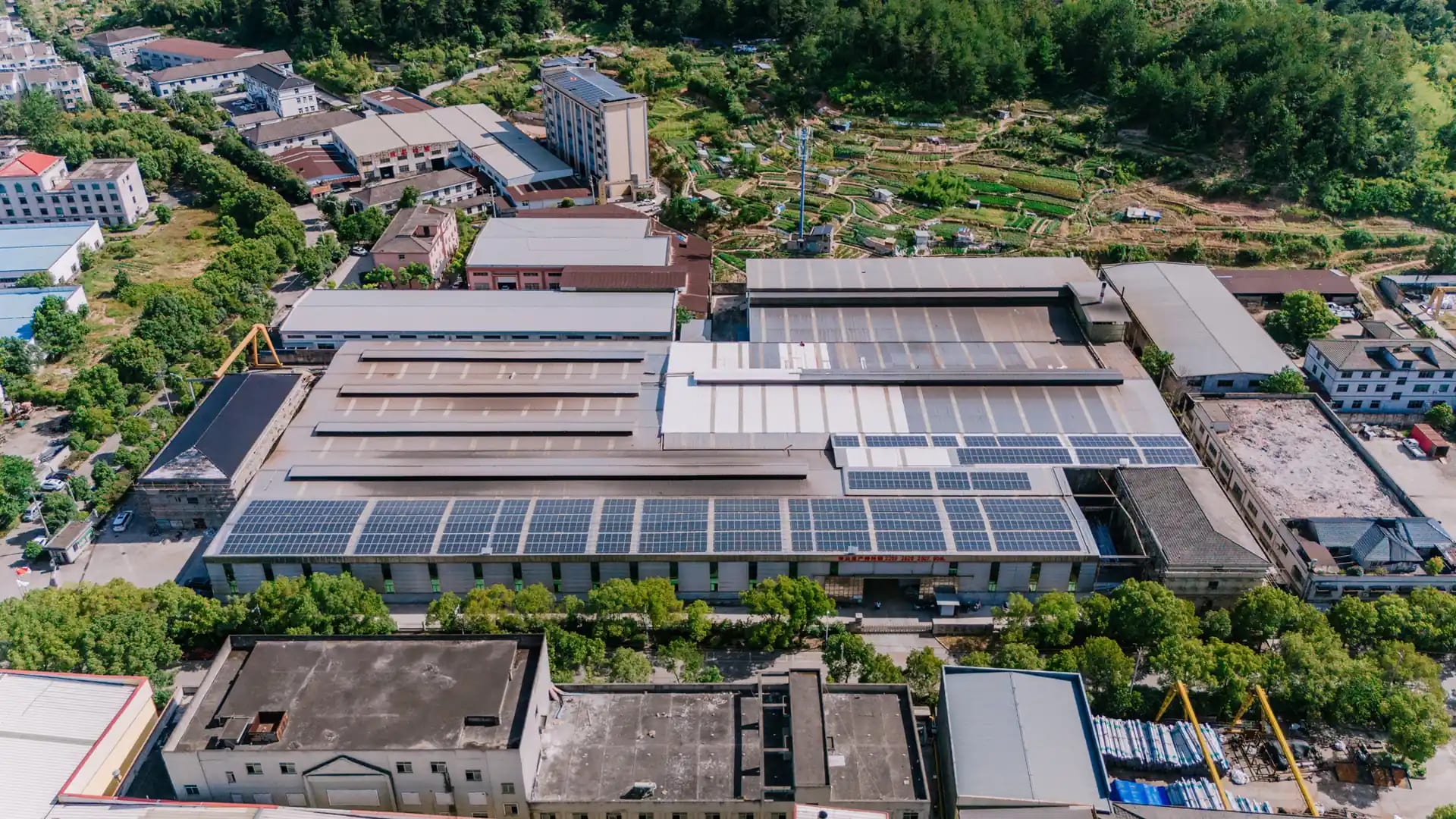

Superheater and Heat Exchanger Bundles
Superheater elements and shell-and-tube bundles run hot for whole campaigns between shutdowns, and stabilized tube is specified when the equipment designer wants every weld zone to survive that exposure intact.
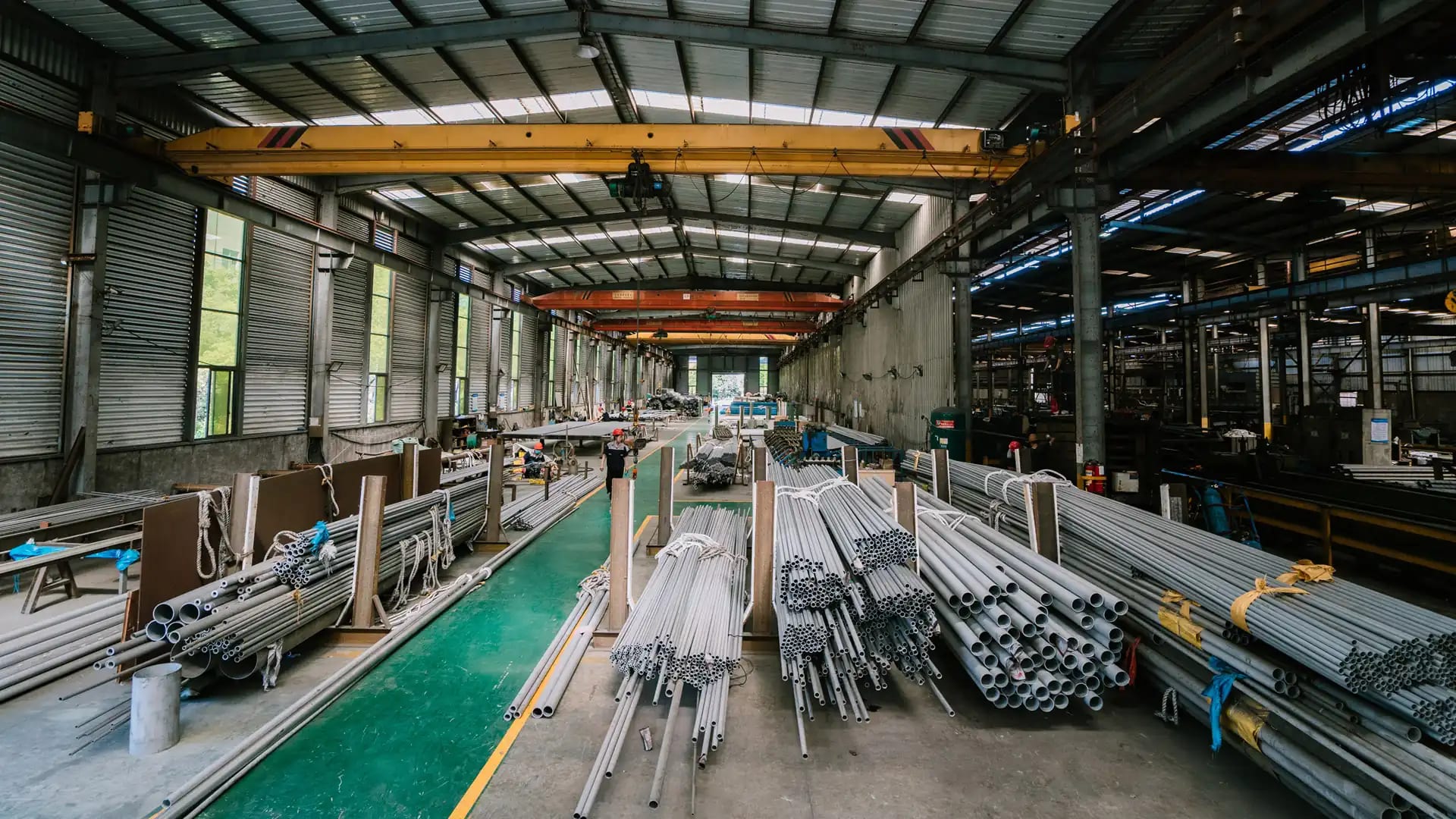
ASTM A213 / ASME SA-213 / UNS S31635 / W.Nr. 1.4571
Tube production at Thaida Stainless Steel Manufacturing (Thailand) Co., Ltd. covers ASTM A213 TP316Ti stainless steel seamless tubes, made in Ban Bueng, Chonburi, Thailand, for bundles that spend long runs hot enough to sensitize an unstabilized steel. The grade is UNS S31635, and EN 1.4571 is the European number for the same titanium-stabilized steel, the molybdenum-bearing stabilized member of our stainless steel seamless tubes range. Quotations and certificates are issued from the Bang Phli, Samut Prakan office.
Stainless Steel 316Ti seamless tubeUNS S31635 / W.Nr. 1.4571
EN 10204 3.1 certificate / 3.2 on request
Size is set by outside diameter and wall, with the wall read as a minimum unless your order names average wall. The condition, hot finished or cold finished, goes on the same line, because it decides which permitted variations the tube is measured against.

A213 is the standard for seamless boiler, superheater and heat-exchanger tube. TP316Ti belongs to its austenitic group, so one ASTM A213 stainless steel 316Ti seamless tube order settles chemistry, heat treatment, mechanical testing, finish and marking from a single document. Lines ordered by NPS and schedule are served instead by our stainless steel 316Ti seamless pipes.
Each heat is analyzed on one billet or one finished tube, which puts the carbon, nitrogen and titanium figures on the steel that became your order and not on the melt record alone. Lot testing follows: a tension test on one tube where the lot holds 50 tubes or fewer and on two where it holds more, hardness on two tubes, and a flattening and a flaring test, each taken at both ends of a tube of its own. Every tube is then proved on its own, by hydrostatic test or by the nondestructive electric test that may stand in its place, with that choice ours unless your order names one. The heat and lot results reach you as an EN 10204 3.1 (3.2 on request) certificate. Where your order calls for witnessed testing, we book an independent inspector to attend the lot tests.
Titanium is what defines the grade, specified as a multiple of carbon plus nitrogen: five times their sum at the low end, 0.70% at the high end. Nitrogen stops at 0.10%, and silicon at 0.75% rather than the 1.00% the unstabilized 316 grades may carry. Every UNS S31635 seamless tube comes from a heat read against these limits, in weight %:
UNS S31635316TI
| Element | TP316Ti Limit, % |
|---|---|
| C (Carbon) | 0.08 max |
| Mn (Manganese) | 2.00 max |
| P (Phosphorus) | 0.045 max |
| S (Sulfur) | 0.030 max |
| Si (Silicon) | 0.75 max |
| Cr (Chromium) | 16.0 to 18.0 |
| Ni (Nickel) | 10.0 to 14.0 |
| Mo (Molybdenum) | 2.00 to 3.00 |
| N (Nitrogen) | 0.10 max |
| Ti (Titanium) | 5 x (C + N) min, 0.70 max |
Carbon in an austenitic steel can leave solution as chromium carbide at the grain boundaries, taking the local chromium with it and opening those boundaries to intergranular attack after welding or long exposure to heat. In 316Ti the titanium reaches the carbon and nitrogen first, forming stable titanium carbides and carbonitrides, so the chromium stays where the corrosion resistance needs it. That mechanism works with carbon at 0.08% maximum, which is why 316Ti belongs to the stabilized grades rather than the low-carbon ones.
Titanium changes the corrosion behavior of the steel, not its room-temperature targets. Each lot is tested after solution treatment against the A213 figures for TP316Ti:
| Property | A213 Requirement for TP316Ti |
|---|---|
| Tensile Strength, min | 515 MPa (75 ksi) |
| Yield Strength, min | 205 MPa (30 ksi) |
| Elongation, min, on a 50 mm (2 in.) gauge length | 35% |
| Hardness, max | 192 HBW / 200 HV, or 90 HRB |
| Solution Treatment | 1040 °C (1900 °F) minimum, water or other rapid cool |
The solution treatment figure is a floor rather than a band, and the rapid cool that follows it is what the standard asks of the grade. Two tubes from each lot give the hardness reading, by Brinell, Rockwell or Vickers where the wall is 5.1 mm or heavier, by Rockwell or Vickers from 1.65 mm up to 5.1 mm, and not at all below 1.65 mm. Holding a seamless S31635 stainless steel tube under that hardness ceiling is what keeps it formable enough for rolling into a tube sheet.
Grade 316Ti answers to the names below. An order is governed by the UNS number with the A213 grade, and every other entry is a cross-reference.
In the European system 1.4571 is the molybdenum-bearing stabilized grade, so an inquiry raised against seamless WNR 1.4571 tube is quoted, made and marked as ASTM A213 TP316Ti. We quote and mark against UNS S31635 and the A213 grade, and treat 1.4571 purely as the cross-reference between your drawing and that grade.
316Ti stainless steel seamless tube is made here in outside diameters from 6.35 to 257 mm, walls from 0.89 to 12.7 mm and straight lengths up to 22 m. Hot finished and cold finished are both offered, and the variations below are the ones that apply to our A213 seamless tubing in the hot-finished condition.
| Specified OD | Permitted Variation |
|---|---|
| 100 mm (4 in.) and under | +0.4 / -0.8 mm |
| Over 100 to 200 mm (over 4 to 7-1/2 in.) | +0.4 / -1.2 mm |
Each figure already takes in out-of-roundness, and all of them refer to the tube as delivered, before any expanding, swaging, bending or polishing. Above 200 mm the limit is written into our quotation for the size, and beyond 225 mm no tabulated variation exists at all.
With minimum wall on the order, no tube leaves thinner than the figure you give, and the permitted overrun tightens as the wall grows. The +40% band is limited to tube of 100 mm outside diameter and under; a cold-finished order is governed instead by one figure for all walls, +20% / 0 up to 38.1 mm outside diameter and +22% / 0 above it:
| Specified Minimum Wall | Permitted Variation |
|---|---|
| 2.4 mm (0.095 in.) and under | +40% / 0 |
| Over 2.4 to 3.8 mm (over 0.095 to 0.150 in.) | +35% / 0 |
| Over 3.8 to 4.6 mm (over 0.150 to 0.180 in.) | +33% / 0 |
| Over 4.6 mm (over 0.180 in.) | +28% / 0 |
A second rule governs the wall inside one tube: at 50 mm outside diameter and over with a wall of 5.6 mm and over, the wall at any point in one cross section stays within ±10% of the actual mean wall of that section. Heavy-wall superheater and exchanger tube is where that rule does the work, since it limits how far the wall may wander around a single circumference.
Two routes keep carbide precipitation out of an austenitic structure. 316L seamless tubes take the low-carbon route, with carbon held to 0.035% and minimums of 485 MPa tensile and 170 MPa yield. At 0.08% carbon, 316Ti locks that carbon into titanium carbides instead, lifting the minimums to 515 and 205 MPa, which is what a bundle held at temperature through a whole campaign asks for. Molybdenum is the same in both, 2.00 to 3.00%, so chloride pitting is not what decides between them.
A bundle that needs the titanium stabilization without the molybdenum belongs in 321 stainless steel seamless tubes instead: the titanium rule there is the same, A213 asks for no molybdenum in that grade, and its chromium and nickel bands of 17.0 to 19.0% and 9.0 to 12.0% sit against 16.0 to 18.0% and 10.0 to 14.0% here.
Each SS 316Ti seamless tube we make goes where chloride or acid exposure meets long periods at temperature, the combination titanium stabilization was put in the grade for.
Superheater elements and shell-and-tube bundles run hot for whole campaigns between shutdowns, and stabilized tube is specified when the equipment designer wants every weld zone to survive that exposure intact.

Bleaching stages and organic acid duty in pulp and paper mills put chlorides and heat on the same surface, so seamless 316Ti tube brings molybdenum and titanium stabilization into one bundle.

Subsea flowlines, offshore condensers and platform exchangers take the grade for chloride resistance, with every tube traceable to its heat and lot for the records an offshore package is built on.
Reactor internals and transfer lines in chemical plants carry acidic process streams, where 2.00 to 3.00% molybdenum works against pitting while titanium keeps the grain boundaries free of chromium carbide.

Coastal installations and desalination trains draw seawater through condenser and exchanger tubing, and seamless 1.4571 stainless steel tube is what European data sheets call up for those circuits.

Pharmaceutical plants run sterile product and clean utility lines in bright annealed tube, sized by outside diameter and wall so each run matches the skid drawing without reducing fittings.
Bundles
Tubes separated by size and heat, banded into bundles or laid into timber cases, each bore closed off with a plastic cap.
Marking
Our mark, the standard and the grade, with the condition, hot finished or cold finished, and the wall basis, minimum or average.
Long runs
Lengths approaching 22 m ride on closely spaced battens, so they reach site as straight as they left the works.
Documents
A packing list that runs size by size, the EN 10204 3.1 (3.2 on request) certificate, solution-anneal furnace charts, PMI results and the mill certificate of the billets the order started from.
Trade terms
FOB, CIF or CFR, as written into the quotation.
Routes
Road transport to plants across Thailand, and sea freight to Singapore, Malaysia, Indonesia, Vietnam, the Philippines and India.
Our indicative band for Stainless Steel 316Ti Seamless Tubes is USD 4 to 8 per kg. Nickel and molybdenum set the floor and the titanium addition carries a premium over the plain grade, while outside diameter, wall, length, lot size, finish and the test scope account for the spread inside the band. Send your size list for a firm figure against each item.
Indicative only. Send your sizes and specification to Thaida for a firm quotation.
Every stainless steel 316Ti seamless tube on your order is pierced, finished, solution treated and tested at our works at 154 Moo.1 Map Phai, Ban Bueng, Chonburi 20170, Thailand. Quotations, certificates and export papers are prepared at 89/18 Moo.15 Enterprize Park, Bangna-Trad Road, Bang Kaeo, Bang Phli, Samut Prakan 10540, Thailand. A requisition written around seamless 1.4571 stainless steel tube is produced and certified to TP316Ti on the same route.
No. Carbon runs to 0.08% maximum, and the protection against sensitization comes from titanium, specified at five times carbon plus nitrogen with 0.70% as the ceiling. The low-carbon route takes a different path, holding carbon to 0.035% and settling for tensile and yield minimums of 485 and 170 MPa instead of 515 and 205 MPa.
The grade is supplied solution treated at 1040 °C (1900 °F) or hotter, with water or another rapid cool, and A213 states that figure as a minimum rather than a range. The stabilizing and stress-relief treatments the standard lists as extras cover other grades, so one solution treatment is what a TP316Ti order carries.
Its outside diameter may run +0.4 / -1.2 mm, the hot-finished band for tube over 100 to 200 mm. A 5 mm minimum wall sits above 4.6 mm, so it may finish up to 28% heavier than ordered and never thinner; a 4 mm wall would instead take +33% / 0. Cold finishing suits closer diameter work.
On tube of 50 mm OD and over with a wall of 5.6 mm and over, the wall at any point in one cross section stays within ±10% of the actual mean wall of that section. That limit works alongside the plus-only band for the ordered minimum wall, so a heavy-wall tube is checked against both.
Yes. A213 asks that a tube going into a boiler or a tube sheet survive expanding and beading with no crack or flaw opening up, and that superheater tube take the forging, welding and bending of fabrication. The flattening and flaring tests on each lot are the evidence.
The EN 10204 3.1 (3.2 on request) certificate carries the heat and product analyses, where the titanium, carbon and nitrogen results show the stabilizing ratio was met, then the lot tension, hardness, flattening and flaring figures, and the result of the test every tube was put through.
From 6.35 to 257 mm in outside diameter, with walls from 0.89 to 12.7 mm and straight lengths to 22 m. Each size is ordered as an outside diameter plus a wall, the wall counting as a minimum unless your order names average wall, and in the hot-finished or cold-finished condition.
Request a Quote for Stainless Steel 316Ti Seamless Tubes
or email sales@thaida.co.th