Get a Quote
Stainless Steel Seamless Tubes Manufacturer in Thailand

ASTM A213 / ASME SA-213 / ASTM A1016 / EN 10204 3.1

Stainless Steel Seamless Tubes Manufacturer in Thailand

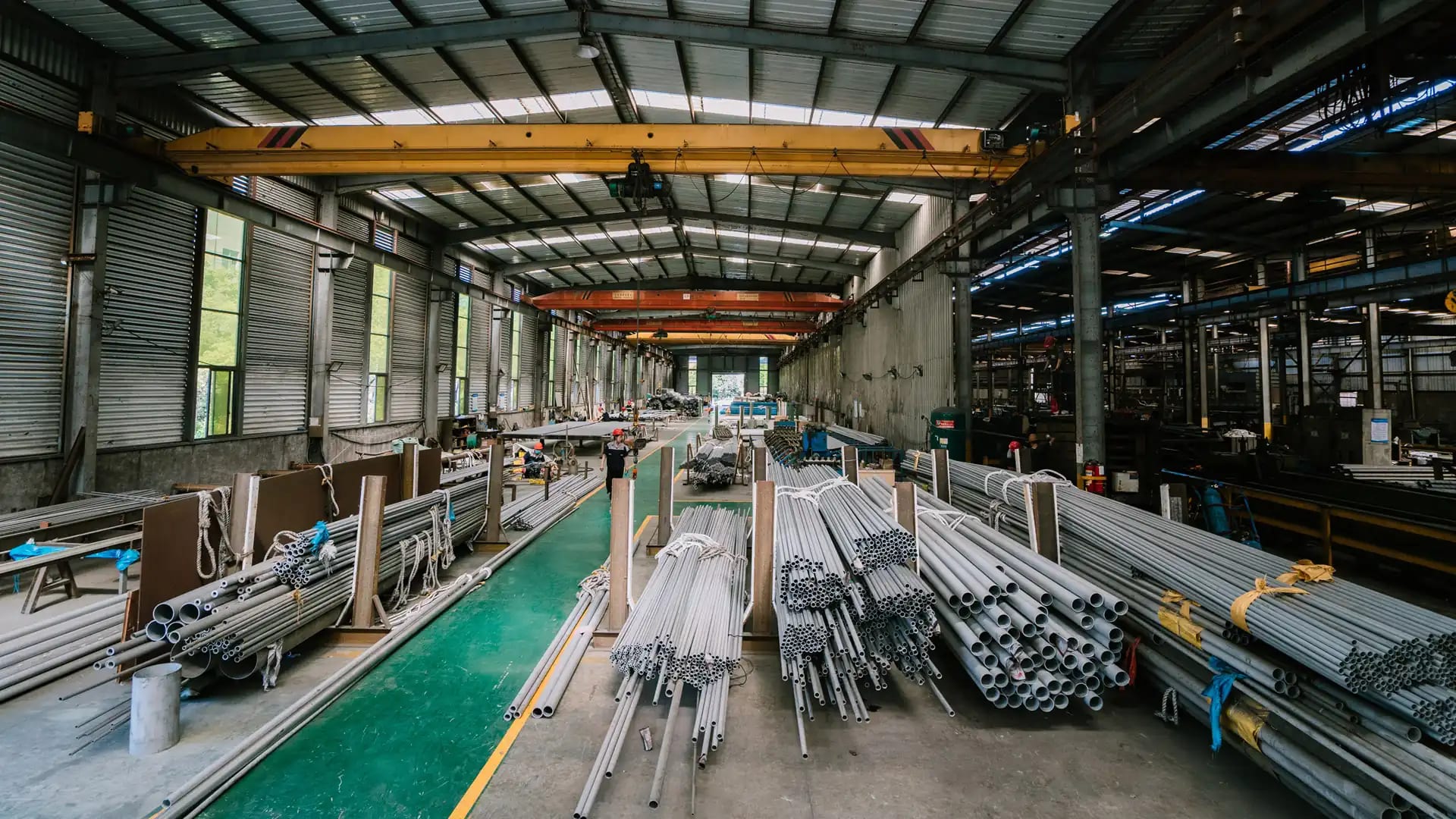
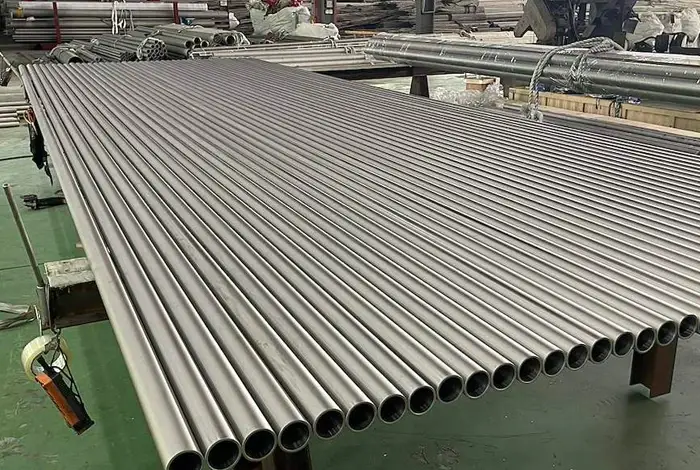
Thaida Stainless Steel Manufacturing (Thailand) Co., Ltd. manufactures ASTM A213 / ASME SA-213 stainless steel seamless tubes in Ban Bueng, Chonburi, Thailand, for boilers, superheaters, heat exchangers and condensers. Quotes and test paperwork are prepared at the Bang Phli, Samut Prakan office. Twenty-one austenitic grades run from UNS S30400 seamless tube and seamless WNR 1.4404 tube for general and chloride duty to heat-resisting, stabilized, H-grade and high-alloy grades, each tube pierced from solid billet and finished to its ordered OD and wall.

Stainless Steel seamless tubeASTM A213 / ASME SA-213 / ASTM A1016

  • 6.35 to 257 mmOutside diameter
  • 0.89 to 12.7 mmWall thickness
  • Up to 22 mLength
  • 21 grades304 / 304L / 309 / 310 / 310H / 310S / ...

EN 10204 3.1 certificate / 3.2 on request

ASTM A213 Stainless Steel Seamless Tube Specifications

Each line on a tube order states the real outside diameter and the wall, never an NPS or schedule. All twenty-one grades share the production envelope below, so one request can combine several grades for the same exchanger, condenser or boiler package.

Standard
ASTM A213 / ASME SA-213, general requirements to ASTM A1016; 309, 310 and 314 to their own grade composition
Grades
  • 304
  • 304L
  • 309
  • 310
  • 310H
  • 310S
  • 310MoLN
  • 314
  • 316
  • 316L
  • 316LN
  • 316Ti
  • 317
  • 317L
  • 321
  • 321H
  • 347
  • 347H
  • 904L
  • 253MA
  • SMO 254
Outside Diameter
6.35 to 257 mm
Wall Thickness
0.89 to 12.7 mmminimum wall or average wall
Length
Up to 22 mcut to ordered length
Manufacturing Route
  1. Round billet heated
  2. Pierced and hot worked
  3. Cold-finished tubes then cold drawn or cold pilgered
Finishing Condition
Cold finished or hot finished, as specified
Heat Treatment
Solution treatedthen water quenched or rapidly cooled
Surface
Pickled free of scaleor bright annealed
Ends
Plain endscut and deburred
Form
Seamlessround, straight lengths
Testing
  • Each tube hydrostatic or nondestructive electric tested
  • Tension, flattening, flaring and hardness tests per lot
Test Certificate
EN 10204 3.13.2 on request
Stainless Steel Seamless Tubes Manufacturer in Thailand

ASTM A213 governs seamless ferritic and austenitic tubes for boilers, superheaters and heat exchangers, while ASME SA-213 is the version referenced for boiler and pressure vessel code work. It requires every austenitic tube to be delivered heat treated and sets separate requirements for the H grades so that they reach higher creep-rupture strength. Tolerances and test methods come from ASTM A1016, the general requirements specification behind A213. Grades 309, 310 and 314 are absent from the A213 grade tables, so we produce them to their own composition limits in the same size range. Where a drawing calls for NPS and schedule sizes, the item belongs with our stainless steel seamless pipes.

Each ASME SA-213 seamless stainless steel tube is proven individually, either under hydrostatic pressure or by nondestructive electric examination. A213 also requires a product analysis from every heat, flattening and flaring tests on both ends of sample tubes from each lot, hardness and tension tests per lot and, on the H grades, a grain size determination. These results go onto the EN 10204 3.1 (3.2 on request) certificate, and the document set adds raw material certificates, a PMI record for every tube, heat treatment charts and records of size and surface roughness checks. If the order specifies it, we add an intergranular corrosion test by ASTM A262 Practice E, and third-party inspection is also available on request.

Austenitic Stainless Steel Seamless Tube Grades

Grade choice follows what the tube carries and the conditions around it. The stainless steel seamless tubes below fall into five groups, from general chromium-nickel tubing to heat-resisting, molybdenum-bearing, stabilized and high-alloy grades, and composition, strength and size data sit on the page linked from every grade.

General-Duty Chromium-Nickel Seamless Tubing

Stainless Steel 304 Seamless Tubes
UNS S30400 / W.Nr. 1.4301

304 Seamless Tube

Grade 304 is the basic austenitic chromium-nickel steel, valued for good weldability and general corrosion resistance. Heat exchangers, water treatment units, dairy lines and beverage filling systems often start with UNS S30400 seamless tube, which tube lists written to European numbering call seamless WNR 1.4301 tube.

Stainless Steel 304L Seamless Tubes
UNS S30403 / W.Nr. 1.4307

304L Seamless Tube

Lower carbon is the point of 304L, because it reduces sensitization in the heat-affected zone when tube ends are welded into tubesheets or headers. Pasteurizer exchangers, distillation column internals and reactor auxiliaries are typical uses of seamless 1.4307 stainless steel tube, while power plants also order UNS S30403 seamless tube for steam distribution.

High Chromium-Nickel Seamless Tube Grades

Stainless Steel 309 Seamless Tubes
UNS S30900 / W.Nr. 1.4828

309 Seamless Tube

Compared with 304, grade 309 is richer in chromium and nickel, so it holds a protective oxide and resists scaling in hot gases. It sits outside the A213 grade tables, and 309 seamless tube serves thermocouple protection tubes, furnace muffles, radiant tubes and air preheater sections in fired equipment.

Stainless Steel 310 Seamless Tubes
UNS S31000 / W.Nr. 1.4845

310 Seamless Tube

Grade 310 pairs high chromium and nickel with a higher carbon level than 310S, giving creep strength along with oxidation resistance. A213 names 310S and 310H but not 310 itself, so stainless steel 310 seamless tube follows the grade's own chemistry for radiant tubes, thermowells and furnace recuperator tubing.

Stainless Steel 310H Seamless Tubes
UNS S31009 / W.Nr. 1.4841

310H Seamless Tube

310H is the H grade of the 310 family in ASTM A213, with a controlled carbon range and a minimum grain coarseness that lift its creep-rupture strength. SS 310H seamless tube is specified for superheater and reheater tubes, steam reformer furnace headers and hydrocarbon reforming reactors that carry load at temperature for long periods.

Stainless Steel 310S Seamless Tubes
UNS S31008 / W.Nr. 1.4845

310S Seamless Tube

TP310S is the A213 listing for the low-carbon form of 310. Its reduced carbon makes welding of tube-to-header joints easier, and 310S stainless steel seamless tube is used for high-pressure boiler tubing, heat transfer systems, coal gasifier internals and annealing furnace components where oxidizing heat is the main exposure.

Stainless Steel 310MoLN Seamless Tubes
UNS S31050 / W.Nr. 1.4466

310MoLN Seamless Tube

Listed in ASTM A213 as TP310MoLN, this grade builds on a low-carbon, high chromium-nickel base with additions of molybdenum and nitrogen. Its resistance to ammonium carbamate corrosion suits 310MoLN seamless tube to urea strippers, carbamate condensers and high-pressure synthesis circuits, and the grade also serves nitric acid and fertilizer plants.

Stainless Steel 314 Seamless Tubes
UNS S31400 / W.Nr. 1.4841

314 Seamless Tube

Grade 314 adds silicon to a high chromium-nickel base, strengthening resistance to scaling and carburization. Because A213 has no 314 grade, 314 seamless tube is supplied to 314 chemistry limits for radiant tubes in gas-fired and electric furnaces, furnace conveyor systems and heat exchangers. Its high silicon calls for careful welding procedures.

Molybdenum-Bearing Seamless Tubing for Chlorides and Acids

Stainless Steel 316 Seamless Tubes
UNS S31600 / W.Nr. 1.4401

316 Seamless Tube

Molybdenum is what separates 316 from 304, and it helps the tube hold up against pits and crevice corrosion where cooling or process water carries chlorides. Instrumentation, thermowells, sanitary bioreactor tubing and desalination lines commonly call for UNS S31600 seamless tube, ordered from German or EN-based datasheets as seamless WNR 1.4401 tube.

Stainless Steel 316L Seamless Tubes
UNS S31603 / W.Nr. 1.4404

316L Seamless Tube

316L keeps the molybdenum of 316 at a lower carbon level, so tube ends resist intergranular corrosion after welding. Evaporators, power plant and HVAC heat exchangers and pure water lines are built from UNS S31603 seamless tube, and small diameters drawn in seamless 1.4404 stainless steel tube go into surgical tools and medical equipment.

Stainless Steel 316LN Seamless Tubes
UNS S31653 / W.Nr. 1.4429

316LN Seamless Tube

Nitrogen added to low-carbon 316 gives 316LN solid solution hardening and a stronger austenite. The stable austenitic structure keeps its toughness at cryogenic temperatures, so seamless stainless steel 316LN tube serves liquefied gas lines, high-pressure hydraulic tubing in heavy machinery and seawater cooling systems.

Stainless Steel 316Ti Seamless Tubes
UNS S31635 / W.Nr. 1.4571

316Ti Seamless Tube

Titanium stabilization turns 316 into 316Ti. Titanium combines with carbon and nitrogen as stable carbides and carbonitrides, keeping chromium available for corrosion resistance after welding and long heat exposure. SS 316Ti seamless tube is often preferred over 316L for superheaters and heat exchangers, and it also serves pulp bleaching lines and oil and gas condensers.

Stainless Steel 317 Seamless Tubes
UNS S31700 / W.Nr. 1.4449

317 Seamless Tube

With a molybdenum level above that of 316, grade 317 offers stronger resistance to chlorides and organic acids. Power plants use seamless stainless steel 317 tube as condenser and superheater tubing, and the grade also goes into flue gas desulfurization systems, process heat exchangers, bleaching equipment, marine cooling systems and sour gas service.

Stainless Steel 317L Seamless Tubes
UNS S31703 / W.Nr. 1.4438

317L Seamless Tube

Holding carbon low, 317L keeps the high molybdenum of 317 while protecting weld heat-affected zones from intergranular attack. 317L stainless steel seamless tube handles sulfuric, acetic and phosphoric acid duty, condensers on corrosive cooling water and chlorine dioxide bleaching stages in pulp mills.

Stabilized and H-Grade Seamless Tubes for Pressure at Temperature

Stainless Steel 321 Seamless Tubes
UNS S32100 / W.Nr. 1.4541

321 Seamless Tube

Titanium stabilization in 321 binds carbon so that tubes keep their resistance to weld decay after welding and heat exposure. Seamless 321 stainless steel tube serves boiler and heat exchanger tubing, heating element tubing, bellows, expansion joints and aircraft exhaust manifolds, and a stabilizing heat treatment can be added under A213 supplementary requirement S2.

Stainless Steel 321H Seamless Tubes
UNS S32109 / W.Nr. 1.4878

321H Seamless Tube

In 321H, titanium stabilization meets the H-grade package of A213: carbon kept within a raised range, grain size checked on every lot and a hotter solution treatment, all aimed at creep-rupture strength. SS 321H seamless tube goes into boiler superheater and reheater sections, refinery flare headers and catalytic cracking units.

Stainless Steel 347 Seamless Tubes
UNS S34700 / W.Nr. 1.4550

347 Seamless Tube

Niobium is the stabilizing element in 347, forming carbides ahead of chromium so that tubes stay resistant to intergranular corrosion after welding. Seamless stainless steel 347 tube serves boiler superheaters and reheaters, boiler feed water systems, thermal desalination evaporators, condensers for hot hydrocarbons and refinery furnace heater tubing.

Stainless Steel 347H Seamless Tubes
UNS S34709 / W.Nr. 1.4912

347H Seamless Tube

347H is the high-carbon member of the niobium-stabilized pair. Niobium carbides add creep resistance to the raised carbon range and grain size control that A213 demands of an H grade, so 347H stainless steel seamless tube suits radiant superheaters that must resist sagging, boiler tubes and heat exchanger tubes.

High-Alloy and Heat-Resisting Seamless Tubing: 904L, 253MA and SMO 254

Stainless Steel 904L Seamless Tubes
UNS N08904 / W.Nr. 1.4539

904L Seamless Tube

Grade 904L combines low carbon with high nickel, molybdenum and copper, a mix aimed at strong reducing acids such as sulfuric acid. ASTM A213 lists it as UNS N08904 with no grade name. Seamless 904L stainless steel tube suits reboilers, corrosive-fluid exchangers, power plant condensers and brine heaters in thermal desalination.

253MA Seamless Tubes
UNS S30815 / W.Nr. 1.4835

253MA Seamless Tube

A213 lists UNS S30815 (253MA) without a grade name; its alloying relies on silicon and nitrogen together with a small cerium addition. An outer chromia and inner silica scale protect it against oxidation, and 253MA seamless tube serves radiant tubes, thermocouple protection tubes, pulverized coal injection tubes and superheater connecting tubes.

SMO 254 Seamless Tubes
UNS S31254 / W.Nr. 1.4547

SMO 254 Seamless Tube

SMO 254 is a high-molybdenum austenitic grade with nitrogen and copper, listed in ASTM A213 as UNS S31254. Its molybdenum and nitrogen hold off pits and crevice attack in seawater and chloride-rich media, so SMO 254 seamless tube serves marine condensers, desalination intake and brine systems, heat recovery boilers and flue gas scrubbers.

Seamless SS Tube Sizes and Wall Basis

Every seamless SS tube is made within OD 6.35 to 257 mm, wall 0.89 to 12.7 mm and lengths up to 22 m, with each tube cut to its ordered length. Size is stated as outside diameter and wall, with the wall given as minimum or average. OD, wall and cut-length tolerances follow ASTM A1016, with closer OD bands for cold-finished tubes than for hot-finished ones, and the bands for each line, including diameters beyond the A1016 OD table, are confirmed with the quotation. The same basis applies from small instrument tubing in seamless 1.4401 stainless steel tube to dairy heating lines in seamless 1.4301 stainless steel tube and large-OD boiler tubes.

Cold-Drawn Seamless Tube Finish and Formability

After piercing and hot working, cold-finished tubes are cold drawn or cold pilgered, a step that improves dimensional accuracy and gives a smooth internal and external surface. Every tube is then solution treated and either pickled clean of scale or bright annealed, which leaves a scale-free surface without pickling. Tubes are straightened and cut with burr-free ends. A213 requires tubes fitted into a boiler or tube sheet to stand expanding and beading without cracks, and superheater tubes to withstand the forging, welding and bending their fabrication involves.

Applications of ASTM A213 Seamless Stainless Tubing

Steam generation and heat transfer remain the core uses named in A213, and the same grades also run instrument, hydraulic and hygienic process lines.

Power Generation duty for Stainless Steel seamless tube

Power Generation

Superheater and reheater sections rely on H grades such as 321H and 347H for creep-rupture strength, while UNS S30403 seamless tube handles instrument lines and the auxiliary tubing around each boiler.

Heat Exchangers and Evaporators duty for Stainless Steel seamless tube

Heat Exchangers and Evaporators

Shell-and-tube exchangers and evaporators in refineries, chemical plants and HVAC systems often run in UNS S31603 seamless tube, with 316Ti or 347 chosen where tubes see sustained heat after welding.

Oil and Gas duty for Stainless Steel seamless tube

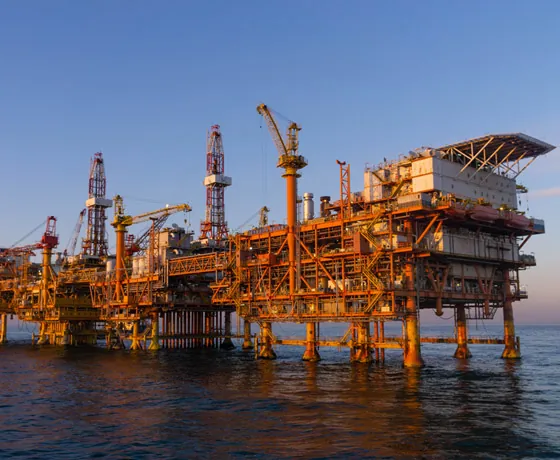
Oil and Gas

Gas processing plants, LNG and CNG transfer lines and offshore platforms use UNS S31600 seamless tube for instrumentation and thermowells, with SMO 254 for high-pressure hydraulic instrumentation tubing on offshore rigs.

Chemical and Fertilizer Plants duty for Stainless Steel seamless tube

Chemical and Fertilizer Plants

Process fluid lines, refrigeration circuits and fertilizer production units use seamless 1.4401 stainless steel tube for general chemical duty, while urea plant circuits take 310MoLN for its carbamate resistance.

Marine Systems duty for Stainless Steel seamless tube

Marine Systems

Shipboard hydraulic and control systems run in seamless WNR 1.4401 tube for its chloride resistance, and engine exhaust systems use stabilized or heat-resisting grades chosen for the gas temperature.

Food, Dairy and Brewing duty for Stainless Steel seamless tube

Food, Dairy and Brewing

Pasteurizers, dairy plants, breweries and fermentation tanks use seamless WNR 1.4301 tube for heating and cooling circuits, and seamless 1.4307 stainless steel tube for CIP return and hot water loops.

Pharmaceutical and Bioprocess duty for Stainless Steel seamless tube

Pharmaceutical and Bioprocess

Purified water loops, bioreactors, fermenters and CIP and SIP systems need cleanable, corrosion-resistant tubing, and seamless WNR 1.4404 tube is the common choice for these hygienic circuits.

Automotive duty for Stainless Steel seamless tube

Automotive

Fuel-injection lines and exhaust systems need tubing with accurate OD and clean bores; seamless WNR 1.4307 tube serves fuel and lubricant lines, and heat-resisting 309 handles exhaust sections.

Building Services duty for Stainless Steel seamless tube

Building Services

Gas and water supply lines in buildings and architectural details use seamless 1.4301 stainless steel tube, chosen for general corrosion resistance and a smooth, clean surface.

Shipping and Packaging

Bundling

Tubes grouped by grade, size and heat, wrapped against moisture and dust, then crated in timber for ocean shipment.

Identification

Each tube marked with grade, specification, size, wall basis and heat number, with your item codes added on request.

Bore protection

Both ends of every tube closed with plastic caps so the bore stays clean.

Cutting

Each tube trimmed and deburred to the ordered length before packing, so bundles arrive ready for installation.

Commercial basis

FOB, CIF or CFR, settled in the order confirmation.

Delivery reach

By truck to any site in Thailand, and in export containers to Singapore, Malaysia, Vietnam, Indonesia, the Philippines and India.

Order Seamless Stainless Steel Tubing from Thaida

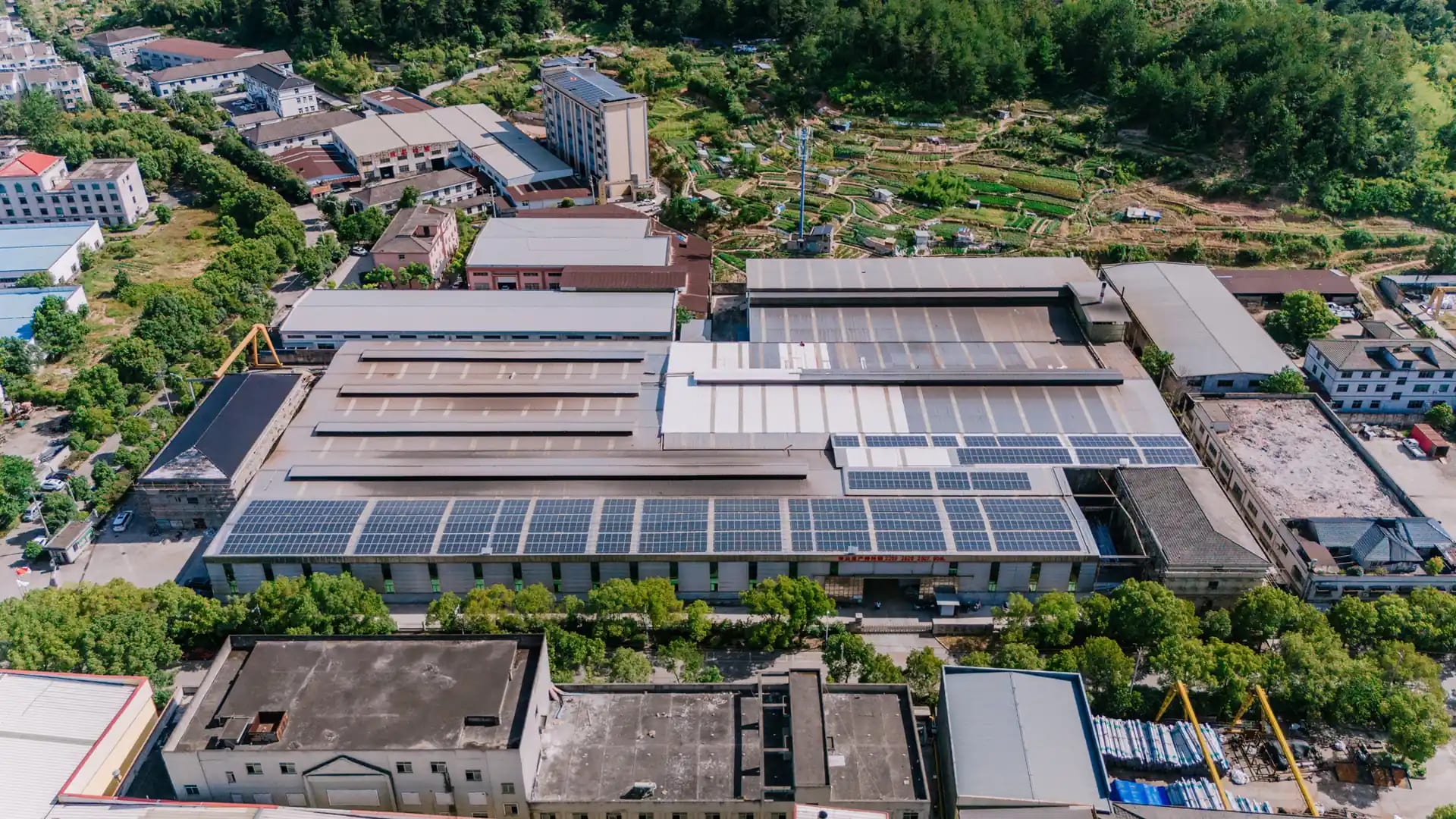
Production of each austenitic stainless steel seamless tube takes place at 154 Moo.1 Map Phai, Ban Bueng, Chonburi 20170, Thailand, where billets are pierced, hot worked, finished, solution treated and tested. Our team at 89/18 Moo.15 Enterprize Park, Bangna-Trad Road, Bang Kaeo, Bang Phli, Samut Prakan 10540, Thailand, reviews drawings, prepares quotations and releases the certificates. Each quotation states which lengths come out of stock and which need a fresh production lot, along with the test plan for every grade requested.

Factory
154 Moo.1 Map Phai, Ban Bueng,
Chonburi 20170, Thailand
Office
89/18 Moo.15 Enterprize Park, Bangna-Trad Road,
Bang Kaeo, Bang Phli, Samut Prakan 10540, Thailand
Exporting to
  • Singapore
  • Malaysia
  • Vietnam
  • Indonesia
  • Philippines
  • India

Frequently Asked Questions

When is a minimum-wall order the better basis than an average-wall order?

Choose minimum wall when your design calculation fixes a thickness that must never be undercut, because the permitted variation then lies entirely above the stated wall. Choose average wall when the datasheet gives a nominal wall and accepts variation both ways. If the order is silent, A213 treats the stated wall as minimum, so state the basis on every line.

How do I identify H-grade seamless tubes after delivery?

Check the marking and the certificate. A213 requires 310H, 321H and 347H seamless tubes to show their heat number and heat-treatment lot identity alongside the manufacturer, specification, grade, finishing condition and wall basis. The lot's grain size result appears on the EN 10204 3.1 (3.2 on request) certificate, linking each tube to its tested lot.

Which grade suits condensers cooled by seawater or corrosive water?

Match the grade to the cooling water. 317L carries more molybdenum than 316L and is used for condensers on corrosive cooling water, 904L adds copper and serves condensers in coastal installations, and SMO 254, alloyed with molybdenum and nitrogen, is used for seawater condensers on ships and offshore platforms. UNS S31603 seamless tube remains the molybdenum-bearing base for exchanger bundles.

Which eddy current or ultrasonic practice applies when a tube is not hydrotested?

Austenitic tubes are examined tube by tube with eddy current to ASTM E426 or ultrasonic testing to ASTM E213. A213 lets the manufacturer choose between that electric test and the hydrostatic test unless the order names one, so write hydrostatic testing on the line if your code or end user requires it for an ASME SA-213 seamless stainless steel tube.

How are 309, 310 and 314 seamless tubes specified when A213 omits them?

Order them by grade name and UNS number. They are made to their own composition limits within the OD, wall and length envelope of our A213 seamless tubes, and the certificate states the measured heat analysis. Where a specification must cite A213, its nearest listed grades are TP309S or TP309H for 309 and TP310S or TP310H for 310.

Can tubes larger than the usual A213 size range still be supplied to it?

Yes. A213 describes the sizes it usually covers but accepts other diameters when the tubes meet every remaining requirement, so our larger stainless steel seamless tubes are supplied to the same specification, with the same per-tube test, lot tests, marking and certificate as the smaller sizes.

Should I specify cold-finished or hot-finished tubes?

Specify cold finished for exchanger, condenser and instrument tubing, where closer OD and wall tolerances help tube-to-tubesheet expansion and fitting make-up. Hot finished is the other A213 option and carries wider tolerances. Our tubes are normally cold drawn or cold pilgered after hot working, and the marking states which condition was supplied.

Can tubes be stress-relief annealed for chloride stress corrosion service?

Yes, when you order A213 supplementary requirement S1, which in our range covers 304L, 316L, 321 and 347: the anneal follows roll straightening, and no mechanical straightening is allowed afterwards. Add S1 to the line for each seamless WNR 1.4307 tube or seamless 1.4404 stainless steel tube that will see chloride-bearing process or cooling water.